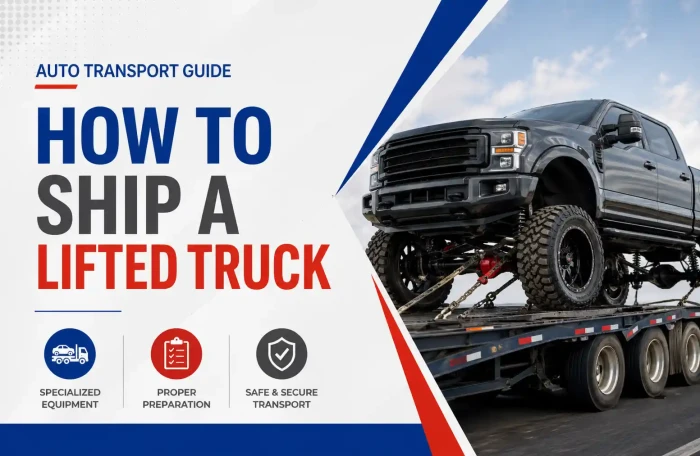
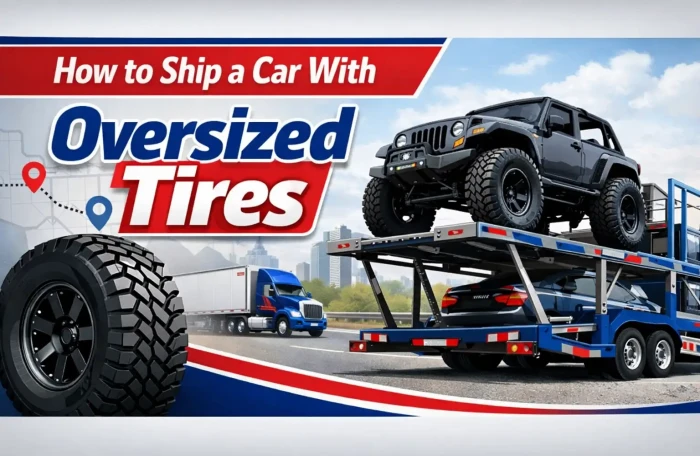


Shipping a car with oversized tires changes the process right away. What looks like a standard move quickly becomes oversized vehicle transport, where space, weight, and equipment shape every decision.
A lifted truck or wide off-road build does not simply ride along with other vehicles. It competes for limited trailer space designed for smaller, predictable dimensions. That is why carriers treat these moves as overdimensional auto transport rather than routine shipments.

Where Most Builds Stop Fitting
The limiting factor is rarely the trailer's full width. It is the usable space. The legal trailer width is 8.5 feet, or 102 inches. The actual loading area is often closer to 82 inches between the fenders. That gap is what causes problems.
A vehicle like a Ford Raptor measures about 96 inches wide with factory oversized tires. It cannot fit within that narrower space. Height also comes into play. The same truck sits around 79.8 to 80.6 inches tall before adding lifts or roof accessories.
At that point, track width clearance becomes the deciding factor. Distance does not matter if the vehicle cannot physically fit.
Why the Trailer Type Changes Everything
Once those limits are exceeded, the carrier must switch equipment. A deckover trailer becomes necessary because it offers a full 102-inch flat deck without fender restrictions. Heavier or taller builds may require RGN (Removable Gooseneck) or lowboy transport to manage vertical clearance limits.
Loading also changes. Standard ramps, usually 12 to 18 inches wide, can be too narrow for oversized tires. Specialized setups reduce risk by using wider ramps and lower approach angles, often around 6.3 degrees, to prevent scraping. This is what "wide-tire car-hauling equipment" refers to. It is not optional. It is required to move the vehicle safely.

Cost Starts With Space, Then Builds From There
The cost to ship a lifted truck across the country depends on how much your vehicle displaces, not just how far it travels.
A mildly oversized vehicle may add $100 to $400 above a sedan rate. True oversized builds often start around $800 to $1,500 for shorter routes.
Per-mile pricing reflects the same constraints. Medium oversized shipments typically fall between $2.00 and $5.00 per mile. Heavier or extreme builds can reach $5.00 to $9.00 per mile. These rates do not drop significantly with distance. Carriers cannot easily fill the unused space around a large vehicle, so the cost stays elevated.
Weight also affects pricing. Federal limits cap total loads at 80,000 pounds. Axle limits matter as well, with about 20,000 pounds allowed on a single axle and 34,000 on tandem axles. A heavily modified truck reaches those limits faster than expected.

Permits and Escorts Can Shift the Plan
Oversized car shipping permits and escorts are required when dimensions exceed state limits. Permit fees usually range from $15 to more than $70 per state. That alone is manageable. The cost increases when escort vehicles are required, adding about $1.50 to $2.50 per mile.
Routing becomes more restrictive in these cases. Some roads are no longer viable once a vehicle exceeds certain size thresholds.
Weight, Fuel, and Small Details That Add Up
Fuel weight is often overlooked. Gasoline weighs about 6 pounds per gallon, and a full tank adds an unnecessary load that works against both efficiency and legal weight limits. That extra weight does not help the shipment. It only reduces the carrier's flexibility when balancing the trailer.
Carriers prefer a partial tank, usually around one-quarter full. That provides enough fuel to load and unload the vehicle without adding avoidable weight. It also reduces risk during transit.
If the vehicle is inoperable, expect an additional $150 to $300. Loading requires winches or specialized equipment, and it takes more time to secure the vehicle properly. That added handling changes both the labor required and the vehicle's position on the trailer.
Transit Time Is Not Just Distance
Carriers generally travel about 400 to 500 miles per day under normal conditions, but oversized shipments do not always follow that pace. Routes may need to avoid low-clearance areas or restricted roads, which can add distance or slow progress. Permit requirements can also limit when a truck is allowed to move, sometimes restricting travel to daylight hours.
Demand plays a role as well. During periods like the snowbird season, more vehicles travel along the same routes, making specialized equipment harder to secure.
In practice, timing is shaped by more than distance. The vehicle’s size, the route it can legally take, and the availability of the right trailer all influence how long the shipment actually takes.
Preparation That Prevents Problems Later
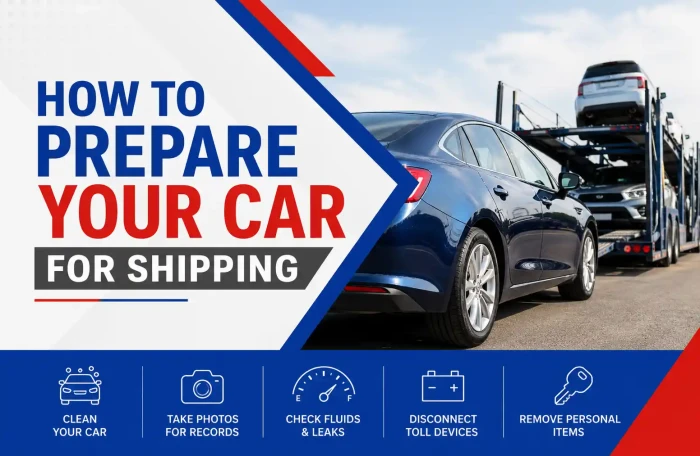
Preparing a modified truck for shipping reduces risk. A clean vehicle allows for an accurate bill of lading inspection. Dirt can hide damage, which leads to disputes later.
Tire condition is important. Oversized tires respond more noticeably to pressure changes during transit. Proper inflation helps secure the vehicle without causing stress. Loose accessories should be removed or secured. Wind at highway speeds can damage anything not firmly attached.
Personal items are another concern. The DOT does not permit them inside the vehicle. If a carrier allows limited items, it usually involves an added fee and must be arranged in advance.
What Makes Oversized Shipping Work Smoothly
Clear information early in the process makes the difference. Most issues in oversized vehicle transport can be traced back to missing or inaccurate details at the start.
Accurate dimensions matter more than general descriptions. Tire width, overall height, and any added accessories all affect trailer selection and routing. Even small miscalculations can lead to delays or the need to reschedule with different equipment.
Shipping a car with oversized tires becomes manageable when those factors are addressed up front. Most complications come from assumptions about fit, access, or equipment, not from the transport process itself.
Where AmeriFreight Auto Transport Fits In
AmeriFreight Auto Transport works by matching oversized vehicles with carriers that have the right equipment from the start. No upfront payment until you choose a carrier. That matters because not every carrier is equipped to handle lifted-truck shipping or wide builds.
Our customer service agents focus on the details that affect the shipment. Width, height, tire size, and modifications are evaluated early to avoid issues later.
AmeriFreight Auto Transport is recognized as one of the best-reviewed in the industry, reflecting its consistent handling of complex shipments, including off-road vehicle logistics.
Get your free, no obligation quote today.