


Car shipping for college students often seems like a simple decision at first. You look at a few price ranges, compare them to the cost of driving, and assume the cheaper option wins. That approach misses what usually matters most once the move gets closer.
Timing, campus restrictions, and how much disruption you can handle during move-in tend to shape the decision more than the initial quote. Many families also carry an unspoken assumption.
Driving feels easier and more controllable. That can be true for shorter distances. Once the trip spans multiple states, the trade-offs start to shift in ways that are not obvious up front.

What It Really Costs to Ship a Car to College
Car shipping for college students rarely comes down to a single flat rate. Pricing moves within a range based on distance, vehicle type, timing, and how flexible your schedule is. A clearer way to evaluate costs is to look at distance tiers and transport types side by side.
Vehicle type has a noticeable impact on cost. Larger vehicles, such as pickup trucks, can cost more than standard sedans because they take up more space and add weight to the trailer. If the vehicle is not operable, expect an additional cost due to the required loading equipment.
Driving vs. Shipping Comes Down to Time and Wear
Driving a car to campus may look like the lower-cost option at first glance. Fuel, hotels, and meals are easy to estimate, but they are only part of the picture. Vehicle depreciation and the value of your time are often overlooked.
A long-distance trip can take several days. That is time spent on the road instead of preparing for classes, getting familiar with campus, or settling into housing. For families, it can also mean coordinating return travel after the drop-off.
Auto transport for university moves shifts that burden. The vehicle travels separately, and you arrive ready to focus on everything else that comes with starting a new term. This difference between driving and shipping becomes more important when the trip spans multiple days, involves tight move-in schedules, or has limited flexibility.

Why Most Students Use Open Transport
Open car transport for students is the standard method across the industry. Vehicles are loaded onto multi-car trailers similar to those used for dealership deliveries. While cars are exposed to weather and road conditions, this method has a strong safety record and remains the practical choice for everyday vehicles.
Enclosed-vehicle shipping costs are typically 30 to 60 percent higher. That increase comes from limited capacity, as enclosed trailers carry fewer vehicles per trip. For most student vehicles, the added cost does not significantly change the outcome. Open transport provides a balance between affordability and reliability.
Timing Works in Windows, Not Exact Dates
Shipping schedules operate within pickup and delivery windows rather than fixed appointment times. Carriers build routes that include several vehicles, and those routes can shift slightly based on traffic, weather, or operational adjustments.
Most carriers travel between 400 and 600 miles per day. This gives a general sense of transit time, but not an exact arrival date. Advances in routing systems have improved efficiency, with some estimates showing up to a 22 percent reduction in transit time. Even so, flexibility remains part of the process.

Campus Rules Can Override Your Plan
Shipping a car to campus only works if the school allows it. Freshman car parking policies at US universities can be stricter than expected. Some campuses limit or prohibit vehicles for first-year students, and violations can result in fines.
Even when cars are permitted, campus layout can create challenges. Large transport trucks may not be able to access dorm areas or narrow streets. In those cases, delivery typically happens at a nearby open location where the carrier can safely unload the vehicle.
Confirming parking eligibility and delivery logistics ahead of time prevents last-minute complications.
Preparing the Car Without Surprises
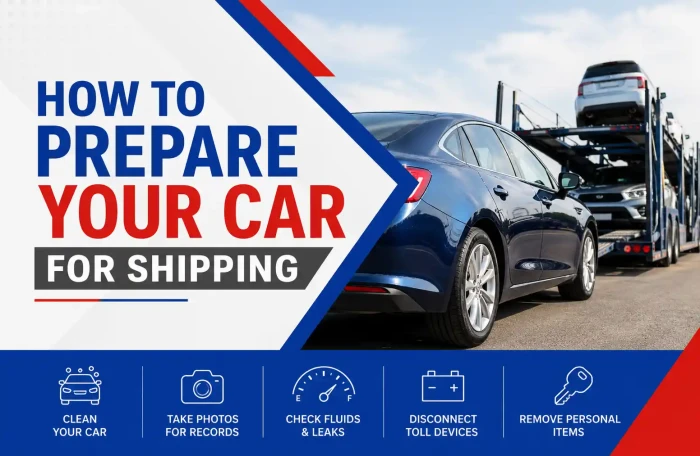
Vehicle preparation for transport focuses on reducing risk and avoiding delays. Cleanliness plays a role because it enables clear inspection. Dirt and debris can hide existing scratches or dents, which makes condition reports less accurate.
A few preparation steps have a direct impact:
Keep fuel at about one-quarter tank.
Ensure the battery is fully charged and the vehicle starts without issue.
Address any visible fluid leaks before pickup.
Remove or cover toll transponders to prevent unintended charges during transit.
Personal items are another area where misunderstandings are common. The Department of Transportation does not permit household goods to be transported inside vehicles. Some carriers may allow up to 100 pounds in the trunk for an additional fee, but this must be arranged in advance.
The Bill of Lading Is Where Claims Are Decided
The Bill of Lading condition report is the document that records the vehicle’s condition at both pickup and delivery. It plays a central role in any damage claim. At pickup, the driver and the owner review the vehicle together and note any existing damage. At delivery, the same process is repeated.
If new damage is found, it must be documented on the Bill of Lading before signing. This step is critical for anyone filing a damage claim for later. Once the document is signed without notes, it becomes much harder to pursue a claim.
Discounts and What They Actually Mean
Student car shipping discounts are often advertised as a major cost advantage. AmeriFreight Auto Transport offers a student discount for anyone currently enrolled in a college or university, including undergraduate and graduate students. You request a quote, provide proof of enrollment such as a student ID, and the discount is applied to your shipment.
Most student car shipping discounts reduce the total cost by about $150 to $250 per vehicle. This helps, but it does not outweigh the main pricing factors like distance, timing, and vehicle type.
How AmeriFreight Auto Transport Approaches Student Moves
AmeriFreight Auto Transport works as a broker, coordinating shipments and connecting customers with vetted carriers while managing the process from start to finish.
No upfront payment until you choose a carrier, giving you the flexibility to review options before committing. AmeriFreight Auto Transport is considered one of the best-reviewed in the industry.
The bigger benefit is simplicity. AmeriFreight Auto Transport handles the logistics, allowing you to focus on your move, classes, or schedule while their customer service agents coordinate the shipment.
Get your free, no obligation quote today.
Disclaimer
Pricing, transit times, and availability vary based on distance, vehicle type, route demand, and market conditions. Quotes are estimates, not guaranteed rates or dates.