

AmeriFreight
Car Shipping Cost Calculator
Get Instant Car Shipping Quotes
- No upfront payment until you choose a carrier
- Options designed to help you find competitive pricing
- Book on your terms
- Optional gap protection plan available
- 20+ Years of Experience in the industry
- One of the best-reviewed companies in the industry




Trust Your Car Shipping Quote to AmeriFreight
Join thousands of customers who got a free estimate and shipped with AmeriFreight Auto Transport. We're BBB-accredited and A-rated, and we take pride in delivering strong customer service at every step of the car shipping process. See what our customers have shared about their experience with our auto transport services.

4.8


Over 1500+ Reviews BBB

4.8
Over 4,730+ Reviews Consumer Affairs

4.7

Over 5,350+ Reviews Google

4.9

Over 4000+ Reviews Transport Reviews

4.8
Over 9500+ Reviews Move.org

4.7
Over 700+ Reviews Trustpilot
How Much Does It Cost to Ship a Car?
The average car shipping cost in 2026 typically ranges from $500 to $2,000, depending on factors like distance, carrier type, vehicle size, seasonality, and route demand. If you are wondering how much does it cost to ship a car, the answer depends largely on whether you choose open or enclosed transport and the type of vehicle being shipped. Longer routes generally lower the per-mile car shipping cost, while expedited delivery and enclosed transport increase the final price.
The cost to ship a car with an open carrier is usually more affordable because multiple vehicles are transported at once. Enclosed shipping offers added protection for luxury, exotic, classic, or high-value vehicles, resulting in a higher vehicle shipping cost overall.
Average Car Shipping Cost by Carrier Type and Distance
| Route Distance | Open Carrier Cost (Standard) | Enclosed Carrier Cost (Premium) | Estimated Delivery Time |
|---|---|---|---|
| Less than 500 miles | $375 – $600 | $640 – $1,020 | 2–3 days |
| 500 – 1,000 miles | $500 – $860 | $850 – $1,460 | 3–5 days |
| 1,000 – 2,000 miles | $675 – $1,150 | $1,150 – $1,955 | 5–8 days |
| Over 2,000 miles | $960 – $1,400 | $1,635 – $2,380 | 7–10 days |
What’s the Average Car Shipping Cost per Mile?
As of March 2026, the average car shipping cost per mile typically ranges from $0.50 to $1.20 for open carrier transport and $0.64 to $2.20 for enclosed carrier transport, depending on the shipping distance. Shorter routes usually cost more per mile, while longer routes generally have a lower average rate per mile.
Average Car Shipping Cost by Vehicle and Distance
| Vehicle Type | Short (0–500 mi) | Medium (500–1,000 mi) | Long (1,000–2,000 mi) | Extended (2,000+ mi) |
|---|---|---|---|---|
| Sedan | $500 | $680 | $910 | $1,180 |
| SUV | $575 | $780 | $1,045 | $1,360 |
| Truck | $625 | $850 | $1,140 | $1,475 |
| Luxury Vehicle | $800 | $1,090 | $1,455 | $1,890 |
| Motorcycle | $400 | $545 | $730 | $945 |
Factors That Affect Your Car Shipping Cost

How does distance affect car shipping cost?
Distance is one of the biggest factors that affects your car shipping cost. Longer routes increase the total price because carriers spend more on fuel, driver time, tolls, and mileage. However, the auto transport rate per mile usually decreases as the distance increases, making cross-country shipping more cost-efficient on a per-mile basis than shorter trips.
For example, shipping a vehicle about 500 miles may cost between $495 and $650, while a 1,500-mile shipment often ranges from $850 to $1,150. Coast-to-coast transport exceeding 2,500 miles can reach $1,200 to $1,500 depending on the route, timing, and carrier availability.

How does vehicle type affect auto transport cost?
Your vehicle’s size, weight, and condition directly impact the car shipping cost. Compact sedans are generally the least expensive to transport because they take up less trailer space and are easier to load. Larger SUVs, trucks, and vans increase the overall auto transport rate because they weigh more and reduce the number of vehicles a carrier can haul at once.
Luxury, exotic, and classic cars may also increase the cost because many owners choose enclosed transport for added protection. In most cases, compact cars cost around $500 to $800 to ship, while SUVs and trucks often range from $800 to $1,200. Enclosed shipping for high-value vehicles can push the price to $1,200 to $2,000 or more.

How does expedited shipping affect auto shipping cost?
Expedited shipping increases your car shipping cost because it prioritizes your vehicle for faster pickup and delivery. Standard transport schedules allow carriers to group vehicles efficiently along a route, while expedited orders require quicker dispatching and less scheduling flexibility.
In many cases, expedited service adds about $200 to $500 to the final auto transport rate. Customers who need urgent relocation, dealership delivery, or last-minute shipping often choose this option despite the higher price.

How does seasonality affect vehicle shipping cost?
Seasonal demand plays a major role in determining your car shipping cost throughout the year. Summer is typically the busiest season for the industry because families, students, and snowbirds relocate more frequently, which often raises car transport rates due to higher demand.
Winter can sometimes lower the average auto transport rate because fewer vehicles are being shipped, but severe weather and reduced carrier availability may still increase pricing in certain regions. December and January routes are especially unpredictable because holiday schedules and winter storms can affect delivery timelines and availability.

How does route popularity affect car transport cost?
Route popularity can significantly affect your car shipping cost because carriers prefer routes with consistent demand and frequent bookings. High-traffic shipping lanes such as Florida to New York, California to Texas, or Chicago to Miami often have lower car transport rates because carriers can easily fill trailers and avoid driving with empty spots.
Less common routes and rural locations usually cost more because carriers have fewer nearby shipments to combine along the same trip. Remote pickup and delivery locations may also require extra mileage, fuel, and scheduling time, which can increase the final auto transport rate. In many cases, customers shipping between major cities save more than those transporting vehicles to smaller towns or isolated areas.

How does transport method affect car shipping cost?
The transport method you choose has a direct impact on your car shipping cost. Open transport is the most common and affordable option because vehicles are shipped on open-air trailers that carry multiple cars at once. Most standard shipments using open carriers range from $500 to $1,000 depending on distance and route demand.
Enclosed transport costs more because it protects vehicles from weather, road debris, and outside exposure during transit. Many owners of luxury, exotic, antique, or collector vehicles prefer enclosed shipping for the added security. On average, enclosed auto transport rates typically range from $1,200 to $2,000 or more.
Open Carrier vs. Enclosed Carrier: Which Costs More?
Choosing between open and enclosed transport is one of the biggest factors affecting your total car shipping cost. Open carriers are the industry standard and offer the most affordable option for everyday vehicles, while enclosed carriers provide added protection at a higher price. In most cases, enclosed car shipping costs about 75% more than open transport because of limited trailer capacity, higher insurance coverage, and lower carrier availability.
Open Auto Transport Cost
Open carrier transport is the most common and budget-friendly shipping option available. Vehicles are transported on open-air trailers that typically carry multiple cars at once, helping reduce the overall auto transport cost per vehicle. For a 1,500-mile shipment, most open carrier rates fall between $900 and $1,200 depending on route demand, seasonality, and vehicle size.
Open transport is best for standard sedans, SUVs, trucks, and daily drivers. Because nearly 95% of all car carriers on the road are open trailers, availability is usually faster and lead times are shorter. Most customers can secure pickup within one to three days on major routes.
Enclosed Auto Transport Cost
Enclosed carrier transport costs more because vehicles are shipped inside fully covered trailers that protect against weather, road debris, dirt, and outside exposure. Most enclosed auto transport rates for a 1,500-mile shipment range from $1,400 to $1,700, although high-end or oversized vehicles may cost even more.
This shipping method is commonly recommended for luxury, exotic, classic, antique, and high-value electric vehicles. Since enclosed trailers make up only a small percentage of the total carrier fleet, lead times are often longer, usually around three to seven days depending on the route and season.
Open Carrier vs. Enclosed Carrier Cost Comparison
| Comparison Factor | Open Carrier | Enclosed Carrier |
|---|---|---|
| Average Cost (1,500 miles) | $900 – $1,200 | $1,400 – $1,700 |
| Cost Difference | Baseline | About 75% higher |
| Best For | Daily drivers, standard sedans, SUVs, trucks | Classic, luxury, exotic, and high-value EVs |
| Weather Protection | None | Full protection |
| Carrier Availability | High (~95% of carriers) | Limited (~5% of carriers) |
| Typical Lead Time | 1–3 days | 3–7 days |
How Much Does It Cost to Ship a Car to Another State?
The cost to ship a car to another state typically ranges from $600 to $1,500 for open transport and $1,000 to $2,000 for enclosed transport, depending on the distance, vehicle type, route popularity, and time of year. Short interstate routes are usually more affordable, while cross-country shipments cost more overall but often have lower per-mile rates.
Shipping a car to another state is one of the most common types of auto transport services in the U.S. Customers frequently ship a car to another state for moves, college relocations, military transfers, seasonal travel, and online vehicle purchases. State-to-state car shipping is usually handled by open carriers because they offer lower pricing and greater carrier availability across most interstate routes, while enclosed transport is recommended for luxury, classic, exotic, or high-value vehicles that need additional protection during transit.
The cost to ship a car to another state can also vary based on whether you're moving between neighboring states, traveling across multiple regions, or shipping coast-to-coast. Carriers running high-traffic interstate corridors, like Florida to New York, California to Texas, or Georgia to Ohio, typically offer the most competitive rates because trailer space fills quickly along established routes. Less common state-to-state routes, or shipments involving rural pickup or delivery locations, may add $100 to $300 to the overall auto transport cost.
Below are estimated car shipping costs for some of the most popular state-to-state transport routes in the country.
| Route | Approx. Distance | Open Auto Transport Estimated Price | Enclosed Auto Transport Estimated Price | Notes |
|---|---|---|---|---|
| Florida to North Carolina | 600–750 miles | $677 | $1151 | Popular for college moves and seasonal relocations. |
| California to Michigan | 2,200–2,400 miles | $962 | $1635 | Common for cross-country relocations and job transfers. |
| Arkansas to Colorado | 800–1,000 miles | $854 | $1452 | Ideal for outdoor lifestyle and mountain-state moves. |
| Florida to Wisconsin | 1,300–1,500 miles | $925 | $1573 | Frequently used by snowbirds returning north. |
| Georgia to Ohio | 600–750 miles | $699 | $1188 | Popular route for family and employment relocations. |
| California to New York | 2,700–2,900 miles | $1124 | $1911 | One of the busiest coast-to-coast auto transport routes. |
| Alabama to Colorado | 1,200–1,400 miles | $1025 | $1743 | Often used for military and career-related moves. |
| Colorado to Georgia | 1,300–1,500 miles | $849 | $1443 | Common for long-distance residential relocations. |
| New York to Utah | 2,100–2,300 miles | $1141 | $1940 | Ideal for outdoor enthusiasts and western relocations. |
| Michigan to Texas | 1,200–1,400 miles | $962 | $1635 | Frequently booked for corporate and family moves. |
| California to North Carolina | 2,500–2,700 miles | $1029 | $1749 | Popular among coast-to-coast movers and retirees. |
| Idaho to New York | 2,300–2,500 miles | $679 | $1154 | Often used for long-distance lifestyle relocations. |
| Michigan to New York | 600–750 miles | $699 | $1188 | Common for students and regional moves. |
| Arizona to Colorado | 700–900 miles | $712 | $1210 | Ideal for mountain-state relocations and seasonal travel. |
| Arkansas to Hawaii | 3,500+ miles | $1044 | $1775 | Typically used for military or permanent island moves. |
| Florida to North Dakota | 2,000–2,200 miles | $1399 | $2378 | Less common route with longer carrier lead times. |
| Florida to Utah | 2,200–2,400 miles | $1199 | $2038 | Popular for cross-country and retirement relocations. |
| Florida to Indiana | 1,000–1,100 miles | $675 | $1148 | Frequently used during seasonal moves and college transfers. |
| Maryland to New York | 200–300 miles | $579 | $984 | Short-distance route popular for urban relocations. |
| New Jersey to Utah | 2,100–2,300 miles | $1084 | $1843 | Common for long-distance household and job relocations. |
| Florida to Michigan | 1,300–1,500 miles | $849 | $1443 | One of the top snowbird vehicle shipping routes. |
| Florida to Illinois | 1,100–1,300 miles | $789 | $1341 | Frequently booked for seasonal and family relocations. |
| North Carolina to Ohio | 500–700 miles | $495 | $842 | Affordable regional route with strong carrier availability. |
| California to Florida | 2,600–2,800 miles | $1148 | $1952 | High-demand coast-to-coast shipping corridor. |
| Mississippi to New York | 1,200–1,400 miles | $952 | $1618 | Common for long-distance residential moves. |
| Iowa to New York | 1,100–1,300 miles | $856 | $1455 | Frequently used for college and work relocations. |
| Florida to Texas | 1,000–1,200 miles | $699 | $1188 | Popular route for retirees and job-related moves. |
| New Hampshire to Texas | 1,900–2,100 miles | $909 | $1545 | Ideal for long-distance relocations and military moves. |
| Florida to New York | 1,200–1,400 miles | $1148 | $1952 | One of the busiest snowbird auto transport routes. |
| Ohio to Virginia | 400–600 miles | $643 | $1093 | Common for East Coast and regional relocations. |
| New York to Wyoming | 1,900–2,100 miles | $1124 | $1911 | Less common route often used for lifestyle relocations. |
| Florida to Massachusetts | 1,300–1,500 miles | $750 | $1275 | Popular seasonal route for Northeast residents. |
| Florida to Montana | 2,300–2,500 miles | $1399 | $2378 | Long-distance route with limited carrier availability. |
| Kentucky to New York | 750–900 miles | $759 | $1290 | Frequently booked for family and urban relocations. |
| Illinois to Virginia | 700–900 miles | $856 | $1455 | Ideal for Midwest-to-East Coast relocations. |
| Maryland to Texas | 1,400–1,600 miles | $1024 | $1741 | Common for military and corporate transfers. |
| Alabama to New York | 1,000–1,200 miles | $749 | $1273 | Frequently used for long-distance household moves. |
| Massachusetts to New York | 200–250 miles | $375 | $638 | Short-distance route with fast pickup availability. |
| Florida to Ohio | 950–1,100 miles | $799 | $1358 | Popular among snowbirds and seasonal travelers. |
| Georgia to New Jersey | 800–950 miles | $699 | $1188 | Common East Coast relocation and commuter route. |
| Illinois to Michigan | 300–400 miles | $399 | $678 | Affordable Midwest route with frequent carrier traffic. |
| California to Utah | 650–800 miles | $688 | $1170 | Ideal for western-state relocations and college moves. |
| New York to Ohio | 450–600 miles | $625 | $1063 | Frequently used for regional family relocations. |
| Louisiana to New York | 1,300–1,500 miles | $854 | $1452 | Common for cross-country residential moves. |
| Indiana to Mississippi | 600–800 miles | $549 | $933 | Budget-friendly regional shipping route. |
| Florida to Georgia | 350–500 miles | $529 | $899 | Short-distance route with high carrier availability. |
| Michigan to Virginia | 650–850 miles | $807 | $1372 | Popular for military and work-related relocations. |
| Colorado to Florida | 1,700–1,900 miles | $919 | $1562 | Frequently booked for retirement and seasonal moves. |
| New Jersey to Pennsylvania | 100–250 miles | $590 | $1003 | Common short-haul route for local relocations. |
| California to Illinois | 2,000–2,200 miles | $962 | $1635 | Popular cross-country route for long-distance movers. |
Not All Routes Are Created Equal — Geography Inside a Busy State
Not every pickup point in a "busy" shipping state is equally easy to serve.
Big state, different job. California is a high-volume shipping state overall, but a pickup in far Northern California is nothing like a pickup near LA or the Bay Area. Same logic applies in Texas: Houston to Dallas is a routine, well-covered lane. A ranch three hours into West Texas is a completely different job for a carrier to plan around.
The hardest-to-reach regions, year-round:
Parts of Montana, Wyoming, and the Dakotas
Northern Maine
West Virginia and other mountain communities
These areas require carriers to leave the interstate and drive a long way out — often with nothing else to pick up while they're there, which raises the price.
Where you'll typically find the strongest carrier availability:
Southern California ↔ Texas
Texas ↔ Florida
The Northeast ↔ Florida
Major East Coast metro-to-metro moves
Even on these popular lanes, direction and season still matter, a route can be well-served overall and still have few trucks heading your specific way that week.

_(1).webp)
How Much Does It Cost to Ship a Car Across the Country?
The cost to ship a car across the country typically ranges from $1,200 to $1,800 for open transport and $1,800 to $2,200 for enclosed transport. Cross-country car shipping usually refers to routes over 2,500 miles, such as California to New York or Florida to Washington, and pricing depends on factors like vehicle type, seasonality, carrier availability, and route demand.
Most coast-to-coast shipments take approximately 7 to 10 days in transit, although weather conditions, traffic, and pickup locations can affect delivery timelines. Open carriers remain the most affordable option for customers who need to ship a car across the country, while enclosed transport is recommended for luxury, exotic, classic, or high-value vehicles that require additional protection during transport.
When Is the Cheapest Time to Ship a Car?
The cheapest time to ship a car is February, when demand is at its lowest and carrier availability is highest. Rates in February average 10–15% below the annual average. October and November are the second most affordable window. The most expensive month is December, when holiday carrier shortages and winter weather push rates 15–25% above average.
.webp)
Month-by-Month Car Shipping Cost Guide
| Month | Demand Level | Typical Price Change | Carrier Availability | What to Expect |
|---|---|---|---|---|
| January | Medium | Around average | Moderate | Snowbird demand keeps southern routes busy despite slower nationwide shipping activity. |
| February | Low | 10–15% below average | High | The cheapest month to ship a car due to lower demand and improved carrier availability. |
| March | Medium | Slightly below average | High | Early spring rates remain affordable before relocation demand increases. |
| April | Medium-High | 5–10% above average | Moderate | Northbound snowbird traffic and spring moves begin increasing prices. |
| May | High | 10–15% above average | Moderate | Peak moving season begins with higher demand across major interstate routes. |
| June | High | 10–20% above average | Moderate-Low | Summer relocation season increases shipping demand nationwide. |
| July | High | 10–20% above average | Moderate-Low | One of the busiest months for auto transport due to vacations and moves. |
| August | High | 10–20% above average | Moderate-Low | College moves and end-of-summer relocations keep rates elevated. |
| September | Medium | Near average | High | Demand begins cooling after the summer peak season. |
| October | Low-Medium | 5–10% below average | High | One of the best months for balancing affordability and reliable transit conditions. |
| November | Low-Medium | 5–10% below average | High | Lower demand and stable weather help keep prices competitive. |
| December | High | 15–25% above average | Low | Holiday schedules and winter storms significantly increase rates and delays. Book two to four weeks early. |
Shipping a Car in Winter
Winter shipping typically costs 5–15% below the annual average outside of December, making it one of the more affordable seasons overall. However, weather conditions may create delays in certain regions. Snow, ice, and shorter daylight hours can affect delivery schedules, especially in northern states.
December — Holiday schedules reduce driver availability, making this one of the most expensive months for auto transport. Booking two to four weeks early is recommended.
January — Snowbird migration to Florida, Arizona, and Texas increases demand on southern routes, which may temporarily raise prices on those corridors.
February — Typically the cheapest month to ship a car. Carrier availability improves after the holidays while demand remains low across most routes.

Shipping a Car in Spring
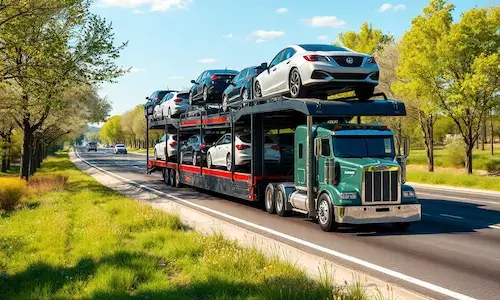
Spring is one of the most balanced seasons for vehicle shipping because weather conditions improve and more carriers return to the road. Demand gradually rises throughout the season as relocations and seasonal travel increase. Spring shipping rates generally run near or slightly above the annual average depending on the month.
March — Shipping rates often remain relatively affordable before peak moving season begins.
April and May — Demand rises as snowbirds return north and families begin preparing for summer moves. Popular interstate routes may experience moderate pricing increases and scheduling backlogs.
Shipping a Car in Summer
Summer is the busiest season for the auto transport industry, with rates running 10–20% above the annual average during peak months. School breaks, vacations, military transfers, and cross-country relocations create extremely high demand for both open and enclosed carriers.
June, July, and August — These are the peak months for car shipping nationwide. Rates are often 10–20% higher than winter averages, and booking at least two weeks in advance is recommended for the best pricing and carrier availability.

Shipping a Car in Fall
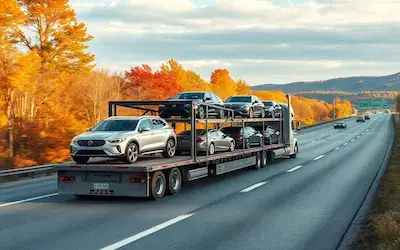
Fall is one of the best times to ship a car because demand slows while weather conditions remain favorable in most parts of the country. Fall shipping typically runs 5–10% below the summer peak, with October and November offering some of the most competitive rates of the year.
September — College-related vehicle shipments can temporarily increase prices on certain routes.
October and November — Two of the most affordable months for car shipping outside of February. Lower demand and strong carrier availability often create competitive pricing for both open and enclosed transport.
How to Get the Cheapest Car Shipping Quote?
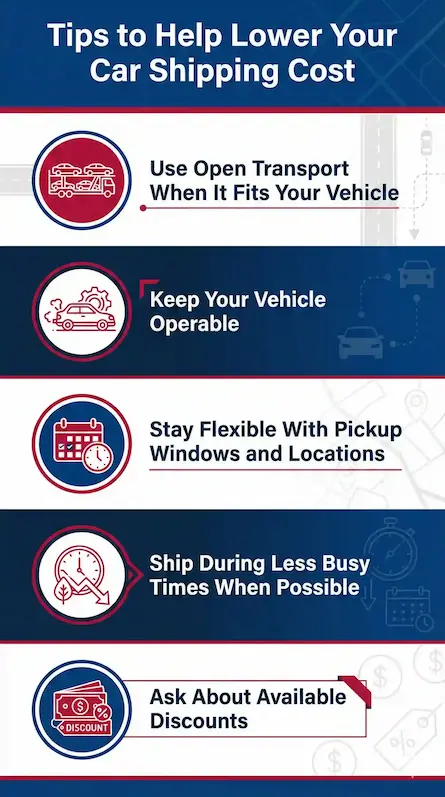
The cheapest way to ship a car is to choose open carrier transport, book two to three weeks in advance, and schedule your shipment in February or October through November. Flexible pickup windows and shipping between major cities also help reduce costs. Open carrier shipping costs 40% less than enclosed transport on most routes.
Why open carrier transport saves you money
Choosing open auto transport instead of enclosed shipping is one of the easiest ways to reduce your total cost. Open carriers are more widely available, transport multiple vehicles at once, and typically cost 40% less than enclosed transport. Customers searching for cheap auto shipping or low-cost car transport often choose open carriers for standard sedans, SUVs, and daily drivers.
When to book for the lowest car shipping rates
Booking your shipment at least two to three weeks in advance helps you secure lower car transport rates. Last-minute bookings usually cost more because carriers have less flexibility to combine routes efficiently along the same trip. For peak summer months and December holiday windows, booking three to four weeks ahead is recommended to lock in the best pricing before carrier availability tightens.
Best months to ship a car for the lowest cost
Timing matters as well. February is typically the cheapest month to ship a car because demand is low and carrier availability increases after the holiday season. October and November are also excellent times to find cheap car shipping quotes before winter demand begins rising again.
How flexibility on pickup and delivery saves money
Being flexible with your pickup and delivery window often unlocks lower car shipping rates because it allows carriers to fit your vehicle into existing routes instead of dispatching a dedicated trip. A 3-5 day pickup window can save $100 to $200 compared to demanding a specific date. Customers willing to meet drivers at a nearby major road or terminal — rather than requiring rural door-to-door pickup — can often reduce their auto transport cost further.
How metro vs rural pickup affects your car shipping cost
Customers located near major metropolitan areas usually pay less because carriers operate more frequently on high-volume interstate routes. Rural pickup and delivery locations typically add $100 to $300 to the total auto transport rate because of extra mileage and limited carrier availability. In some cases, terminal-to-terminal shipping may reduce pricing further compared to remote door-to-door delivery.
Car shipping discounts that can lower your cost
AmeriFreight Auto Transport offers several discounts that can help lower your auto shipping cost, including military discounts, student discounts, senior discounts, first responder discounts, and early booking savings. Eligible customers can stack qualifying discounts in some cases, for example, an active military member booking three weeks in advance may qualify for both the military discount and early booking savings.
How does the AmeriFreight car shipping cost calculator work?
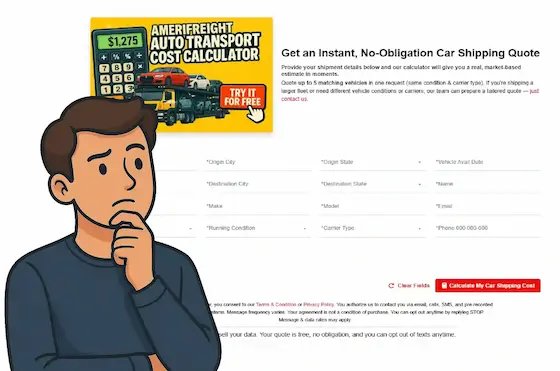
The car shipping cost calculator takes a few key details about your move and turns them into a clear estimate of your car shipping cost.
Enter pickup and delivery locations
Add your vehicle details
Choose your transport type
Select your first available pickup date
Review your instant car shipping estimate

Customer Reviews
See Why Customers Rate AmeriFreight Among the Best Car Shipping Companies
Hear from other customers about their car shipping experience with AmeriFreight.


Know more about our review policy.
Ship a Car to Any State in the United States
- Alabama Car Shipping
- Alaska Car Shipping
- Arizona Car Shipping
- Arkansas Car Shipping
- California Car Shipping
- Colorado Car Shipping
- Connecticut Car Shipping
- Delaware Car Shipping
- Florida Car Shipping
- Georgia Car Shipping
- Hawaii Car Shipping
- Idaho Car Shipping
- Illinois Car Shipping
- Indiana Car Shipping
- Iowa Car Shipping
- Kansas Car Shipping
- Kentucky Car Shipping
- Louisiana Car Shipping
- Maine Car Shipping
- Maryland Car Shipping
- Massachusetts Car Shipping
- Michigan Car Shipping
- Minnesota Car Shipping
- Mississippi Car Shipping
- Missouri Car Shipping
- Montana Car Shipping
- Nebraska Car Shipping
- Nevada Car Shipping
- New Hampshire Car Shipping
- New Jersey Car Shipping
- New Mexico Car Shipping
- New York Car Shipping
- North Carolina Car Shipping
- North Dakota Car Shipping
- Ohio Car Shipping
- Oklahoma Car Shipping
- Oregon Car Shipping
- Pennsylvania Car Shipping
- Rhode Island Car Shipping
- South Carolina Car Shipping
- South Dakota Car Shipping
- Tennessee Car Shipping
- Texas Car Shipping
- Utah Car Shipping
- Vermont Car Shipping
- Virginia Car Shipping
- Washington Car Shipping
- West Virginia Car Shipping
- Wisconsin Car Shipping
- Wyoming Car Shipping
FAQ
Frequently Asked Questions
The cost to ship a car cross country generally ranges from $1,200 to $2,200. Coast-to-coast shipments usually take 7 to 10 days depending on the route. Open transport is cheaper than enclosed transport.
The cost to ship a car cross country generally ranges from $1,200 to $2,200. Coast-to-coast shipments usually take 7 to 10 days depending on the route. Open transport is cheaper than enclosed transport.
Car shipping cost per mile usually ranges from $0.50 to $1.20 for open transport. Short-distance routes often have higher per-mile rates. Longer shipments lower the average cost per mile.
Car shipping cost per mile usually ranges from $0.50 to $1.20 for open transport. Short-distance routes often have higher per-mile rates. Longer shipments lower the average cost per mile.
The cost to transport a car 200 miles typically ranges from $300 to $600. Short-distance shipments have higher per-mile costs due to fixed carrier expenses. Oversized vehicles may cost more.
The cost to transport a car 200 miles typically ranges from $300 to $600. Short-distance shipments have higher per-mile costs due to fixed carrier expenses. Oversized vehicles may cost more.
The cost to ship a car 1,000 miles generally ranges from $700 to $1,200. Pricing depends on vehicle size, transport type, and route demand. Enclosed shipping costs significantly more.
The cost to ship a car 1,000 miles generally ranges from $700 to $1,200. Pricing depends on vehicle size, transport type, and route demand. Enclosed shipping costs significantly more.
Shipping a car is often cheaper than driving long distances when fuel, hotels, meals, and vehicle wear are included. Professional transport also saves time and prevents unnecessary mileage. Cross-country shipping is especially cost-effective.
Shipping a car is often cheaper than driving long distances when fuel, hotels, meals, and vehicle wear are included. Professional transport also saves time and prevents unnecessary mileage. Cross-country shipping is especially cost-effective.
Have a question not answered here? Ask an Expert! Our team of car shipping specialists are here to help. Get personalized answers to your car shipping questions! By choosing AmeriFreight, you can be confident that your car shipping experience will be smooth, efficient, and stress-free. Get your free quote today!
Ready to get an estimate from AmeriFreight
Auto Transport? Call us at (770) 486-1010
Get free quote
