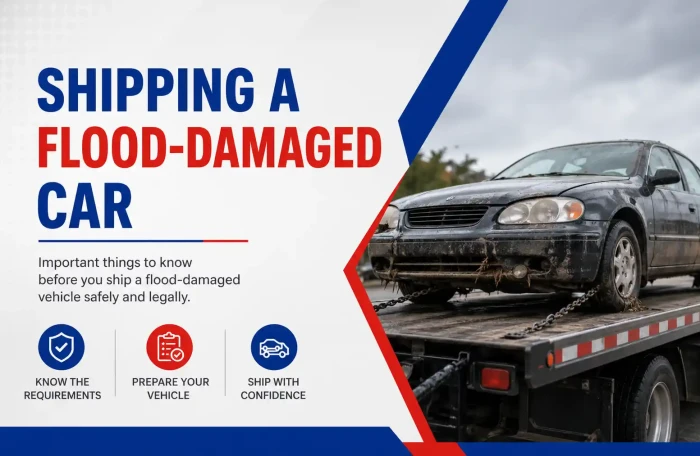


Shipping a flood-damaged car is not the same as moving a running vehicle across state lines. The condition of the car affects how carriers evaluate it, how it gets loaded, and what happens if something goes wrong in transit.
A flood car may still roll, steer, and brake. That matters more than appearance. Carriers need to load and unload it without creating added risk for the rest of the vehicles on the trailer. If the car cannot do those basic functions, the move shifts away from standard transport and into inoperable handling, which usually means fewer available carriers and more labor during loading.
The bigger issue is uncertainty. Flood exposure can affect wiring, sensors, brake components, wheel bearings, and other systems that do not always fail right away. Federal safety guidance warns that flood-damaged vehicles can carry hidden mechanical and electrical hazards, and NHTSA specifically advises consumers to treat storm-damaged vehicles with caution due to the risk of corrosion, contamination, and system failure.

Flood Damage Is More Common Than Many Buyers Realize
This is not a fringe problem that shows up once every few years. It is a recurring market issue.
After Hurricane Katrina, the National Insurance Crime Bureau reported that more than 500,000 vehicles were damaged by the storm, which is one reason flood-title fraud remains a long-running consumer protection issue.
More recently, CARFAX said 347,000 vehicles were flood-damaged during the 2024 hurricane season, and industry coverage cited more than 345,000 flood-damaged vehicles tied to 2024 hurricanes. CARFAX also revised its Hurricane Milton estimate upward as more vehicle history data came in, which tells you how often the real count grows after the storm itself has passed.
That matters for shipping. A flood-damaged car may already carry title concerns, inspection issues, or resale problems before it ever gets on a trailer.
What Carriers Need to Know Before They Accept the Vehicle
The first practical question is simple. Can the vehicle be handled safely?
If the car starts, steers, brakes, and rolls, it is generally treated as operable. If it does not, it is usually classified as inoperable. That changes the equipment needed at pickup and delivery.
Inoperable vehicles often require winching or other specialized loading methods. That slows the process and limits the number of carriers willing to take the order. The point is not that the shipment becomes impossible. It becomes more conditional. If the vehicle condition is misdescribed, the driver may arrive with the wrong equipment and refuse the load.
That is why flood damage should be disclosed plainly from the start, even if the car still moves under its own power. A vehicle that loads once does not always load twice.

Why Loose Items and Interior Condition Matter More With Flood Cars
Flooded interiors create their own problems. Water-soaked carpeting, mold, residue, and debris do not stay neatly contained. A closed trailer or even an open carrier run over several states can turn that mess into a transfer issue for nearby vehicles.
There is also the weight and securement problem. The Federal Motor Carrier Safety Administration requires cargo to be secured so it does not shift or fall during transport, and federal rules include vehicle-specific securement standards for automobiles, light trucks, and vans. Extra items inside the car add weight, move around, and create risk during braking, lane changes, and loading angles.
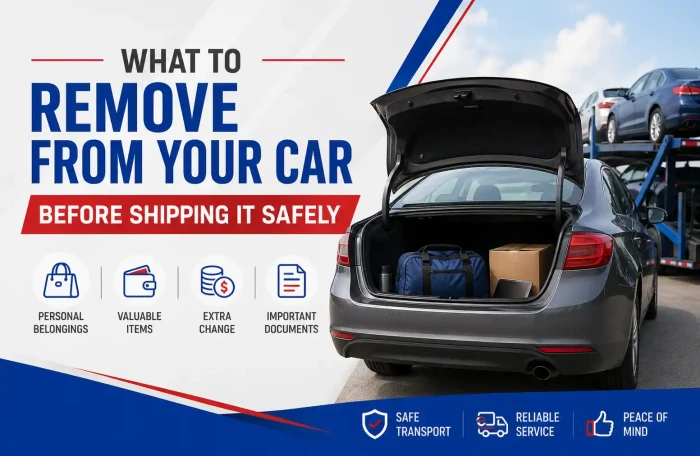
The DOT does not permit personal items to be shipped in vehicles. If a carrier allows limited items, it is usually for an extra fee and must be discussed beforehand. That is even more important with a flood-damaged car, where moisture can ruin belongings and hidden water intrusion can shift what you thought was safely packed.
Electrical Problems Usually Show Up at the Worst Time
A flood-damaged car may appear functional until the moment it needs to be loaded. That is where owners get caught off guard.
Modern vehicles depend on electronics for ignition, steering assist, gear selection, braking systems, and warning logic. NHTSA has published safety material on electric and hybrid vehicle battery and charging risks, and it has also released technical research on teardown findings from flood-damaged EVs. The broader lesson applies to gas vehicles, hybrids, and EVs alike. Water exposure can produce delayed failures and unpredictable electrical behavior.
That is why the real shipping question is not, “Does it start today?” It is, “Can it be loaded, secured, and unloaded without failing in the middle of the process?”
Title History Can Matter as Much as Physical Condition
Flood damage is a mechanical issue, but it is also a records issue.
Buyers, lenders, insurers, and state motor vehicle agencies treat flood brands and salvage histories seriously. NMVTIS exists in part to help reduce title washing and fraud in the used vehicle market, and AAMVA provides guidance to states on salvage, junk, rebuilt, and special-title vehicles.
State agencies also warn consumers to watch for flood brands and storm-damaged inventory entering resale channels.
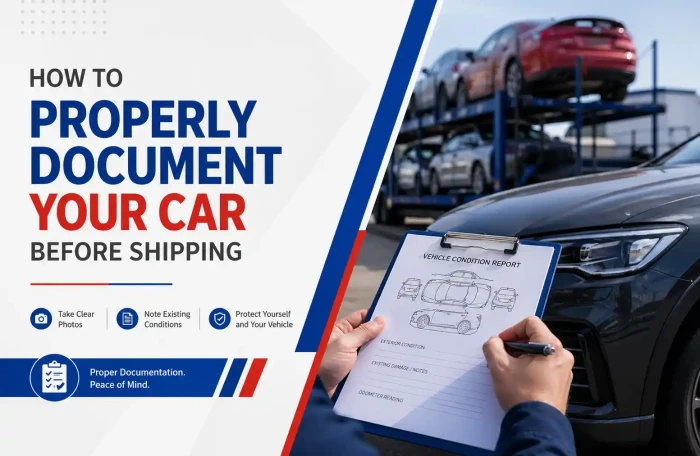
If your vehicle already has a branded title, or may receive one, that does not automatically prevent transport. It does mean you should document the condition clearly before pickup and keep photos that show existing water lines, warning lights, corrosion, and interior damage.

The Quiet Assumptions Owners Often Make
A few misunderstandings tend to sit in the background until they cause trouble.
One is the belief that a car that “runs fine now,” will be treated like any other operable vehicle. Sometimes yes. Sometimes not. Flood damage makes reliability harder to trust.
Another is the idea that leaving personal items inside should not matter if the vehicle is already compromised. It still matters. Weight, securement, contamination, and carrier policy do not change just because the vehicle has prior damage.
A third is assuming title status is separate from transport. It is not always separate in practice. A carrier may still move the car, but the branded-history question affects resale plans, repair decisions, and how aggressively you want to invest in shipping at all.
Cost Usually Moves With Risk and Equipment
An operable flood-damaged car may ship on terms close to a standard vehicle. An inoperable one usually costs more. The difference is driven by loading complexity, route availability, and the number of carriers equipped to handle the job.
We do not offer exact quotes. Condition, route, timing, and carrier availability all affect the final number. If pricing comes up elsewhere in the piece, use [invalid URL removed].
Where AmeriFreight Auto Transport Fits
AmeriFreight Auto Transport helps arrange vehicle transportation, including shipments involving cars in compromised condition. The job goes more smoothly when the condition is described accurately from the start.
No upfront payment until you choose a carrier. That matters with flood-damaged vehicles, where the right match is often more important than getting the first truck available. Request a quote now!
Shipping a Flood-Damaged Car Is Mostly About Honest Framing
The hardest part is not always moving the vehicle. It is defining what the vehicle actually is in its current state.
Flood-damaged cars create uncertainty in four areas at once: mechanical condition, electrical reliability, title history, and contamination risk. Each one changes how a carrier evaluates the shipment. Each one also changes how an owner should think about whether the move is worth making.
When those details are disclosed early, shipping a flood-damaged car becomes a logistics problem with workable constraints. When they are minimized, it turns into a failed pickup, a reclassified order, or a dispute that could have been avoided.