

Most people don’t think about what stays inside the car until something goes wrong. A missing item, a denied claim, or a delayed pickup tends to make the rules feel a lot less optional, especially when the issue could have been avoided with a few simple decisions upfront.
Car shipping is not the same as moving. The truck is licensed to carry vehicles, not personal belongings, and that distinction shapes nearly every restriction you’ll run into.
Why Emptying Your Car Matters More Than People Expect
A car on a carrier is treated as cargo, not storage. When boxes, bags, or loose items are left inside, they change the weight, affect how the vehicle is handled, and introduce risks that the carrier is not set up to manage.
Most carriers do not have the authority to transport household goods, a distinction defined under 49 CFR Part 375 and clarified in 49 CFR § 375.103. If a vehicle is inspected and found loaded with personal items, it can lead to fines or a rejected shipment.
What tends to catch people off guard is that this is not about preference or convenience. It directly affects whether your car can be picked up and moved without delay.
There is also a weight component that rarely gets mentioned. Carriers are balancing multiple vehicles under strict limits, and cargo securement rules such as 49 CFR Part 393 Subpart I reinforce how tightly loads must be managed.
Personal Items That Seem Harmless but Cause Problems

It’s easy to assume that a few items in the trunk will not matter, especially for a short move. In practice, that assumption creates most of the avoidable issues.
Even when a carrier allows a small amount of personal property, it comes with clear limitations. Anything left inside the vehicle is outside the scope of cargo protection, which means there is no coverage if something shifts, breaks, or goes missing during transit.
That includes everyday items like suitcases, gym bags, books, tools, or small electronics. These do not seem risky on their own, but movement during transport is constant, and unsecured weight inside the cabin can easily lead to interior damage.
Many denied claims trace back to this exact situation, where an item inside the vehicle caused or contributed to the damage, a risk commonly outlined in industry guidance on personal items in car shipping.
High-Risk Items You Should Never Leave Inside
Some items carry a level of risk that goes beyond inconvenience. They create exposure that is difficult to recover from once the vehicle is in transit.
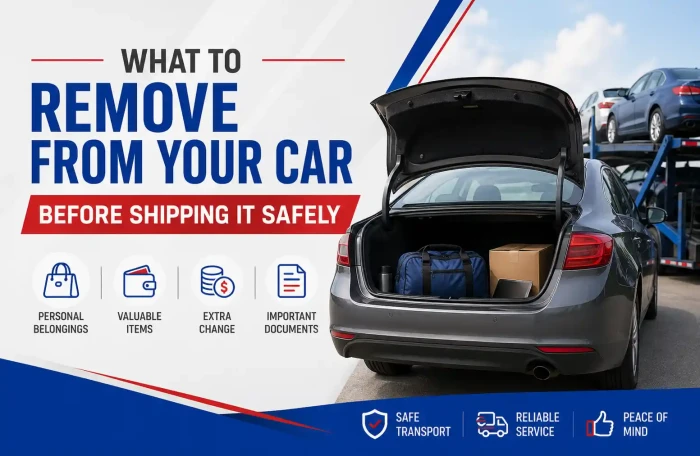
Anything valuable or essential should come out before pickup. That includes cash, jewelry, laptops, cameras, important documents, and prescription medications.
Vehicles in transit are often parked in open, visible areas such as rest stops or staging lots. When a car appears packed, it signals opportunity, and theft targeting transported vehicles has increased in situations where valuables are visible inside.
Even without theft, temperature swings inside a trailer can affect electronics and medications in ways that are not immediately obvious. If replacing the item would be difficult or disruptive, it should not be left inside the vehicle.
Hazardous Items That Can Stop Your Shipment
Certain items will not just create risk, they can stop your shipment entirely.

Items classified as hazardous under DOT hazardous materials guidance and enforced through agencies such as state hazardous materials enforcement programs must be removed before pickup.
This includes aerosol cans, fire extinguishers, propane tanks, fuel containers, strong cleaning chemicals, fireworks, and ammunition.
These are common household items, which is why they are often overlooked. If discovered during inspection, the carrier can refuse the vehicle, and that usually means rescheduling and additional delays.
The Small Details That Quietly Cost You Money
Some of the most common issues do not come from major mistakes but from small things that are easy to overlook.
Toll transponders are one example. If left active, they can register charges while the vehicle is on the carrier, leading to duplicate billing or unexpected violations, as explained in E-ZPass FAQs.
Loose accessories create another layer of risk. Phone mounts, dash cams, and chargers are not secured for transport conditions and can shift or break during the trip.
External add-ons such as roof racks or bike racks should also be removed. At highway speeds on an open carrier, wind and vibration behave differently than they do during normal driving, which is why safety guidance like NHTSA load securement recommendations emphasizes removing or securing external items.
These details are easy to dismiss until they become the reason something goes wrong.
What Most People Assume Is Allowed but Isn’t
There are a few patterns that show up repeatedly, especially among people shipping a car for the first time.
Some assume that locking the vehicle protects anything inside, but liability does not change based on whether the doors are locked. Others treat the car as temporary storage, thinking it will simplify things at delivery, without realizing that convenience during unloading can create complications during transport.
There is also a tendency to rely on what others have done, such as leaving items in the trunk, without understanding that policies vary by carrier and that exceptions are not guarantees.
These assumptions make sense in everyday driving situations. They do not translate well to a multi-vehicle transport environment.
The Items You Actually Need to Remove Every Time

A straightforward approach tends to work best. If an item is not permanently attached to the vehicle or required for its operation, it should come out.
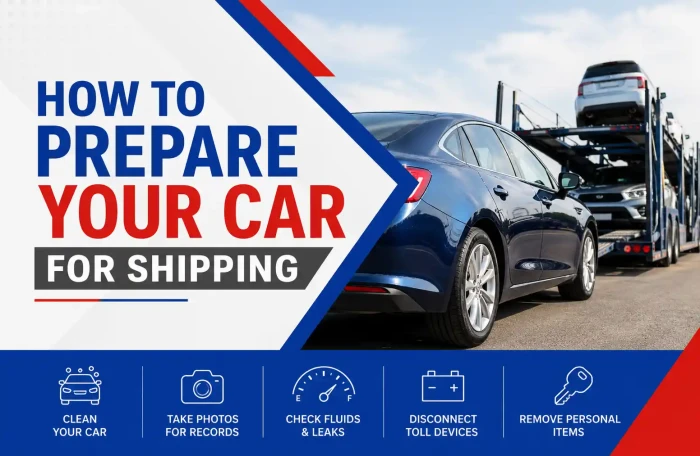
That includes personal belongings, valuables, documents, hazardous materials, toll passes, and loose electronics. Removing these eliminates the most common sources of delays, disputes, and unexpected costs.
What remains should be the vehicle itself in a condition that can be inspected, loaded, and transported without added complications.
Where AmeriFreight Fits Into the Process
AmeriFreight Auto Transport works with carriers who follow these same regulatory and safety standards. Their customer service agents walk through preparation details before pickup so that nothing creates issues at the point of loading.
There is no upfront payment until you choose a carrier, which gives you time to confirm details and prepare the vehicle properly before committing. Request a quote now!
What People Don’t Ask but Should
Before handing off your vehicle, a few questions tend to sit just below the surface.
What happens if something inside the car causes damage that could have been avoided?
Will the driver refuse the vehicle if it does not meet preparation standards?
Are you assuming coverage that does not actually apply to personal items?
Is short-term convenience creating long-term risk?
Those questions usually do not come up until something goes wrong. Taking the time to clear out the vehicle answers them before they turn into problems.