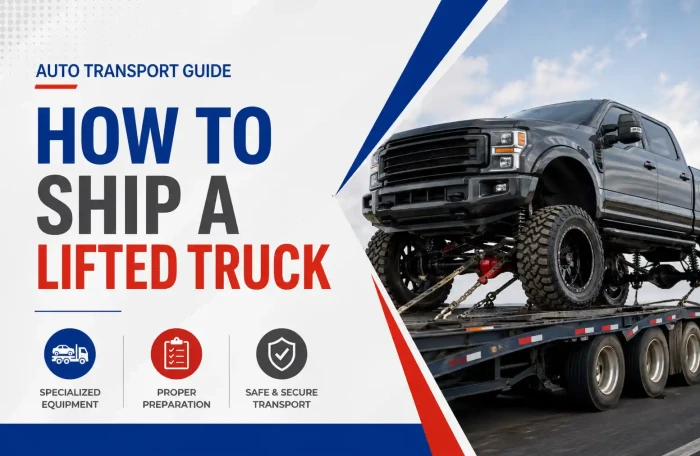


Shipping a lifted truck comes down to three decisions. Measure it correctly, match it with the right trailer, and work with a carrier that can handle oversized or modified vehicles.
If those three pieces are handled upfront, the rest of the process looks similar to a standard shipment. If they are not, the job can stall at pickup, cost more than expected, or require last-minute changes.
Most issues trace back to one thing. The truck is not treated like a standard vehicle when it should not be.
Shipping Starts With Accurate Measurements
The lift itself is only part of the equation. Total height, width, and added weight from modifications all matter.
A truck that exceeds 8 feet 6 inches in width is considered oversized. Height limits vary by route, but many areas operate close to 13 feet 6 inches of clearance. That includes both the truck and the trailer it sits on.
This is where owners often miscalculate. They measure the truck alone and forget the trailer adds several feet. That mistake can push the load into permit territory without warning.
Once a truck is classified as oversized, everything changes. Routing, equipment, and pricing all shift.

Choosing the Right Trailer Makes or Breaks the Move
Most standard carriers cannot load lifted trucks due to height restrictions.
Flatbeds are often used when width is the main issue. Step-deck trailers help when height becomes a concern by lowering part of the deck. For extreme lifts, lowboy or removable gooseneck trailers are used because they sit much closer to the ground.
Each option solves a different problem. It also changes how much space the truck takes up.
A lifted truck can occupy the same space as two standard vehicles. That is one reason pricing often runs 40 to 60 percent higher compared to a regular pickup.

Permits and Routing Affect Timing More Than Driving
Distance still matters, but oversized classification adds another layer.
Each state may require a permit, and those permits are tied to approved routes. If a bridge clearance or construction zone creates a conflict, the route must change.
That adds miles and planning time.
Permit fees themselves are usually modest, often starting between $15 and $60 depending on the state, with added charges based on size.
The real impact is coordination. The shipment cannot move freely until every required permit is secured.
Securement Is Different for Lifted Trucks
The higher the truck sits, the more stability becomes a concern.
Standard tire straps may not fit oversized tires. Carriers often use chains and binders attached directly to the frame. This reduces movement by compressing the suspension.
It is effective, but it requires experience. Improper securement is one of the main causes of damage with modified vehicles.
Insurance Does Not Always Reflect Modifications
Carrier coverage is typically based on factory value.
Aftermarket parts are not always fully accounted for. A heavily modified truck may carry far more value than what the carrier policy assumes.
This is where documentation matters. Photos and receipts help establish value if something goes wrong.
The bill of lading is critical. It records the condition at pickup and delivery. Missing details there can affect any claim.
Loading Is Where Risk Shows Up First
Lifted trucks are harder to load than standard vehicles.
Approach angles can cause scraping, especially with long wheelbases or custom bumpers. Carriers may use arched ramps or lift gates to reduce that risk.
Most damage occurs during loading, not while driving. That is where careful handling matters most.
What Actually Drives Cost
Miles are only part of the equation.
A lifted truck increases cost through space, weight, and complexity. It may take up more room, require specialized equipment, and trigger permits.
Fuel usage also increases with heavier and less aerodynamic vehicles. Carriers factor that into pricing.
Preparing the Truck Before Pickup
Small steps here prevent delays later.
Keep fuel between one-eighth and one-quarter tank to reduce weight.
Remove or secure accessories like antennas or light bars.
Clean the truck so the inspection is accurate.
Take clear photos from all angles, especially of modified parts.
Working With AmeriFreight Auto Transport
AmeriFreight Auto Transport helps coordinate shipments for lifted trucks by matching the vehicle’s size with the right carrier and equipment.
No upfront payment until you choose a carrier.
Open and enclosed transport options are available depending on how much protection you want.
Door-to-Door Service (Location Permitting) is available when access allows. If space or road conditions limit access, you may meet the carrier at a nearby location.
Customer service agents help review measurements and modifications before dispatch so there are fewer surprises at pickup.

Disclaimer
Transport conditions vary based on road clearances, equipment limits, and regulatory approvals that may not be visible at booking. Final arrangements depend on carrier acceptance. Vehicle modifications can affect handling and eligibility. Customers should confirm all specifications before shipment to avoid delays, reclassification, or changes in transport method.