


Your 2026 Guide to How Flatbed Auto Transport Works
Open carriers may be the industry standard, but they’re not built for every car. When a vehicle is oversized, too low to the ground, or not in running condition, flatbed auto transport is often the only solution. That difference can save you time, money, and the risk of damage if you know when to choose it.
Think about the vehicles that don’t fit the “average.” A lifted truck, a classic car with delicate ground clearance, or an ATV headed to the mountains. These aren’t vehicles you want squeezed onto a standard trailer. A flatbed gives them the space and support they need.
In this article, you’ll learn how flatbed auto transport works and when it makes sense to use it. We’ll walk through the process and show you how it helps keep your vehicle safe. By the time you finish, you’ll have a clear idea if this service is the right choice for your car.
What You’ll Learn in This Guide
Coming up in this post, we’ll answer three key questions:
When should you choose flatbed auto transport instead of open or enclosed carriers?
How does the flatbed transport process actually work, from loading to delivery?
What does flatbed auto transport cost in 2026?
Overview
What Flatbed Auto Transport Is

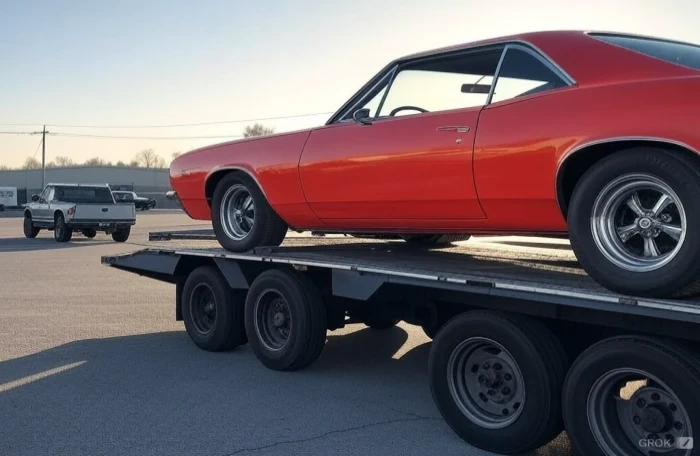
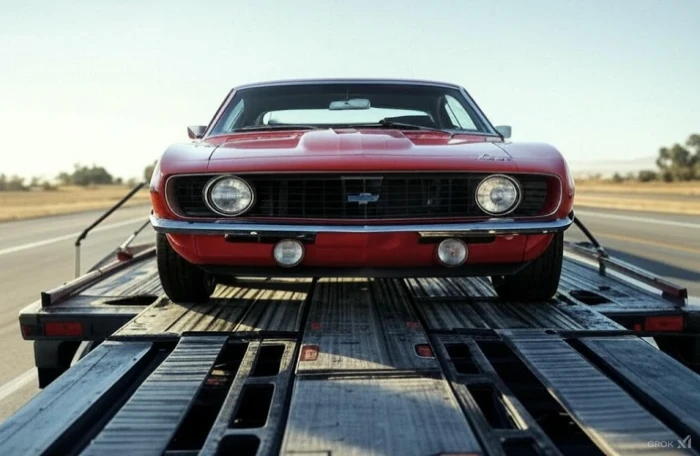
Flatbed auto transport is a shipping method that uses a flat, open trailer with no sides or roof to carry vehicles. Unlike open carriers that stack several cars on two levels, or enclosed carriers that protect cars inside a covered trailer, a flatbed is a single-level platform.
Flatbed trailers: One-level platforms with no sides or roof.
Open carriers: Two-level trailers carrying multiple cars, exposed to the elements.
Enclosed carriers: Covered trailers that shield vehicles from weather and road debris.
When to Use Flatbed Auto Transport

Flatbed auto transport isn’t for every situation, but it’s the right choice when your vehicle doesn’t fit standard trailers.
Oversized vehicles:
Dually trucks with wide rear axles.
Lifted SUVs or trucks that are too tall for open carriers.
Inoperable vehicles:
Cars that won’t start, roll, or steer.
Vehicles needing winches or special equipment for loading.
Classic, exotic, or specialty cars:
Low-clearance sports cars that could scrape on ramps.
Restored or custom cars that need careful handling.
When other carriers aren’t possible:
Areas where large open or enclosed trailers can’t access.
Unique shapes or sizes that don’t fit on standard haulers.
Flatbed transport fills the gap when open or enclosed carriers aren’t a safe or realistic option. It’s about matching the right trailer to the right vehicle.
Flatbed vs. Other Transport Methods
Not every car needs a flatbed
If your vehicle is in good condition and fits standard dimensions, AmeriFreight Auto Transport has you covered. Choose open transport for a cost-effective option or enclosed transport for extra protection.
How Flatbed Transport Works

Flatbed auto transport follows a step-by-step process that makes shipping safe and straightforward.
1. Booking the transport
You schedule the pickup and provide details about your vehicle’s size, condition, and location.
The carrier matches your vehicle with a flatbed suited for the job.
You schedule the pickup and provide details about your vehicle’s size, condition, and location.
The carrier matches your vehicle with a flatbed suited for the job.
2. Loading the vehicle
Inoperable cars are winched onto the flatbed.
Drivable vehicles are carefully driven up ramps.
Special tools like wheel nets and straps help position the car securely.
Inoperable cars are winched onto the flatbed.
Drivable vehicles are carefully driven up ramps.
Special tools like wheel nets and straps help position the car securely.
3. Securing the vehicle
Straps, chains, and wheel nets hold the car in place.
Safety checks confirm the vehicle won’t shift during transport.
Straps, chains, and wheel nets hold the car in place.
Safety checks confirm the vehicle won’t shift during transport.
4. Transport on the road
The driver moves the vehicle to its destination.
Flatbeds are often more flexible than large carriers, making it easier to access tight areas.
The driver moves the vehicle to its destination.
Flatbeds are often more flexible than large carriers, making it easier to access tight areas.
5. Delivery
The car is unloaded safely at the drop-off point.
You inspect the vehicle and confirm its condition.
The car is unloaded safely at the drop-off point.
You inspect the vehicle and confirm its condition.
Flatbed shipping uses strong equipment like winches, wheel nets, and heavy-duty straps to keep your vehicle stable. This extra care helps secure oversized, delicate, or inoperable vehicles during the trip.
What is The Price For Flatbed Car Shipping?
On average, flatbed shipping costs about $1.25 to $2.00 per mile, though the exact price depends on distance and other factors.
Here’s a simple breakdown:
Short trips (up to 500 miles): $1.00 – $2.00 per mile
Medium trips (500 to 1,500 miles): $0.93 – $1.50 per mile
Long trips (over 1,500 miles): $0.58 – $1.25 per mile
Factors Affecting the Flatbed Pricing
Flatbed auto transport costs more than standard open carriers. Prices depend on several factors:
Vehicle size and weight: Larger vehicles take up more space and require stronger equipment.
Distance: The longer the trip, the higher the total cost.
Pickup and delivery location: Rural areas may add extra fees due to limited access.
Fuel prices: Rising fuel costs directly affect per-mile pricing.
Seasonal demand: Prices often rise in summer and winter, when transport requests peak.
Preparing Your Vehicle for Flatbed Transport

Preparing your vehicle before pickup helps prevent delays and avoid problems during shipping.
1. Clean your vehicle
Wash the exterior so existing scratches or dents are easy to spot.
A clean surface also makes inspection photos clearer.
2. Remove personal items
Take out bags, tools, and valuables from the car.
Loose items can shift and cause damage during transport.
3. Take photos
Capture the vehicle from all angles before pickup.
Photos serve as proof of its condition if a damage claim is needed.
4. Talk with the carrier
Share details about the vehicle’s size, modifications, or condition.
Let the driver know if it doesn’t run, roll, or steer.
5. Coordinate pickup and delivery windows
Confirm times in advance to avoid scheduling issues.
Be available or arrange for someone to hand off the keys.
Taking these steps gives you peace of mind and helps the driver handle your vehicle safely.
Challenges and Solutions
Future of Flatbed Auto Transport

Flatbed auto transport is moving from a rare service to a more common solution, especially as vehicles keep getting bigger and more specialized.
Oversized vehicles on the rise
More people are buying lifted trucks, heavy-duty SUVs, and larger specialty vehicles. Trucks are becoming popular, with 170,239,357 private and commercial truck registrations in 2022 alone.
These often require flatbeds because standard trailers can’t handle them.
More people are buying lifted trucks, heavy-duty SUVs, and larger specialty vehicles. Trucks are becoming popular, with 170,239,357 private and commercial truck registrations in 2022 alone.
These often require flatbeds because standard trailers can’t handle them.
Growth in specialty transport
Classic car restorations and custom builds are increasing.
Owners often choose flatbeds for careful handling and extra space.
Classic car restorations and custom builds are increasing.
Owners often choose flatbeds for careful handling and extra space.
Ready to Roll with Flatbed Auto Transport
Flatbed auto transport gives you a safe, flexible way to move vehicles that don’t fit standard carriers. Whether it’s a lifted truck, an inoperable car, or a classic build, flatbeds make the job possible. With the right preparation and carrier, your vehicle can be shipped smoothly and with confidence.
Have a Vehicle That Doesn’t Fit The Standard Mold?
AmeriFreight Auto Transport offers reliable flatbed shipping for oversized, inoperable, and specialty vehicles. Whether it’s a lifted truck, low-clearance sports car, or heavy equipment, we connect you with vetted, insured carriers to get it moved safely and securely.
Get a quote today and ship with confidence.
Frequently Asked Questions (FAQs)
What types of vehicles need flatbed auto transport?
Flatbeds are often used for oversized trucks, lifted SUVs, inoperable cars, heavy equipment, and specialty vehicles that won’t fit standard carriers.
Is flatbed auto transport safe?
Yes. Drivers use heavy-duty straps, chains, and wheel nets to secure vehicles. While the car is exposed to the weather, the equipment keeps it stable during transport.
Can flatbeds transport classic or exotic cars?
Yes, especially if the car is too low or wide for open or enclosed trailers. Many owners of restored or custom vehicles prefer flatbeds for the extra space.
Are there any companies offering flatbed transport for oversized vehicles?
Yes, many auto transport companies, including AmeriFreight’s carrier network, offer flatbed services for oversized vehicles like dually trucks, lifted SUVs, and RVs.
What if my vehicle is damaged during flatbed shipping?
Standard insurance applies, and AmeriFreight also offers an optional gap protection to cover areas standard policies may not include.