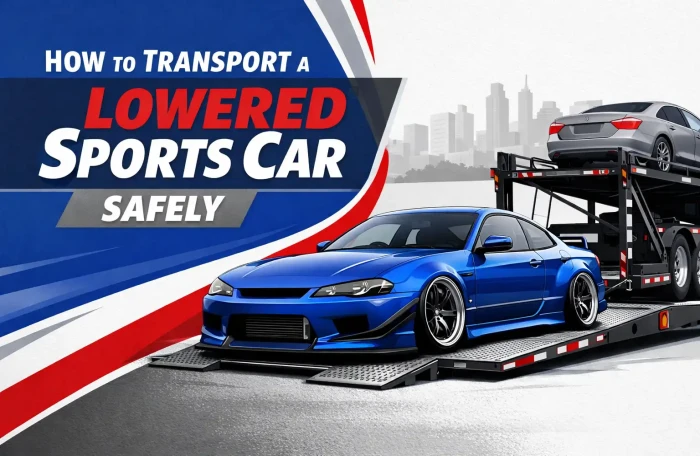


Shipping a lowered sports car requires specialized handling to prevent underbody damage. Use enclosed transport with a hydraulic lift gate, ensure proper ground clearance, and confirm soft-tie securement. Choose a carrier experienced with low-clearance vehicles, document the car’s condition, and prepare it carefully to reduce loading risks and transit stress.
A lowered sports car behaves differently before it even leaves your driveway. The same design choices that improve grip and aerodynamics create a problem the moment the car meets a loading ramp.
Once ground clearance drops below about four inches, the margin for error disappears. A standard carrier ramp sits at an angle that works for most vehicles. For a lowered car, that angle turns into a contact point. Front splitters scrape. Midsections catch. Rear diffusers drag.
That is the part many owners underestimate. The risk is not during the drive across the country. It starts during the first few feet of loading.
The Real Risk Is Geometry, Not Distance
Distance affects price. Geometry affects damage.
Every lowered car has three vulnerable points during loading. The front approach, the center breakover, and the rear departure. If the angle is too steep, the car can “high-center,” meaning the middle of the chassis hits the peak of the ramp while the wheels lose support.
Standard ramps often sit around a 20-degree incline. That works fine for vehicles with 6 to 8 inches of clearance. A lowered sports car typically needs something closer to 6 to 10 degrees to avoid contact.

That difference is not small. It is the difference between a clean load and a cracked underbody panel.
Why Enclosed Transport Stops Being Optional
Most cars move on open carriers. It is efficient and widely available. It is also where problems start for low-clearance vehicles.
Open trailers rely on fixed ramps and shifting deck angles. Drivers often compensate with wooden boards to reduce the incline. That workaround depends on judgment, balance, and time. Small mistakes here tend to show up later as damage.
Enclosed transport changes the equation. Not just because it protects from weather, but because it usually comes with the equipment lowered cars actually need.
Hydraulic lift gates matter more than the trailer walls. They lift the car flat instead of forcing it up an incline. That removes the angle problem entirely.
Air-ride suspension inside the trailer also plays a role. Lowered cars have stiff suspensions. They do not absorb road vibration well. A trailer that absorbs that movement reduces stress on the car during transit.

If the car has expensive aero parts, aftermarket suspension, or a very low stance, enclosed transport is not a luxury decision. It is a risk-averse decision.
Cost Reflects the Equipment, Not Just the Distance
Shipping a lowered sports car costs more. The reason is not just protection. It is the equipment and time required to move it safely.
Enclosed transport can run 30 to 60 percent higher than open shipping. When a hydraulic lift gate is required, the cost can climb even further.
That premium often feels steep until you compare it to repair costs. A damaged carbon fiber splitter or undercarriage component can exceed the cost difference in a single incident.
How the Car Itself Affects the Outcome
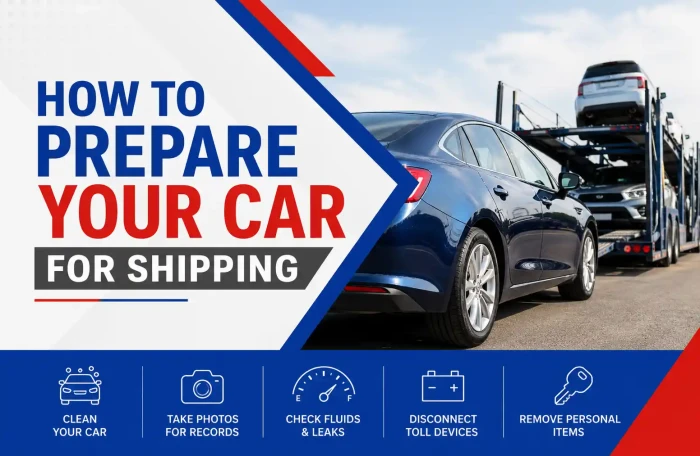
The condition of the car before pickup directly affects loading success.
Small changes matter more than people expect.
Tire pressure is one of them. Slightly underinflated tires can lower the car enough to create contact during loading. That half-inch difference can be the deciding factor.
The adjustable suspension should be raised to its highest setting. Factory lift modes should be activated if available. Removable aero parts should be taken off if they sit low and are exposed.
Drivers also need to know how the car behaves. Some vehicles lower automatically when turned off. Others require specific modes to stay elevated. If the carrier does not know this, the car can drop height mid-process.
Securement Is Where Damage Quietly Happens
Chains and hooks are common in standard transport. They do not work well with lowered cars.
There is often no safe place to attach them without contacting body panels or suspension components. Even if attached correctly, chains create a rigid connection that transfers stress during braking or road movement.
Soft-tie wheel straps solve that problem. They secure the car by the tires instead of the frame. That allows the suspension to move naturally during transit and reduces stress on the structure.

This is one of those details that rarely shows up in quotes but has a real impact on the outcome.
Documentation Decides What Happens If Something Goes Wrong
Most shipments arrive without issue. When something does go wrong, the outcome depends on documentation.
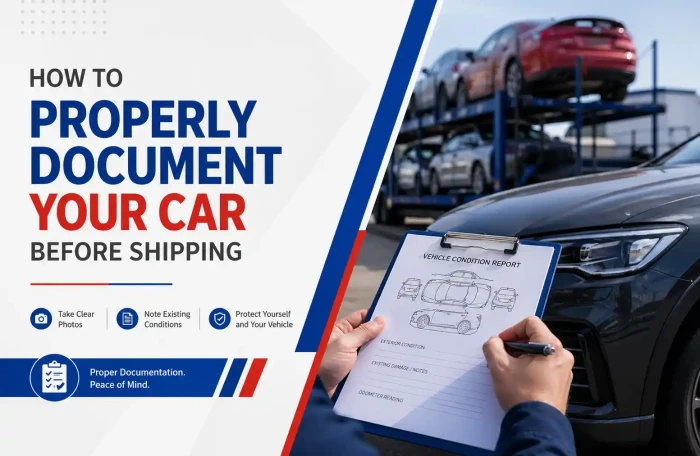
The Bill of Lading records the car’s condition at pickup and delivery. It is not just paperwork. It is the baseline for any claim.
Detailed photos matter. Not just the exterior, but low points like the splitter, underbody, and exhaust. Without that, it becomes difficult to prove when damage occurred.
Under federal law, carriers are generally responsible for damage during transport. That responsibility still depends on proving the condition before shipment.
What People Usually Get Wrong
Most issues come from assumptions that seem reasonable but fail in practice.
One assumption is that any carrier can handle a lowered car with enough care. In reality, equipment matters more than intent.
Another is that the trip itself is the risky part. Loading and unloading are where most problems occur.
There is also a tendency to focus on price first. With standard vehicles, that can work. With low-clearance cars, price often reflects whether the carrier has the right tools.
A quieter concern sits underneath all of this. Owners often assume their car is “not that low.” Until it meets a ramp.
Where AmeriFreight Auto Transport Fits In
AmeriFreight Auto Transport helps coordinate shipments where standard approaches do not work well. Lowered sports cars fall into that category.
The key is matching the vehicle with carriers that use the right equipment, especially lift gates and proper securement methods. No upfront payment until you choose a carrier.
Door-to-Door Service (Location Permitting) is available, but access depends on whether a large carrier can safely reach your location.
Customer service agents guide the process, but the final outcome still depends on the carrier’s equipment and preparation.
Disclaimer
Transporting a lowered sports car involves added risk due to limited ground clearance and specialized handling needs. Equipment, carrier capability, and vehicle condition all affect outcomes. Services are subject to location and carrier availability. No upfront payment until you choose a carrier. Always review transport terms, inspection records, and carrier details before shipment.