

Shipping a car bought on Autotrader starts with arranging vehicle transport through a licensed carrier or auto transport broker after your purchase is finalized. From that point on, each decision affects your total cost, expected timing, and the level of risk you carry until the vehicle is delivered.
Autotrader functions as a marketplace that connects buyers with dealerships and private sellers. It does not operate trucks, manage fleets, or handle car carrier logistics directly.
Because of that, shipping a car bought online becomes a separate step that you must manage. You are coordinating the movement of a high-value asset across states, often without seeing it in person first. That alone raises the importance of making informed decisions early.

What Car Shipping Really Costs
Autotrader car shipping does not come with a fixed price. Most shipments fall between $500 and $2,000, depending on distance, vehicle type, transport method, and demand.
Short routes tend to cost more per mile, often around $1.00 to $2.00 per mile, because setup and fuel costs are spread over fewer miles. Longer routes are more efficient, which is why cross-country shipping often costs around $1,200 to $1,500.
Vehicle size matters. Sedans are easier to load and typically cost less, while SUVs and trucks tend to cost more due to their weight and space requirements. If you choose an enclosed vehicle carrier for added protection, expect a higher total, often in the $1,200-$2,000 range.
Timing also affects pricing. Summer demand can raise rates by 10 percent to 20 percent, while less busy periods tend to be more stable. Expedited shipping adds roughly $200 to $500 to prioritize pickup, but it does not lock in exact dates.
Open vs. Enclosed Vehicle Carrier
Open car transport is the most common option. It allows carriers to move several vehicles at once, which keeps pricing lower and availability higher. The tradeoff is exposure. Weather, dust, and road debris are part of the journey. While major damage is uncommon, minor cosmetic wear can happen.
An enclosed vehicle carrier protects the car from those elements. This option typically costs 30 percent to 60 percent more and is often used for classic, luxury, or specialty vehicles where condition matters more than cost.

Timing Works Within Windows
Shipping timelines depend heavily on how the pickup is scheduled. The pickup date is not only a starting point. It sets the pace for the entire shipment.
Most carriers work within a pickup window rather than a fixed appointment. In most cases, that window ranges from one to five days. This flexibility allows carriers to group vehicles along efficient routes, adjust for traffic or weather, and manage multiple shipments at once.
A narrower or rigid pickup expectation can limit carrier options and may increase costs. Being flexible with that window often improves your chances of getting a faster match with a carrier and a more competitive rate.
A well-planned pickup window keeps the rest of the shipment on track. When that first step is handled with flexibility and clear coordination, delivery timelines tend to follow more smoothly.
Private Seller vs. Dealership Shipping
Shipping from a dealership is usually more straightforward. Staff are familiar with coordinating vehicle transport services and can accommodate large carriers.
Private sellers require more involvement. You will need to coordinate directly, confirm availability, and ensure the pickup location works for a carrier. If access is limited, you may need to arrange a nearby meeting point. This added coordination is where delays are most likely to occur.
The Inspection That Determines Responsibility
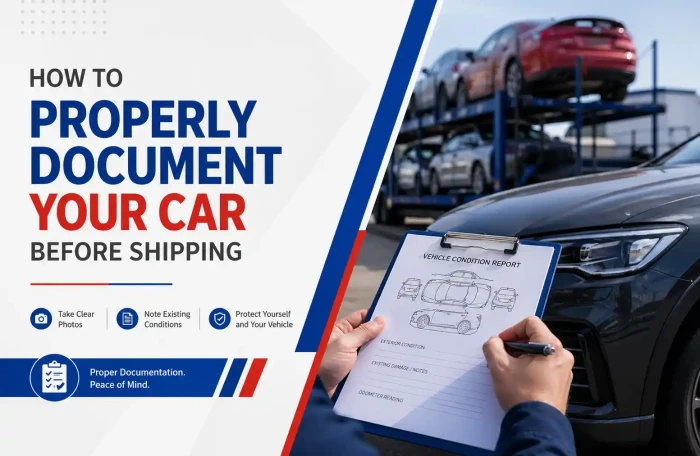
The Bill of Lading (BOL) is the most important document in the process. At pickup, the driver records the vehicle’s condition. At delivery, you compare that record with the vehicle’s current state. Any damage must be documented on the BOL before the driver leaves.
Carrier cargo coverage typically ranges from $100,000 to $350,000 per load and is shared across all vehicles on the trailer. Federal requirements include at least $750,000 in liability coverage, but that applies to third-party incidents, not directly to your vehicle.
What You Can Place Inside the Vehicle
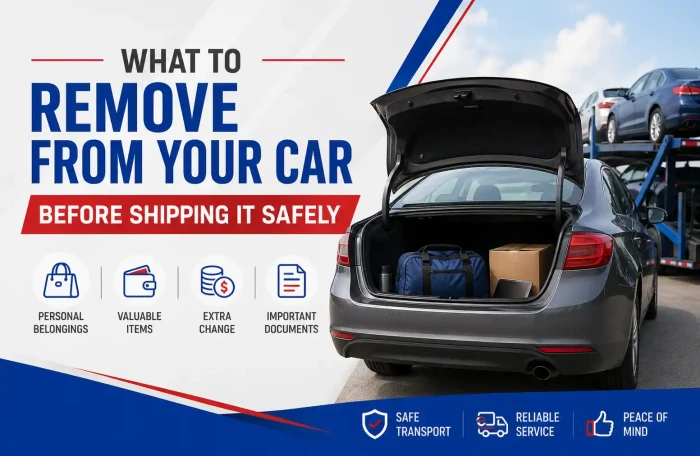
Many buyers assume they can pack personal items inside the car. The Department of Transportation does not permit personal belongings in vehicles during transport. Some carriers may allow a limited amount, often around 100 lbs, for an additional fee, but this must be arranged in advance. If not discussed in advance, those items may be removed before shipping.
Verifying the Carrier Reduces Risk
Checking carrier credentials is one of the most effective ways to avoid problems. You can verify MC and DOT numbers through the FMCSA SAFER system. This confirms that the carrier has valid operating authority and is authorized to transport interstate. Any mismatch between provided details and official records should be treated as a warning sign.

Where the Process Is Won or Lost
Most issues in Autotrader car shipping come from early decisions rather than the transport itself. Choosing the wrong transport type, overlooking how demand affects pricing, skipping carrier verification, or rushing through inspection can all lead to avoidable problems. Treat shipping as part of the purchase decision. That shift alone leads to a smoother and more predictable outcome.
How AmeriFreight Auto Transport Helps
AmeriFreight Auto Transport handles the key parts of shipping your car after buying on Autotrader. You enter your shipment details, get a market-based estimate, and review your options before moving forward. No upfront payment until you choose a carrier.
Your shipment is then matched with a vetted carrier. Each one is checked for proper licensing, insurance, and a solid service record, so you are not dealing with unknown or unverified providers.
Once booked, AmeriFreight Auto Transport coordinates pickup and manages communication among you, the seller, and the carrier. Optional AFTA plans are also available to help with certain out-of-pocket costs if a claim is not fully covered.
Disclaimer
AmeriFreight Auto Transport is not affiliated with or endorsed by Autotrader. This article is provided for informational purposes only to help readers understand the vehicle shipping process.