


Shipping a car bought from Collecting Cars comes down to four decisions that happen quickly after you win. You arrange transport from the seller, choose how it travels internationally, clear U.S. import rules, and then move it domestically to your address.
Each step affects cost, timing, and risk. Miss one detail, and the process slows down or gets more expensive than expected.
Start With Pickup and Timing
Once payment clears, the vehicle does not sit indefinitely.
Most cars are held at storage facilities or auction yards that allow only a short window before daily fees begin. Those charges can reach around $100 per day.
That is why transport needs to be arranged almost immediately.
You will also need a release authorization, often called a gate pass or PIN. Without it, the carrier cannot pick up the vehicle.
If the car does not run, that must be disclosed early. A non-running vehicle requires a winch-equipped trailer. If the carrier arrives unprepared, you may face a failed pickup fee and further delays.
Choose How the Car Travels Overseas
Most Collecting Cars purchases involve international shipping. The method you choose changes how exposed the car is during transit.
Container shipping places the vehicle inside a sealed unit from origin to destination. It limits handling and protects against weather and debris.
Roll-on, roll-off shipping moves the car on and off a vessel under its own power. It costs less but involves more handling and exposure to open-air conditions near saltwater.
The choice usually reflects how you view the car:
A standard driver may justify the lower cost option
A collector or high-value car typically benefits from added protection
Air freight exists for urgent or extremely valuable vehicles, though costs increase sharply.

Understand U.S. Import Rules Before the Car Ships
A car cannot enter the U.S. unless it meets federal requirements.
Three agencies are involved. Customs, safety, and emissions.
Two rules shape most decisions:
Vehicles must be at least 25 years old to bypass federal safety standards
Vehicles must be at least 21 years old and unmodified to bypass emissions requirements
The detail that matters is the exact build date, not the model year.
If your car does not qualify, it may require modifications or special approval before it can legally enter the country.
Expect Additional Costs Beyond the Purchase Price
The auction price is only part of what you will pay.
Importing adds:
A 2.5 percent duty for most passenger vehicles
Processing and port-related fees tied to the car’s value
Customs broker fees, often between $100 and $500
Domestic shipping comes next.
In 2025, average transport costs in the U.S. are around $1.28 per mile, with lower per-mile rates on longer routes.

These numbers change how buyers evaluate a deal. A car that looks affordable at auction may land much higher once everything is included.
Document the Car’s Condition Before and After Shipping
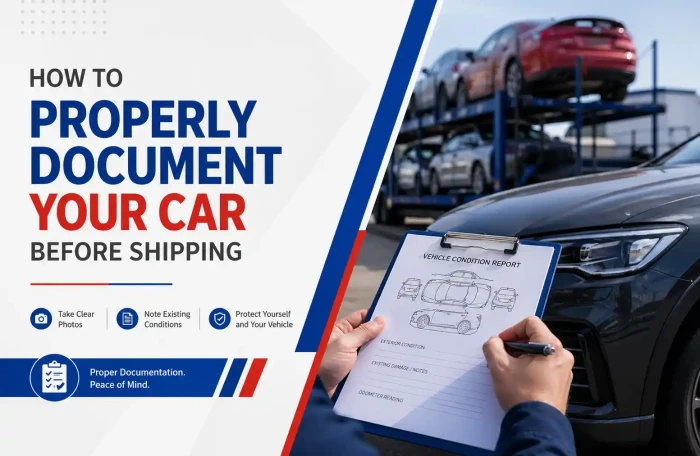
The Bill of Lading is the document that determines whether damage claims succeed or fail.
It records the vehicle’s condition at pickup and delivery.
If new damage is not written on that document at delivery, it becomes difficult to prove it happened during transport.
That makes the delivery inspection critical. It is not something to rush.

Know What Carrier Coverage Actually Means
Transport carriers are required to carry cargo coverage, but the limits are shared across multiple vehicles on a trailer.
For higher-value cars, that may not reflect the full market value.
Some buyers choose additional protection plans to close that gap. It becomes a question of risk tolerance rather than a requirement.
Final Delivery in the U.S.
After clearing customs, the vehicle still needs to reach your location.
AmeriFreight Auto Transport helps coordinate that final leg within the United States. You can choose between open or enclosed carriers depending on the level of protection you want.
Door-to-Door Service (Location Permitting) is available in many areas, though access depends on local road conditions and space for large transport trucks.
No upfront payment until you choose a carrier.
Disclaimer
Shipping timelines, costs, and requirements vary based on vehicle condition, origin, and regulatory factors. All services are subject to carrier availability and location permitting. AmeriFreight Auto Transport does not provide exact quotes. Customers are responsible for complying with all import regulations, documentation, and applicable fees associated with international vehicle purchases and transport.