

Once an electric vehicle (EV) is handed off for transport, its battery is no longer treated as a conventional automotive component. It is regulated as a high-energy system. The reason is simple. Heat.
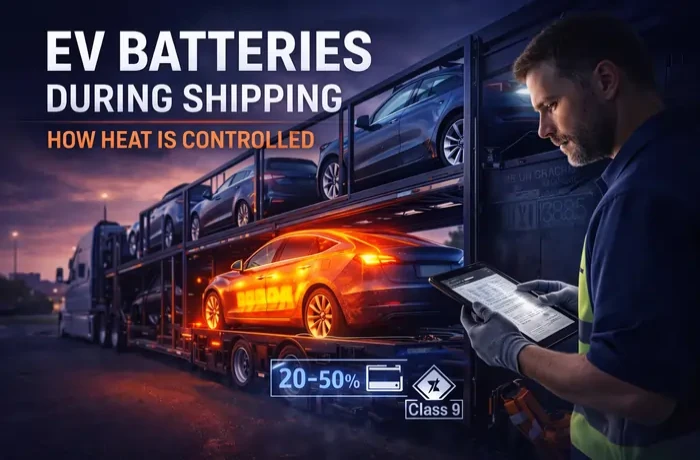
Lithium-ion batteries store a large amount of energy in a small space. In shipping, that places them in Class 9 hazardous materials. They are not considered dangerous in normal daily use. The concern is how quickly a problem can escalate.
If a cell is damaged or overheated, it can enter thermal runaway. Temperatures can rise past 1,000 degrees Celsius in seconds. That risk shapes how electric vehicles are moved on highways, in storage yards, and at loading facilities.
State of Charge Is Lowered on Purpose

Many assume a higher charge is safer. In shipping, the opposite is true.
A lower state of charge reduces the amount of energy available if a failure occurs. Industry standards typically recommend keeping EV batteries between 20 percent and 50 percent charged during ground transport.
Batteries Are Tested Long Before Shipping Ever Starts
By the time an EV reaches a carrier, its battery has already passed a series of international stress tests known as UN 38.3. These tests simulate altitude pressure, extreme heat and cold, vibration, impact, short circuits, overcharging, and forced discharge.

To put numbers on it, batteries are exposed to temperatures ranging from -40 °C to 72 °C. They are dropped from more than 1.2 meters. They are shaken across frequencies up to 200 Hz. Any failure disqualifies the battery from legal transport.
This matters because shipping companies rely on these certifications. They are not re-testing batteries. They trust that the vehicle's system was designed to withstand worst-case conditions.
Vehicles Offer Natural Protection That Loose Batteries Do Not
An EV battery installed in a vehicle is treated differently from a loose battery pack. The vehicle’s structure acts as a protective shell. It shields the battery from punctures, terminal contact, and vibration.
That distinction is why standard auto transport can handle EVs using open or enclosed carriers, rather than specialized hazardous cargo containers. The car itself reduces exposure risk.
AmeriFreight Auto Transport only arranges standard transport options for EVs. Open and enclosed shipping are permitted.
Heat Management Is the Real Priority
During transit, the biggest concern is temperature. EV batteries are sensitive to prolonged heat buildup, especially when vehicles sit idle on trailers or in staging areas.
Carriers manage this by limiting dwell time, avoiding placement near external heat sources, and spacing vehicles appropriately. In commercial logistics environments, thermal imaging is often used to detect hot spots before they become dangerous.
Damaged Batteries Change Everything
A battery is considered damaged or defective if it shows swelling, leakage, discoloration, or if it was involved in a serious collisionThese batteries cannot be shipped under normal conditions. They require special containment, must be handled one battery per container, and, in many cases, cannot be transported by certain shipping methods.
For consumers, this matters most after accidents or recalls. If a vehicle’s battery condition is unclear, transport may be delayed or refused until the condition is confirmed as safe. This is not a customer service issue. It is a legal and safety requirement.
Why EV Shipping Sometimes Feels Slower or More Careful
EV transport often feels more deliberate than gas vehicle shipping. That is not inefficient. It is risk pacing.
Lithium-ion fires behave differently from fuel fires. They can reignite hours or even days after appearing to be extinguished. Industry responses emphasize isolation and cooling over speed. If a vehicle raises concerns at any point, movement stops.
What This Means for You as an EV Owner
Most EV shipments move without incident. The rules exist because the consequences of ignoring them are severe, not because problems are common.
Deciding whether EVs are “harder” to ship depends on perspective. They require more discipline, documentation, and patience around energy management. They do not require exotic transport methods or experimental handling.
EV batteries are not fragile or unpredictable. They are heavily engineered systems with layers of safeguards. Shipping works because those safeguards are respected.
Final Thoughts: The Quiet Confidence Behind EV Shipping
EV shipping works because it is built around restraint, not speed. The systems in place are designed to prevent rare problems from becoming catastrophic ones, even if that means slower decisions and stricter boundaries. For owners, the reassurance comes from understanding that caution is not a weakness in the process.
Need to Ship an EV?
AmeriFreight Auto Transport brings more than 20 years of experience as an auto transport broker, including electric vehicles of all makes and models. We work with thoroughly vetted, fully insured carriers.
Get a free quote today and let us help manage your EV shipment from pickup to delivery.
Frequently Asked Questions (FAQs)
Do I need to tell the auto transport company that my car is electric?
Yes, you should always disclose that your vehicle is electric. This allows the carrier to follow proper handling procedures and plan around battery-related precautions.
Can extreme heat during a cross-country move damage my EV battery while it's on a trailer?
Yes, prolonged exposure to extreme heat can stress an EV battery. Carriers aim to reduce idle time and avoid unnecessary heat buildup during transport.
Disclaimer
This article is for general informational purposes only. This is not a substitute for manufacturer instructions, carrier policies, or applicable regulations. Shipping requirements and safety procedures may vary based on the vehicle, battery condition, route, weather, and carrier availability.