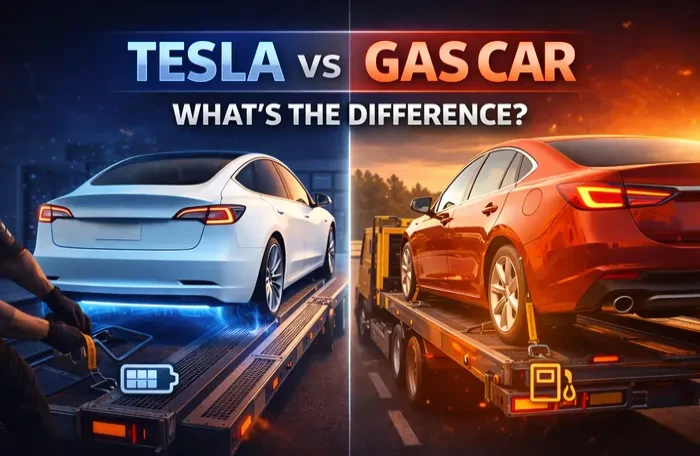


Shipping a Tesla is different from shipping a gas car because it is heavier, relies on software to move and secure it, and carries a large lithium battery that changes how carriers handle risk. Those factors affect trailer space, loading procedures, and, in some cases, rates.
On the surface, the process looks the same. The vehicle gets picked up, loaded onto a trailer, and delivered to its destination. But beneath that routine flow, the details shift. If you are comparing EV shipping to shipping a gas car, the differences are not cosmetic. They affect cost, timing flexibility, and what you should do before pickup.
The Weight Difference Is Not a Small Detail

A Tesla often weighs significantly more than a comparable sedan or SUV.
Electric vehicles typically weigh 20-30 percent more than internal-combustion cars, largely due to the battery pack. Battery packs often weigh between 800 and 1,500 pounds, and some extreme EVs carry far more than that.
That extra weight matters because truck carriers must comply with DOT weight limits. The standard maximum for a tractor-trailer combination is 80,000 pounds. When the load is heavier, carriers may not be able to fill every slot on the trailer.
A trailer that might legally haul nine gas sedans may only be able to haul seven or eight EVs. That reduced load capacity is one of the main reasons shipping a Tesla can cost more than shipping a comparable gas car.
Tesla Battery Placement Changes Loading Risk
Gas-powered cars carry most of their weight in the engine and drivetrain up front. A Tesla places its heaviest component low and centered in the floor, which lowers its center of gravity.
That improves stability during transport but also makes the underbody more critical. The battery casing is part of the vehicle’s structural design. If the underside scrapes a ramp or takes an impact, the consequences can be much more expensive than a typical undercarriage scrape on a gas car.
This is one reason Tesla owners should take pickup inspections seriously. Underbody damage is harder to detect after delivery unless it was clearly documented before transport.
State of Charge Matters for EV Shipping
Gas cars ship with a small amount of fuel, usually around a quarter tank. That provides enough fuel to drive on and off the trailer.
A Tesla operates differently. The battery’s state of charge affects both safety and function during transport.
Industry guidance typically targets a 20-40 percent battery charge at pickup. This reduces risk while still providing sufficient power to load and unload the vehicle normally.
If a Tesla is shipped with insufficient charge, it can cause operational issues. If the low-voltage system fails, the car can become “bricked,” meaning it cannot be placed in Tow Mode or moved as expected. That can lead to delays, added handling costs, or even a failed pickup.
Tesla Transport Depends on Software Settings
With a gas car, a carrier typically needs the keys and the ability to place the vehicle in neutral. A Tesla requires interaction with its software systems.
Tow Mode is often necessary to load the vehicle without re-engaging the parking brake. Teslas equipped with air suspension may also require Jack Mode to prevent the suspension from attempting to self-level while the vehicle is secured.
If Tow Mode is unavailable or the battery charge is too low to power essential systems, loading can quickly become complicated and delay pickup.
A Tesla Cannot Be Hauled Like a Typical Car
Some gas vehicles can be moved short distances with the wheels rolling if the transmission is in neutral.
Tesla manuals warn against transporting the vehicle with its wheels on the ground. Electric motors generate power when the wheels spin, which can cause overheating or drivetrain damage if handled improperly.
Professional auto transport carriers load Teslas fully onto the trailer, as they would other vehicles. The restriction becomes critical in breakdown situations or short-distance repositioning. This is another reason Tesla shipping requires a carrier familiar with EV handling procedures.
Rate Differences Are Usually Real, Not Arbitrary
When shipping a Tesla costs more than shipping a gas sedan, the difference is usually tied to weight and load limits. Many routes show an EV shipping premium of 15-30 percent compared with internal-combustion vehicles.
Not every Tesla shipment costs more. Some routes have enough carrier supply to keep rates competitive. When a carrier must give up trailer space or manage heavier load constraints, rates tend to increase.
Vehicle size alone is not the right comparison. Carriers evaluate weight, clearance, and liability exposure. AmeriFreight Auto Transport can provide an estimate based on your route and vehicle details. No upfront payment until you choose a carrier.
Oversized EVs Change the Equation Even More
A Tesla Model 3 or Model Y fits on most standard trailers. A Cybertruck requires different planning. Large EVs are often wider and heavier than comparable gas trucks. This may require the carrier to position the vehicle on the trailer to maintain proper weight balance.
This frequently results in an oversize or additional handling fee. It reflects physical and regulatory limits, not a brand-specific surcharge. When shipping a Cybertruck, Rivian, or another heavy EV, expect fewer carrier options and less pricing flexibility.
EV Fire Risk Is Different Than Gas Fire Risk

EV fires during transport are uncommon, but they are handled differently from those involving gas-powered vehicles.
A lithium-ion battery fire can involve thermal runaway, which is difficult to extinguish and carries a higher risk of reignition. These incidents can require significantly more water than a traditional gasoline fire.
Gas vehicle fire incidents sit near 1,530 per 100,000, but lithium battery incidents tend to be more severe when they occur. Carriers that transport EVs account for this in their handling protocols.
Claims and Repairs Tend to Be More Expensive on EVs
Even minor shipping damage on a Tesla can cost more to repair than similar damage on a gas-powered vehicle. On average, EV repair claims run about 25 percent higher than comparable internal combustion vehicles. The difference often comes from battery-related components, fewer specialized repair facilities, and the need for trained technicians.
This affects you even if you never file a claim. Higher repair costs influence which carriers accept the vehicle, how they price the shipment, and how detailed their inspection process will be at pickup and delivery.
What You Should Do Before Shipping a Tesla

Shipping a Tesla is straightforward, but it requires careful preparation. A few steps reduce the chances of delays and battery drain issues:
Charge the vehicle to a reasonable range, often around 20 percent to 40 percent
Turn off Sentry Mode and any features that drain the battery while parked
Make sure you can access Tow Mode at pickup
Remove charging cables and adapters if you do not want them lost or damaged
Take clear photos of the exterior, wheels, and visible underbody areas
Open vs. Enclosed Shipping Is the Same Decision, With Higher Stakes
Tesla vehicles can be shipped on open or enclosed carriers, like gas-powered cars.
Open transport is less expensive and the most common option. Enclosed transport adds protection from road debris and weather. That matters more if you are shipping a higher-value Tesla trim, a new vehicle, or a collector model.
EVs do not require special hybrid-equipped carriers. The differences in handling relate to weight, battery state of charge, and loading procedure, not to a separate category of carrier equipment.
The Difference Comes Down to Risk
Shipping a Tesla is not significantly more complex than shipping a gas-powered vehicle, but it requires closer attention to preparation and handling details.
With the correct charge level, transport settings enabled, and realistic expectations for loading and inspection, most Tesla shipments proceed without issue. The objective is not to treat EV transport as high-risk, but to minimize preventable complications.
AmeriFreight Auto Transport coordinates Tesla shipments regularly and can help you compare open and enclosed options based on your route, timeline, and vehicle type. Get your free, instant quote today.