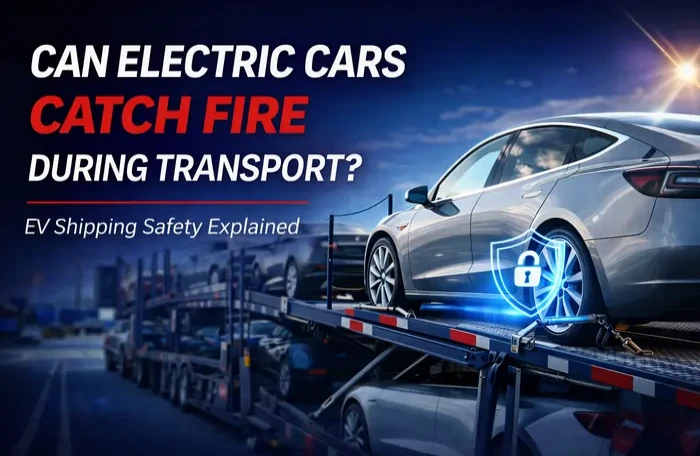



Yes, an electric car can catch fire during transport, but it is uncommon. The part that deserves attention is not how often it happens. The focus belongs on how an EV fire starts, how it behaves, and what choices reduce the odds in the real world.
Many people assume transport risk only shows up if the truck crashes. One scenario fits that idea. A more typical chain starts earlier, with a stressed or damaged battery pack, a high state of charge, or a loading mistake that scrapes the underside. Those details change risk, timing, and how quickly a situation can escalate.
Why EV Fires Feel Different
Gasoline fires need outside oxygen. A lithium-ion battery carries fuel and oxidizer inside the cell. When a cell fails and the internal temperature spikes, the reaction can feed itself and spread from one cell to the next. EV incidents are treated as cooling and containment problems, not simple flame suppression.
Online coverage can lead readers toward the wrong mental model. A headline about a vehicle burning on a ship or in a storage lot can make it sound like EVs ignite without warning. Warning signs often exist, but they are not obvious. Off-gassing can happen before visible flames, and the smoke can include toxic and flammable compounds. In enclosed spaces, the gas hazard can matter as much as the fire itself.
A second assumption shows up quietly in shipping conversations. "If it drove fine after a bump, it must be fine to ship." Driving fine does not confirm the battery pack is fine.
How Common Are EV Fires Compared With Gas Cars?
A useful comparison is fire incidents normalized by vehicles sold. AutoInsuranceEZ combined NTSB fire incident data with Bureau of Transportation Statistics vehicle sales data and calculated fires per 100,000 vehicles sold by powertrain. In that dataset, battery electric vehicles show 25.1 fires per 100,000 vehicles sold, compared with 1,529.9 per 100,000 for gas vehicles and 3,474.5 per 100,000 for hybrids.
Hybrid numbers surprise people because hybrids stack two ignition systems in one vehicle, a high voltage battery, and liquid fuel. Battery electric vehicles do not carry that second fuel source, which helps explain the lower ignition frequency.
Lower frequency does not mean easy suppression. The risk profile is low frequency and high severity. If a lithium-ion pack enters thermal runaway, extreme temperatures can arrive quickly, and sustained cooling can be required to stop the reaction from continuing.
What Actually Triggers An EV Fire During Shipping
Most EV transport fires trace back to a small set of triggers. None of the triggers are mysterious, but each one is easy to overlook.
Battery Damage That Is Not Obvious
Battery packs sit low. That placement increases exposure to underbody impacts, curb strikes, road debris, and loading mishaps. A pack can be compromised without dramatic exterior damage. A damaged cell separator can fail later, after the vehicle has already been loaded, parked, or delivered.
Recent undercarriage damage, a warning message related to the battery, or charging behavior that suddenly changed should be treated as a transport decision point. Carrier questions about condition can be more common for EV shipments than for older gasoline sedans.
Loading Ramps And Clearance
An EV that bottoms out on a ramp is not just scraping plastic. A hard hit to the battery enclosure can act as a delayed trigger. Clearance matters even more on very low vehicles.
A low front lip or a long wheelbase should be communicated clearly during booking so the carrier can plan the ramp angle and placement. Many owners assume every hauler loads every vehicle the same way. EV weight and geometry can change the loading approach.
State Of Charge
State of Charge affects the stored chemical energy available in a failure event. Higher SoC generally increases the intensity and speed of thermal runaway. The research notes that many transport protocols lean on low to moderate charge levels, often below about 30 percent, because lower SoC reduces the likelihood and violence of runaway.
One unstated question sits behind many booking calls. "Should I ship it fully charged so it can be moved around easily?" A moderate charge is usually the safer position.
Heat Exposure And Enclosed Environments
Heat does not magically cause an EV to ignite on a hot day. Heat reduces the margin for a compromised battery. In transport contexts, risk shows up as long dwell time in warm environments, limited ventilation, or a chain of small stresses that add up.
Open and enclosed shipping decisions should be framed around exposure in practical terms. Enclosed reduces road debris and weather exposure. Open is the standard option and is widely used. Neither choice removes the need for a healthy pack and careful loading.
Why Ship Stories Dominate The Conversation
The worst headlines often come from maritime incidents because the environment is unforgiving. Ships can carry thousands of vehicles on stacked decks. Access is limited. Fires can spread fast, and suppression options are constrained.
Road transport looks different. Loads are smaller, and first response is faster. Two EV realities still matter on a carrier truck.
Reignition risk: a damaged pack can hold "stranded energy" that can trigger a later event.
Weight and ramp stress: many EVs weigh more than comparable gas vehicles. Higher weight changes loading forces and equipment demands.
A heavier EV truck or SUV raises a practical question beyond basic availability. Carrier equipment rated for weight and clearance affects safety and the chances of a smooth pickup.
What Reduces EV Fire Risk In Normal Auto Transport
Most mitigation is straightforward, and mitigation starts before a carrier ever arrives.
Confirm The Car Is Fit To Load
A collision history, battery-related warnings, or unusual charging behavior should not be treated as minor details. A carrier cannot diagnose the pack, but the condition affects whether a vehicle is accepted and how it is handled.
A non-drivable EV also changes logistics. Winching can be possible, but safe movement, access to tow points, and pack condition become bigger factors.
Ship With A Moderate Charge
A low to moderate charge level reduces stored energy in a failure event. Many logistics guidelines land in the 20 percent to 30 percent range for transport. Control over charging should be used to avoid shipping at a very high state of charge.
Keep The Vehicle Empty
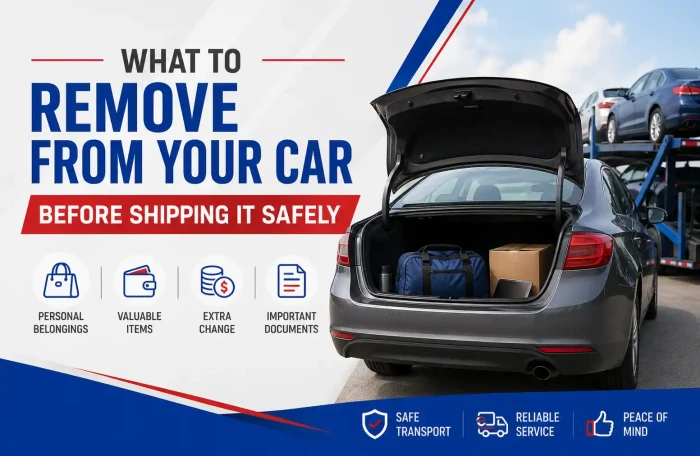
The DOT does not permit personal items to be shipped in vehicles. Some carriers allow limited items, but permission is usually tied to an extra fee, and the details must be discussed beforehand.
One common assumption causes avoidable friction. "I will just toss the portable charger, tools, and boxes in the trunk." Agreement must happen ahead of time, and extra weight can matter on an EV.
Know What Transport Types Apply To EVs
AmeriFreight Auto Transport can help arrange EV shipping using standard transport options, open or enclosed. Only standard options apply for EV shipments.
Door-to-door is available, which means pickup and delivery happen as close to the address as the carrier can safely reach. Some streets cannot support a large hauler, so meeting at a nearby safe location can be part of the plan.
Real-time GPS tracking is not offered. Auto transport status is typically handled through dispatch communication and scheduling updates.
How AmeriFreight Handles The Parts That Affect Your Decision
Comparing providers often goes wrong when promises sound good but do not match how auto transport works. Clarity matters more than confident phrasing, especially around timing, risk, and what is included.
With AmeriFreight Auto Transport:
No upfront payment until you choose a carrier.
Customer service agents help coordinate pickup, delivery, and carrier communication.
Optional AFTA plans are available as gap protection plans. Only AFTA coverage recipients have 48 hours to report damages.
AmeriFreight assists with vehicle transportation, not household goods.
Route, timing, and vehicle type shape pricing, so the AmeriFreight Auto Transport car shipping cost calculator is the fastest way to price the route before you commit.
More context that applies directly to EV shipments is available here: hybrid and EV shipping basics, top EV shipping challenges, EV charging guide for new owners, and auto transport trends to watch in 2025.
People Also Ask
Is It Safer To Transport An Electric Car On An Open Trailer Or An Enclosed Trailer?
Both are widely used. Open transport is the standard option. Enclosed transport reduces exposure to road debris and weather, which some owners prefer for higher-value vehicles. The bigger safety factors are battery condition, state of charge, and loading clearance.
Can Towing An EV On A Dolly Cause The Battery To Overheat And Catch Fire?
The bigger risk with a dolly is mechanical damage, since some EVs are not designed to have drive wheels rolling without the vehicle managing drivetrain behavior. Damage risk matters because battery damage is one path toward later failure. If towing happened before transport, the correct tow method for the model should be confirmed and the situation should be disclosed.
Can A Minor Fender Bender Make An EV Too Dangerous To Transport On A Standard Tow Truck?
It depends on the impact location and what it touched. Cosmetic body damage is one thing. Underbody impact near the battery area, deformed pack protection, or battery warnings change the risk conversation. Signs of pack compromise can lead some carriers to decline, or the vehicle may need evaluation before it is fit to load.
Does Road Salt Exposure During Open Trailer Transport Increase The Risk Of An EV Battery Fire?
Road salt is mainly a corrosion concern. Road salt is not generally treated as a direct fire trigger during a single shipment. Owners who choose enclosed shipping in winter often do it to reduce exposure and cleanup, not because salt is expected to cause a battery event during transport.
Disclaimer: Information in this article is provided for general educational purposes and reflects common auto transport practices and safety considerations. Details can vary by vehicle model, battery condition, carrier requirements, route, weather, and other factors. For concerns about your specific electric vehicle, consult the vehicle manufacturer’s guidance and a qualified service professional before transport. Shipping availability and service details are subject to carrier acceptance and location permitting.