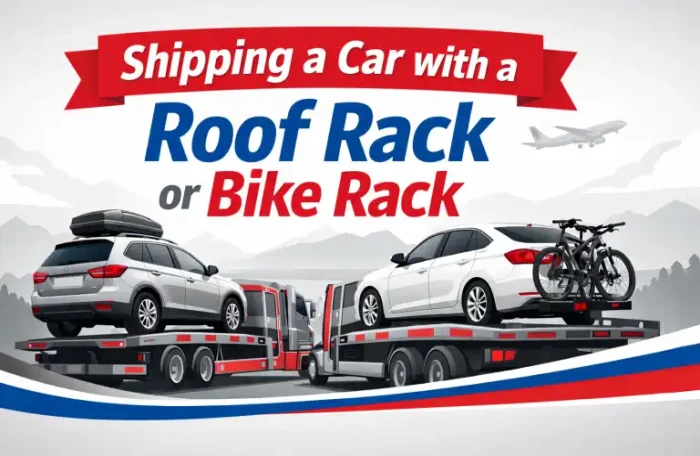


Roof racks and bike racks often become permanent parts of a vehicle. Drivers install them for cycling trips, camping gear, skis, or rooftop cargo boxes, and eventually stop noticing they are there. During auto transport, those attachments become part of the vehicle’s physical profile. They affect height, airflow, and loading strategy, which means carriers must evaluate them before the vehicle is placed on a trailer.
A vehicle that normally loads easily onto a transport carrier can become more complicated once equipment sits on the roof or extends from the rear. Even small dimensional changes matter when multiple vehicles are stacked on a trailer traveling under bridges, power lines, and highway signage. Because of that, racks are treated as structural considerations rather than simple accessories during the shipping process.
Why Transport Carriers Evaluate Roof and Bike Racks
Once a vehicle is loaded onto a transport trailer, it is regulated as cargo under federal transportation law. The securement of vehicles must comply with 49 CFR Part 393 Subpart I cargo securement regulations, which require tiedown systems capable of preventing movement during braking, acceleration, and cornering.
Federal guidance from the Federal Motor Carrier Safety Administration cargo securement rules explains that cargo must remain stable even during sudden stops or emergency maneuvers.

Because of these requirements, carriers normally secure vehicles at the tires or chassis rather than attaching straps to the roof accessories. Cargo securement standards rely on a “working load limit,” meaning the entire system is only as strong as its weakest component, a principle discussed in FMCSA working load limit explanations.
A roof rack made from aluminum crossbars or molded plastic components cannot safely withstand the same forces as a vehicle’s frame, which is why racks are not used as tiedown points.
Vehicle Height Limits and Transport Clearance
Vehicle height is one of the first measurements carriers evaluate before loading. Multi-vehicle carriers must remain within roadway clearance limits established to protect bridges and infrastructure. Many states follow the common commercial vehicle height threshold referenced in Federal Highway Administration commercial vehicle size regulations, which places the typical maximum transport height near 13 feet 6 inches.
That limit applies to the full height of the loaded trailer, not just the truck itself. When several vehicles are stacked on upper and lower decks, even small increases in vehicle height can influence where each vehicle is positioned.

Roof racks commonly add 6 to 12 inches to the total vehicle height. When that additional height pushes a vehicle close to clearance limits, the transporter may place it in a different position on the trailer or adjust the loading configuration. What appears to be a minor accessory from a driver’s perspective becomes part of the dimensional calculation for the entire load.
Aerodynamic Effects of Roof Racks
Roof racks also change how air flows around a vehicle. Studies examining vehicle aerodynamics have shown that external racks can significantly increase drag. Research findings from Lawrence Berkeley National Laboratory’s analysis of roof rack drag show that roof racks may increase aerodynamic drag between roughly 10 percent and 50 percent, depending on configuration.
Engineering simulations examining rooftop cargo carriers demonstrate how rack position changes airflow patterns and drag coefficients, as analyzed in computational fluid dynamics research on roof cargo carrier aerodynamics. When vehicles with rooftop accessories are placed on upper trailer decks, carriers sometimes consider these aerodynamic changes when planning the overall transport load.
Rear-Mounted Bike Racks and Lighting Compliance
Rear bike racks introduce a different issue: visibility of required lighting equipment. Federal vehicle equipment guidance states that installed accessories must not interfere with required lighting systems, a principle clarified in NHTSA interpretation regarding motor vehicle equipment.
When a bicycle carrier blocks tail lamps, turn signals, or reflectors, additional lighting equipment or relocation of the license plate may be required. Transport carriers evaluate these visibility factors before loading a vehicle with a rear-mounted rack.
Transport Equipment Designed for Taller Vehicles
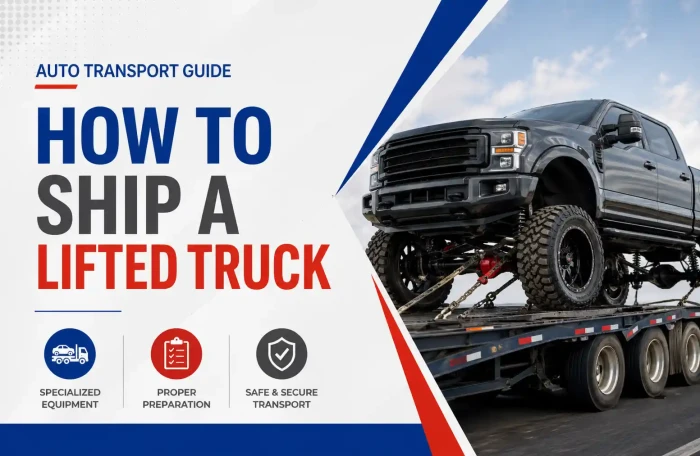
Many vehicles with racks can still ship without removing them. When height becomes a concern, carriers may use equipment designed to accommodate taller loads. Some transport trailers lower the deck height to allow additional vertical clearance, such as the low-center-of-gravity carrier systems developed by Miller Industries.
Loading procedures can also vary depending on the vehicle’s configuration. Specialized ramp systems and hydraulic lift equipment are sometimes used when vehicles have rooftop accessories or limited ground clearance.
How Roof Racks Can Affect Shipping Cost
Roof racks do not always change shipping costs, but they can influence logistics. If the rack increases the vehicle’s overall dimensions or limits where it can be positioned on the trailer, the carrier may need to allocate additional space or adjust loading plans.
Industry discussions about oversized vehicles note that dimensional changes can reduce trailer capacity and increase handling complexity. Providing accurate vehicle details when requesting a quote helps prevent adjustments during dispatch.
AmeriFreight Auto Transport operates under this principle. There is no upfront payment until you choose a carrier, and providing accurate information about racks or accessories helps carriers prepare the correct loading configuration.
Cargo on the Rack Cannot Travel With the Vehicle
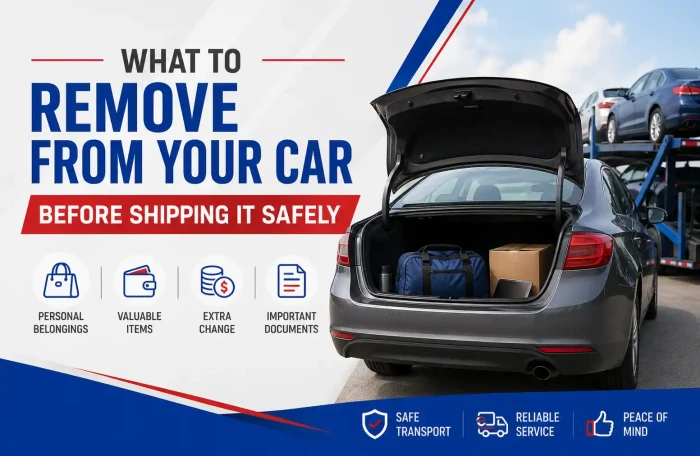
Many owners assume bicycles or luggage can remain attached to the rack during transport. In most cases, that is not allowed. The Department of Transportation does not permit household goods to be transported inside vehicles during auto transport.
If a carrier allows limited items, it usually involves additional discussion and fees beforehand. Objects mounted on roof racks create aerodynamic resistance, theft risk, and potential liability during transit, which is why carriers typically require bicycles and cargo boxes to be removed before the vehicle is shipped.
Insurance and Aftermarket Accessories
Another issue many owners overlook involves coverage for aftermarket equipment. Carrier cargo coverage typically protects the vehicle during transport, but accessories may require documentation to establish their value. Industry discussions about transport coverage note that non-factory parts and accessories may fall outside standard policies unless documented properly.
Owners who want additional protection sometimes explore optional gap protection plans, such as AFTA plans. Photographs taken before pickup can help document the condition of racks and accessories before the vehicle begins its trip.
The Inspection Before Loading
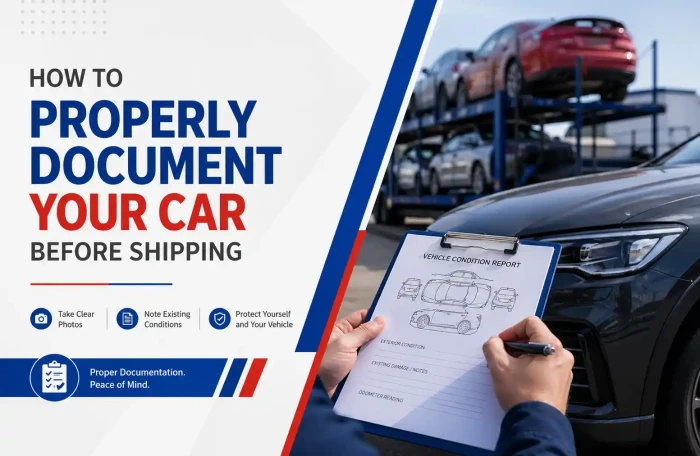
Before the vehicle is loaded, the driver performs a detailed inspection and records the vehicle’s condition on the Bill of Lading. This document functions as both a receipt and a condition report for the shipment.
Inspection procedures typically include documenting the odometer reading and marking existing dents or scratches. Professional carrier operation manuals emphasize recording vehicle condition before the vehicle is secured to the trailer.
Preparing a Vehicle With a Rack for Shipping
Owners can reduce complications by preparing the vehicle properly before pickup. Measuring the vehicle’s height with the rack installed helps determine whether it will affect loading. Removing rooftop cargo, such as bicycles or luggage, prevents aerodynamic issues during transit.
Checking that the rack is tightly secured and photographing the roof area provides documentation of the vehicle’s condition before transport. These small steps make the loading process easier and help prevent delays.
Why Small Accessories Matter During Auto Transport
Drivers often stop noticing their roof racks after months of use. From the perspective of a transport carrier, however, every external attachment changes the vehicle’s dimensions, airflow, and position on the trailer.
Once multiple vehicles are stacked on a transport carrier traveling across the country, even small accessories influence loading strategy and clearance planning. If you plan to ship a vehicle with a roof rack or bike rack, sharing those details during the quote process helps ensure the carrier is prepared for the vehicle’s exact configuration.
AmeriFreight Auto Transport specializes in coordinating vehicle shipments with experienced carriers who understand how to handle vehicles with accessories, oversized dimensions, or unique loading considerations. You can request a quote to see available transport options.
Disclaimer:
The information provided in this article is for general informational purposes only and should not be considered legal, regulatory, or transport compliance advice. Vehicle transport regulations, equipment requirements, and carrier policies may change or vary depending on the carrier, route, and state or federal guidelines. Vehicle owners should confirm specific requirements with their chosen auto transport carrier before shipping a vehicle with roof racks, bike racks, or other aftermarket accessories.