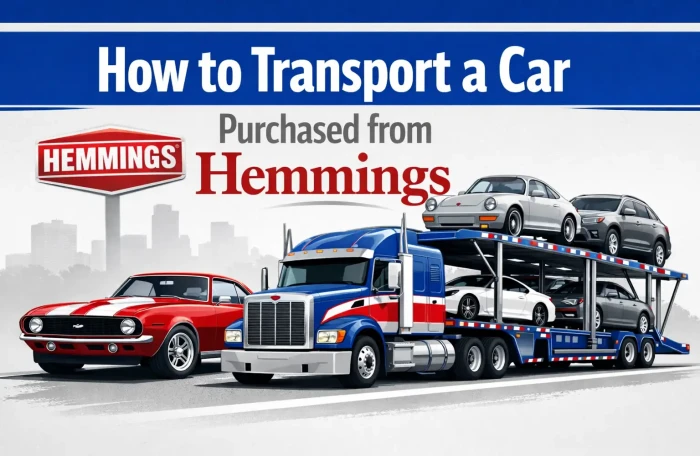


Buying through Hemmings feels different from buying a typical used car. You are often dealing with a vehicle that has history, real value, and in some cases, parts that cannot be replaced. Shipping a car bought from Hemmings is less about moving a vehicle and more about protecting an asset.
The marketplace itself exists because buyers and sellers are rarely in the same place. That geographic gap has become standard in the collector space, where vehicles are sourced nationwide through platforms like Hemmings.
Most buyers underestimate two things right away. First, how much condition matters in transit. Second, how much responsibility falls on them before the carrier even shows up.

What Changes When the Car Is a Collector Vehicle
A standard car shipment tolerates minor risk. A collector car does not.
Even small paint damage can cost thousands to correct using period-accurate materials. In many cases, the repair cost alone exceeds the difference between open and enclosed transport.
That is why shipping decisions here are not about convenience. They are about risk tolerance.
You are not just asking, “How do I ship this car?”
You are really asking:
What happens if something goes wrong?
Can this car even be replaced if it is damaged?
Am I protecting value or just moving it?
Those questions shape every decision that follows.
Open vs. Enclosed Transport Is a Risk Decision
Open transport works for modern vehicles because exposure is acceptable. With Hemmings purchases, exposure often is not.
Open carriers typically cost 30 percent to 60 percent less, but the vehicle remains exposed to weather, debris, and public visibility.
Enclosed carriers cost more, often 40 percent to 60 percent higher, but they isolate the vehicle from those risks.

That tradeoff becomes simple when you frame it correctly:
If the car’s value exceeds $25,000, enclosed transport is usually the safer choice.
If originality matters, enclosed is not optional.
If the car has low clearance or fragile trim, enclosed reduces loading risk.
Hemmings supports this process through integrated shipping tools and logistics partnerships built specifically for collector vehicles. Hard-sided enclosed trailers offer the highest protection. Soft-sided trailers sit in the middle. Open carriers sit at the lowest end of protection.
The Part Most Buyers Get Wrong: Carrier Verification
Shipping a car bought from Hemmings introduces a legal structure most people never see. Every transporter moving vehicles across state lines must be registered with the Federal Motor Carrier Safety Administration (FMCSA).
They must carry:
A USDOT number (carrier identification)
An MC number (operating authority)
Brokers and carriers are not the same. Brokers arrange transport. Carriers physically move the vehicle, as outlined in the FMCSA consumer advisory.
You can verify any company through the SAFER system or check licensing directly. Skipping this step is where most risk enters the process.
Why the Bill of Lading Controls Everything
The Bill of Lading is the document that determines whether a damage claim succeeds or fails.
At pickup, the driver records the vehicle’s condition. At delivery, that condition is compared again.
If damage appears and it is not written on the delivery inspection, your position weakens immediately.
Under federal law, specifically the Carmack Amendment, carriers are generally responsible for damage while the vehicle is in their care. To establish a claim, you must show:
The car was in good condition at pickup
The car arrived damaged
The damage has a clear value
If you cannot prove those points, recovery becomes difficult.
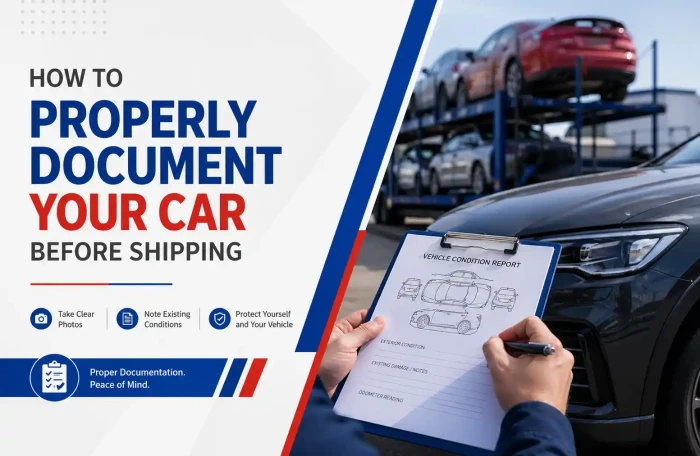
That is why experienced buyers take detailed photos before shipping, including close-ups and undercarriage shots.
Shipping a Non-Running or Project Car
Many Hemmings purchases are not drivable. That changes the logistics immediately.
A non-running car requires winching onto the trailer. This adds time, equipment requirements, and cost.
Carriers need to know this upfront. If they arrive expecting a drivable vehicle, delays happen.

Proper handling includes:
Using axle straps instead of attaching to fragile parts
Stabilizing the vehicle once loaded
Securing loose components before transport
If the vehicle is partially disassembled, risk increases significantly. Some carriers will decline the job entirely if the structure is unstable.
Timing and Pricing Are Not Static
Shipping costs do not exist in a vacuum. They move with the broader freight market.
Freight demand and fuel costs continue to influence pricing and availability. Transportation also plays a major role in the U.S. economy, contributing trillions to GDP.
These shifts affect availability, route pricing, and scheduling flexibility. If your route is less common or your vehicle requires enclosed transport, expect fewer available carriers and more variability in timing.
What You Still Control Before Pickup
Once a carrier is assigned, most of the outcome depends on preparation.
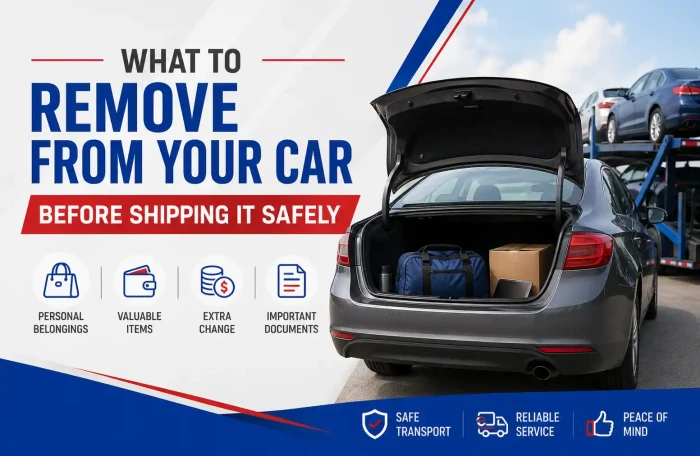
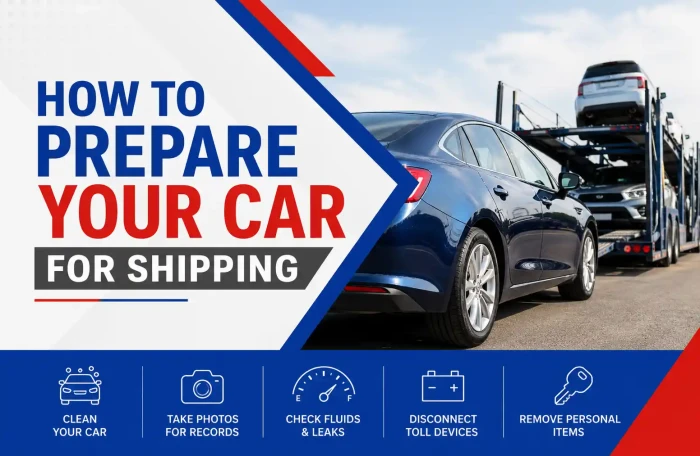
Loose items should be removed or secured. The DOT does not permit personal items to be shipped inside vehicles. If a carrier allows it, it usually comes with added cost and must be arranged in advance.
Fluids should be checked. Even small leaks can cause problems inside enclosed trailers.
Convertible tops should be secured. Fragile trim should be protected.
These steps reduce disputes later. They also reduce the chance of damage during loading.
Where AmeriFreight Auto Transport Fits In
AmeriFreight Auto Transport works within this structure rather than around it.
They connect customers with vetted carriers that meet FMCSA requirements and industry standards. Their process is built to reduce risk, not eliminate it.
There is no upfront payment until you choose a carrier. That gives you time to review options before committing. Get your quote now!
The Assumptions Buyers Rarely Say Out Loud
Many buyers approach shipping with quiet assumptions:
“The carrier will handle everything.”
“If something goes wrong, it will be easy to fix.”
“All transport options are basically the same.”
None of those hold up in practice.
Shipping a car bought from Hemmings is closer to asset transfer than routine delivery. The outcome depends on preparation, documentation, and choosing the right level of protection for the vehicle.
When those pieces are handled correctly, the process feels smooth. When they are not, problems tend to surface at the worst possible moment, when the car arrives and expectations meet reality.