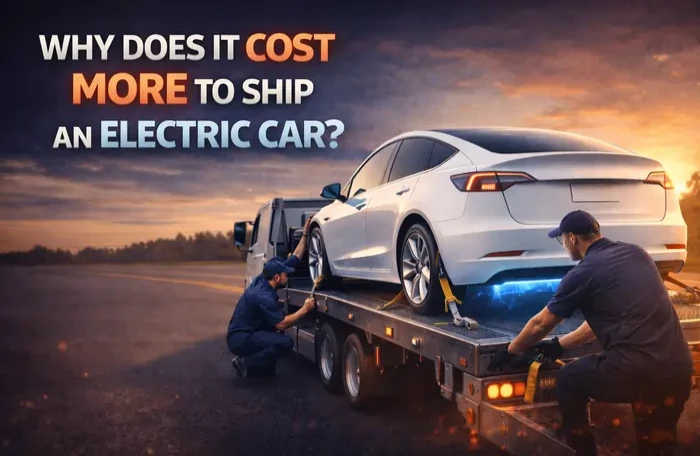


Shipping an electric vehicle in the United States can cost more than shipping a comparable gas vehicle because EVs are often heavier, which can reduce how many cars a carrier can legally haul per load.
Costs can also rise when higher vehicle values increase insurance exposure, when owners choose enclosed transport more often, and when carriers apply extra handling rules for damaged or inoperable batteries.
If you are looking to understand the rates of electric car shipping, you are likely asking questions like:
Is my EV treated like hazardous cargo?
Does the battery make it harder to transport?
Will the carrier need special equipment?
Am I paying more just because it is electric?
The honest answer is that many EV shipments move the same way as gas vehicles. But when certain factors stack up, costs rise quickly.
Most EVs Ship Like Any Other Car, With One Important Caveat
Under federal hazardous materials rules, battery-powered vehicles transported by highway are generally not subject to most hazardous materials requirements when the battery is properly installed and undamaged. This exception is outlined in 49 CFR §173.220, which covers “battery-powered vehicles.”
That means a normal, operable electric vehicle does not automatically require hazmat placards or special paperwork when moved by truck.
Where the rules tighten is when a battery is damaged, defective, recalled, or removed. Damaged or defective lithium batteries fall under stricter packaging and transport requirements under 49 CFR §173.185(f).
So for a clean, operable EV, the regulatory burden is usually limited. For a flooded or collision-damaged EV, compliance requirements can change the entire cost structure.
Weight Is the Biggest Structural Cost Driver
The most overlooked reason electric car shipping can cost more is weight.
Large EVs are significantly heavier than their internal combustion counterparts. In public remarks, the NTSB referenced the GMC Hummer EV as weighing more than 9,000 pounds, with a battery pack exceeding 2,900 pounds.
Auto transporters operate under federal size and weight limits. When EVs are heavier, carriers may not be able to load as many vehicles per trip before reaching legal weight ceilings.
A coalition representing vehicle transporters told Congress that EV weight combined with federal truck weight laws can reduce load capacity by as much as 28 percent.
Auto hauling is built on vehicles-per-load economics. If a truck that could legally carry nine vehicles now carries seven because of weight, each car must absorb a larger share of the trip’s cost. Driver wages, fuel, insurance, and equipment payments do not drop just because the load count does.
Battery Fire Risk Changes Insurance Exposure
Another factor is not how often something happens, but how severe it can be when it does.
The NTSB has documented cases of post-crash lithium-ion battery reignition, including a vehicle reigniting while on a flatbed tow truck. The agency highlights “stranded energy” that can lead to delayed fires.
NHTSA interim guidance advises that severely damaged lithium-ion vehicles should not be stored inside a structure or within 50 feet of other vehicles or combustibles.
For carriers and terminals, that guidance translates into more yard space, more monitoring, and more conservative handling policies when a battery is suspected to be compromised.
Insurance pricing reflects worst-case exposure. EVs also tend to have higher repair costs. Mitchell reported that the average U.S. repairable claim severity for EVs was $963 higher than that of comparable internal combustion vehicles.
Higher vehicle values and higher repair costs increase cargo risk. That risk is priced into transport rates, especially for enclosed carriers handling premium EV models.
Enclosed Transport Is Chosen More Often for EVs
Electric vehicles frequently carry higher price tags. Owners are more likely to request enclosed shipping for added protection.
Enclosed auto transport can cost about 40 to 60 percent more than open transport, depending on route and season.
If EV owners disproportionately choose enclosed carriers, the average EV shipment cost rises. That is not because enclosed is required for EVs. It is because the vehicle’s value changes the owner’s risk tolerance.
Inoperable or Damaged EVs Raise Costs Quickly
If your EV cannot power on, shift into neutral, or be safely driven onto a trailer, costs increase.
Manufacturer guidance often recommends flatbed transport for certain conditions. Tesla’s owner documentation for Model 3, for example, identifies flatbed transport as the recommended method.
Flatbed or specialized handling reduces efficiency compared to drive-on, drive-off multi-car carriers.
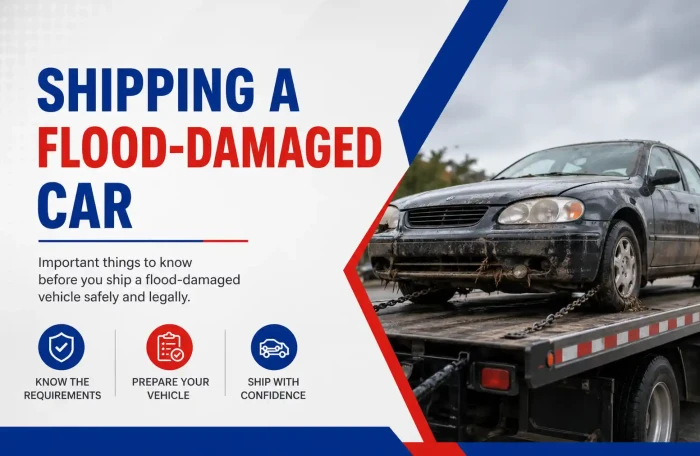
Flooded EVs represent another high-cost scenario. PHMSA issued a safety advisory warning that EV batteries damaged by extreme weather events can present significant hazards and may ignite days or weeks later.
Those vehicles may require segregation, monitoring, or even be restricted from certain modes of transport. That level of handling is more expensive.
What This Means for Electric Car Shipping in the United States
Average U.S. car shipping costs across all vehicle types are often cited at around $1,250, with ranges between $500 and $2,000 depending on distance, vehicle size, and transport method.
There is no nationally published tariff showing a fixed “EV surcharge.” Rates are lane-specific and vehicle-specific.
If your EV is operable, undamaged, and average in size, it may ship very similarly to a gas vehicle on an open carrier. If it is a large, premium model or has sustained battery damage, the cost difference can be meaningful.
Working With AmeriFreight Auto Transport
AmeriFreight Auto Transport arranges open and enclosed vehicle transport within the continental United States. Electric vehicles are shipped using the same standard transport options available for gas vehicles. Door-to-Door Service (Location Permitting) is available.
Disclaimer
Electric vehicle shipping may cost more than shipping a gas vehicle due to added weight, reduced carrier load capacity, higher vehicle value, and increased handling requirements for damaged or inoperable batteries. Final rates depend on route, vehicle condition, transport type, and carrier availability..