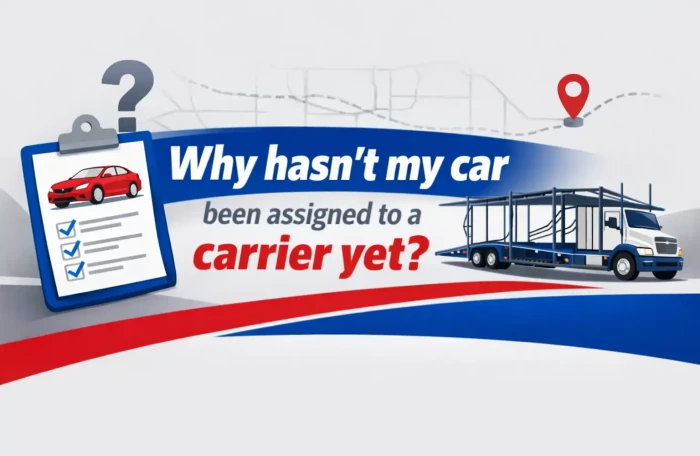


In the auto transport market, an unassigned vehicle almost always signals a pricing or logistics mismatch. Not a forgotten order. Not a hidden mistake. Just a gap between what a carrier needs to make the trip worthwhile and what is currently posted for the route.
What “Unassigned” Really Means
When you book with AmeriFreight Auto Transport, your shipment is listed to licensed carriers who run specific routes. Carriers choose loads that fit their trailer space, timing, and revenue goals.

If your car has not been assigned to a carrier yet, one of three things is usually happening:
The route is thin or rural.
The carrier pay is below what drivers are accepting for that lane.
The vehicle presents added effort or risk.
Carriers are independent businesses. Most operate small fleets. They calculate every mile. A 40-mile detour off a highway may not sound like much, but it can push a driver past their legal driving window for the day. If the numbers do not work, they move on.
That decision is financial, not personal.
Pricing That Looks Good but Does Not Move
Many customers assume that once they accept a quote, a truck should pick up the vehicle quickly. That is not always how the market works.
Carriers choose loads based on current lane demand and pay. If the posted rate is lower than what drivers are accepting that week, the order may sit on the board. The load is visible. It just is not competitive enough to attract a truck.
Many customers quietly assume, “If I accepted the quote, shouldn’t a truck grab it quickly?”
Not necessarily.
Carrier pay must reflect current lane demand. If the posted rate falls below what carriers are accepting this week, your vehicle will sit. The load is visible. It just is not attractive.

Industry data shows that nearly half of very low quotes require price adjustments before a carrier accepts them. Routes priced 20 percent under market averages experience significantly longer pickup delays. Carriers today rely on pricing tools that flag under-market loads immediately. They do not gamble on thin margins.
If your order has been waiting more than a couple of days on a busy corridor, pricing is the first place to look.
Rural Locations Change the Equation
Pickup and delivery points matter more than most people realize.
A vehicle in Dallas or Atlanta moves faster than one parked outside a small town two hours from a major interstate. Carriers build routes around dense corridors. When your car sits outside that flow, a driver must justify the extra fuel, time, and wear.
Some customers wonder, “Can’t a truck just swing by on the way?” That only works when the detour does not disrupt several other vehicles already scheduled on the trailer.
If you have some flexibility, meeting near a commercial lot can make a major difference. Door-to-door service (location permitting) remains standard, but a small change in where you’ll meet the carrier can make shipping your vehicle far more appealing for them.
Only if that swing does not disrupt five to nine other vehicles already scheduled on the trailer.
If flexibility exists, meeting near a commercial lot closer to a highway can shorten the assignment window dramatically. Door-to-Door Service (Location Permitting) remains standard, but location flexibility can shift carrier interest.
Seasonality Shifts Capacity
From October through January, many vehicles move from northern states to the south. From March through May, demand shifts back to northern states. During these seasonal peaks, carriers often book trailers days in advance along the busiest routes.
If your shipment moves against that pattern, or the rate does not compete with similar vehicles on the same lane, assignment can take longer.
Auto transport works differently from parcel shipping, after all. Carrier capacity follows seasonal demand. When your shipment falls outside the main flow, it may take longer for the right truck and route to line up.
From October through January, vehicles move heavily from northern states to the South. From March through May, the pattern reverses. During those peaks, carriers fill trailers days in advance on high-demand corridors.
If your shipment runs against the dominant flow, or your rate does not compete with hundreds of similar vehicles heading the same direction, assignment may slow.
Customers often assume transport works like parcel shipping. It does not. Capacity moves like a tide. If your car sits outside the wave, it waits until the math aligns.
Vehicle Condition Can Narrow the Carrier Pool
Another question people rarely ask out loud is, “Does my car’s condition really matter that much?”
It does.
A running sedan fits most open carriers. A non-running vehicle requires a winch. Fewer trucks carry that equipment. That alone can add 20 to 30 percent to carrier pay. If wheels are locked or the vehicle cannot steer, the available carrier pool shrinks even more.
If a car was listed as running but arrives with a dead battery or flat tires, a driver may decline on arrival to protect their schedule. That can reset the assignment process.
Accuracy upfront protects your timeline.
Industry Pressures Are Real
The trucking sector has been working through a multi-year freight downturn. Insurance premiums have climbed sharply. Operating costs continue rising. Driver shortages remain persistent.
Carriers no longer take “filler loads” just to keep moving. They prioritize profitable lanes. That means realistic carrier pay matters more today than it did several years ago.
This is not about speed alone. It is about sustainability for the driver hauling your vehicle.
Questions Worth Asking Your Agent
If your vehicle has not been assigned to a carrier after several days, clarity helps.
Ask:
What is the current carrier pay being offered?
Have carriers declined the load, and if so, why?
Is my vehicle listed as ready to move?
These questions do not create pressure. They surface alignment. A small pricing adjustment or pickup flexibility can unlock assignments quickly.
What You Can Control
You cannot control national capacity or seasonal demand. You can control flexibility, transparency, and responsiveness.
If timing is tight, expedited shipping may increase carrier interest, but it does not promise pickup or delivery dates. If the budget is firm, patience sometimes becomes the tradeoff.
Many customers quietly worry, “Did I choose the wrong company?” The better question is whether the carrier pay reflects real-time lane demand. AmeriFreight Auto Transport does not require upfront payment until you choose a carrier.
The goal is alignment, not urgency.
The Reality Behind the Wait
An unassigned vehicle is not stuck. It is paused in negotiation between supply and demand.
Once pricing, route density, and equipment match, assignment often happens quickly.
Carriers are not ignoring your shipment. They are evaluating whether it fits their existing route, legal drive time, equipment, and margin.
When those variables align, your car moves.
Disclaimer
This content is for general informational purposes only. Market conditions, carrier availability, pricing, and timing vary by route and season. AmeriFreight Auto Transport arranges transport with licensed carriers and does not control their schedules. Pickup and delivery dates are estimated, not guaranteed. No upfront payment is required until you choose a carrier.