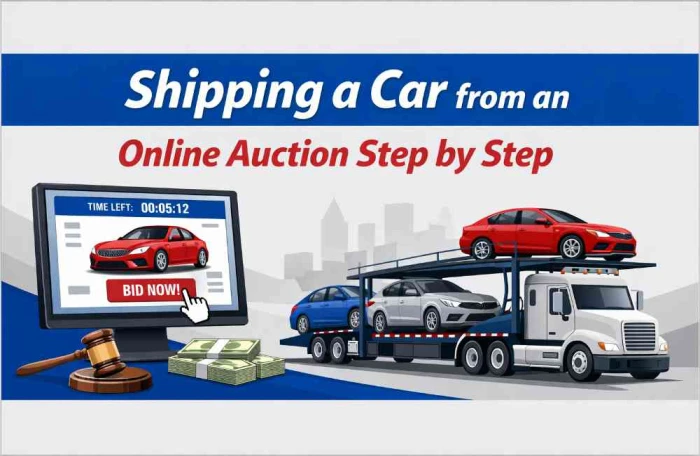


Online auto auctions liquidate vehicles quickly for institutional sellers. Buyers face immediate logistical challenges and storage fee penalties post-auction. Immediate invoice payment secures the asset and generates a gate pass. Transport selection depends on the vehicle value and structural condition. Inoperable units demand winch-equipped carriers. Electric vehicle shipping mandates strict lithium-ion safety protocols using standard transport options.
What is an Online Auto Auction?
An online auto auction is a high-volume clearinghouse designed to liquidate assets for insurance companies, banks, and fleet operators. An online auto auction sells vehicles strictly "as is" and "where is." The auction house steps back entirely once the virtual hammer falls. A common unstated assumption involves the facility coordinating the delivery of the new asset or providing a grace period. The facility does not provide coordination or a grace period.
What Occurs Post-Auction?
The entire burden of extraction shifts to the buyer immediately following the winning bid. A completed bid activates an immediate logistical countdown. Buyers face immediate financial risks from daily storage penalties imposed by the auction yards.
Extracting the vehicle quickly prevents the erosion of the initial investment. Rapid comprehension of platform nuances requires moving with the same speed as the bidding process itself. AmeriFreight Auto Transport, one of the best reviewed in the industry, coordinates the extractions daily. The transition from bidder to owner requires a precise and immediate plan.
Step 1: Pay the Invoice in Full Immediately to Get an Auction Gate Pass
Auction storage fee avoidance requires instant capital deployment. Buyers must pay the invoice in full to achieve an active vehicle release status. The platform generates a specific gate pass PIN following the payment clearance. Delaying payment increases financial risk exponentially. Major auction platforms enforce strict three-day payment deadlines. Copart assesses a $50 late fee if payments are not received within the three-day window.
Buyers incur daily storage fees after the complimentary storage period expires. Immediate wire transfers expedite the release process. The transport driver requires the gate pass PIN, the buyer ID, and the exact lot number to bypass the security gate. The yard denies entry if the details misalign. The buyer absorbs a costly dry run penalty for the driver's wasted time. Matching the buyer ID prevents unauthorized vehicle removal. Buyers face total responsibility for missed pickup deadlines.
Step 2: Choose Between Open and Enclosed Auction Car Transport
Buyers coordinating standard vehicle shipping generally rely on open carriers. Open car carrier rates make open transport the practical choice for daily drivers and salvage acquisitions. Open carriers transport multiple vehicles simultaneously to reduce overall freight costs. Dealerships utilize open transport for high-volume inventory movements. High-value transactions demand enclosed auction shipping.
Enclosed auction shipping protects the investment from road debris and weather exposure. Enclosed trailers feature specialized hydraulic lift gates for low-clearance vehicles. Classic car auction deliveries necessitate enclosed environments to preserve pristine paint conditions.
The Federal Motor Carrier Safety Administration (FMCSA) sets specific insurance requirements for entities obtaining operating authority registration. Carriers must maintain proof of insurance on file with the FMCSA to avoid revocation proceedings. AmeriFreight Auto Transport ensures the chosen equipment matches the vehicle value and structural condition. Evaluating the vehicle value dictates the appropriate transport selection. Buyers avoid unnecessary expenses by matching the carrier type to the vehicle condition.
Step 3: Book Winch-Equipped Car Carriers for Non-Runners
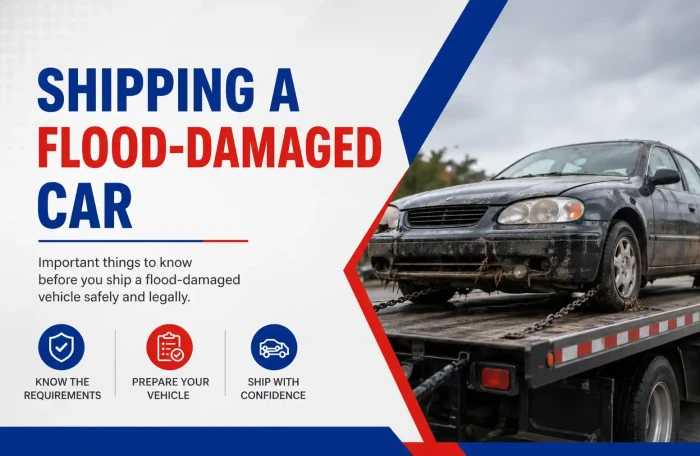
Accurate reporting of the vehicle condition is mandatory for proper dispatch. A standard ramp load is impossible for a vehicle with severe collision damage. Vehicles lacking keys or functioning batteries fall into the non-runner category. The driver must arrive with a winch-equipped car carrier to safely extract a non-runner pickup.
A winch utilizes a motorized cable system to pull the vehicle onto the flatbed. Inaccurate condition reports force the auction yard to use heavy machinery. Heavy machinery triggers forklift loading fees and introduces the risk of severe undercarriage trauma. Drivers face extreme danger loading compromised vehicles without proper mechanical assistance. Forklift damage negates potential profits from the auction purchase. Winch service for salvage cars adds a premium to the base rate due to specialized equipment requirements. Missing wheels require specialized dollies for safe loading procedures.
The National Auto Auction Association (NAAA) arbitration policy outlines specific disclosure requirements for structural damage and vehicle conditions. Sellers must avoid using deceptive announcements regarding the vehicle condition. Transparent communication prevents costly delays at the loading facility.
Step 4: Follow New EV Shipping Requirements and Lithium-Ion Safety Protocols
There are no hybrid-equipped carriers for EVs. Only standard transport options are available: open and enclosed. Electric vehicle transport cost is influenced by strict lithium-ion battery safety protocols. Salvaged electric vehicles present unique fire risks due to compromised battery cells.
Specialized handling increases the overall transport expenditure. Drivers require specific hazmat awareness training to transport damaged lithium-ion batteries safely. Handlers executing a Tesla auction transport require the battery to adhere to the 30 percent state of charge rule.
Battery maintenance below the threshold minimizes thermal risks during transit. The Department of Transportation regulates lithium batteries as a hazardous material because they pose an unreasonable risk to safety. Damaged lithium batteries have a greater potential to short-circuit, release heat, and cause a fire. Buyers must verify the battery status before dispatching a driver. Standard open trailers provide necessary ventilation during transit. Ignoring safety protocols results in carrier refusal at the auction gate. The industry guidelines mandate strict adherence to battery health diagnostics prior to loading.
Step 5: Seek Vetted Auction Carriers for Accurate Online Auction Shipping Quotes
The standard policy requires no upfront payment until choosing a carrier. Fuel volatility and route density dictate final pricing. Market fluctuations cause transport rates to shift daily. Carriers base pricing models on the specific distance and vehicle dimensions. Heavy-duty pickup trucks occupy more space and incur higher transport fees.
Step 6: Audit the Digital Bill of Lading Against the Physical Vehicle Upon Delivery
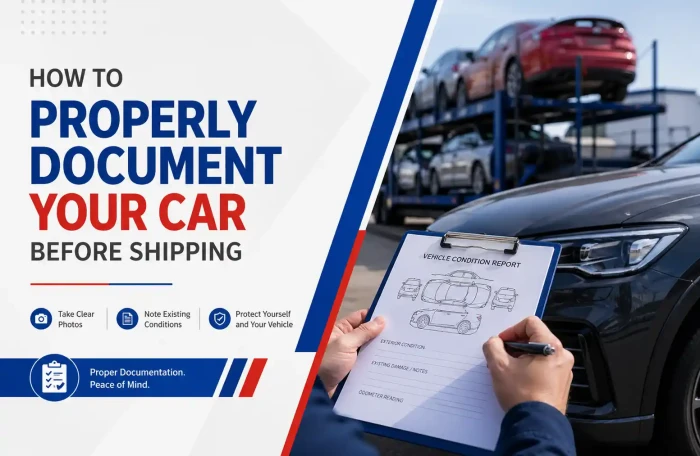
The driver records the vehicle condition alongside pre-shipment inspection photos before leaving the lot. The digital bill of lading serves as the primary legal document for the shipment. Buyers must inspect the vehicle thoroughly in daylight conditions.
Undocumented damage remains the responsibility of the buyer after signing the delivery receipt. Drivers use specialized mobile applications to capture the initial vehicle condition.
Ready To Get Your Auction Vehicle Off The Lot And Into Your Driveway?
Winning the bid is an incredible rush, but letting your new asset sit on the auction lot is a fast way to lose your margin to daily storage penalties. Let the customer service agents at AmeriFreight Auto Transport step in to coordinate the heavy lifting. As one of the best reviewed in the industry, we know exactly how to navigate rigid yard protocols, handle the paperwork, and secure the right equipment for your vehicle's specific condition.
Because the freight market and driver availability shift daily, we don't offer exact quotes, but we will build a realistic estimate based on real-world variables. Most importantly, you carry zero financial risk while we search for your driver, because there is no upfront payment until you choose a carrier.
Connect with our agents today to discuss your route and estimate your transport costs.