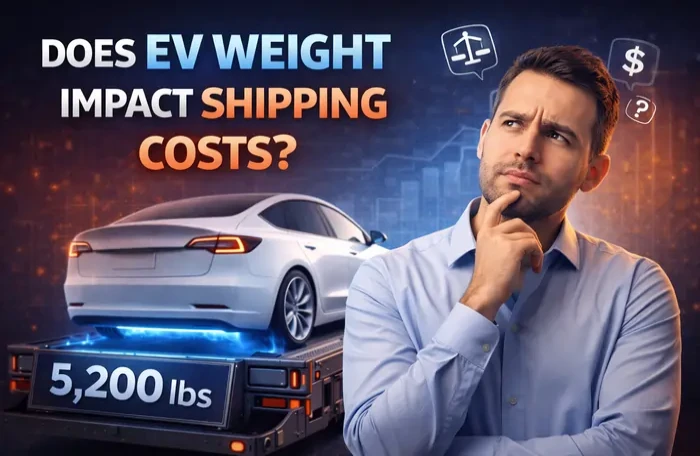


Yes, EV weight affects shipping costs, and drivers often don't see this until they request an estimate.
Electric vehicles are typically heavier than gas-powered models. The battery pack alone can add 1,000 to 2,000 pounds to curb weight. That extra mass affects how carriers load their trailers, how many vehicles they can haul at once, and how they assess risk. When capacity drops, or risk rises, rates adjust.
If you are shipping a compact EV sedan, the impact may be modest. If you are moving a full-size electric truck or SUV, weight is a major cost driver.

Why Weight Changes the Math for Carriers
Auto transport carriers operate under strict federal weight limits. The standard maximum gross vehicle weight for a commercial truck on interstate highways is 80,000 pounds. That total includes the tractor, trailer, and every vehicle loaded on it.
A traditional multi-car carrier might hold eight to 10 gas sedans. Swap those out for heavier EVs, and the math shifts. If each vehicle weighs 6,000 pounds instead of 3,500 to 4,000 pounds, the truck may reach its legal weight limit with only five or six units onboard.
Fewer vehicles per trip means each slot must cover a larger share of the operating costs. That is where the increase shows up in your shipping estimate.
Not All EVs Trigger a Surcharge

Not every EV creates a major weight surcharge. In the compact sedan segment, weight differences are often small, and some EV sedans fall into the same range as comparable luxury gas models. In those cases, the pricing impact is usually minimal.
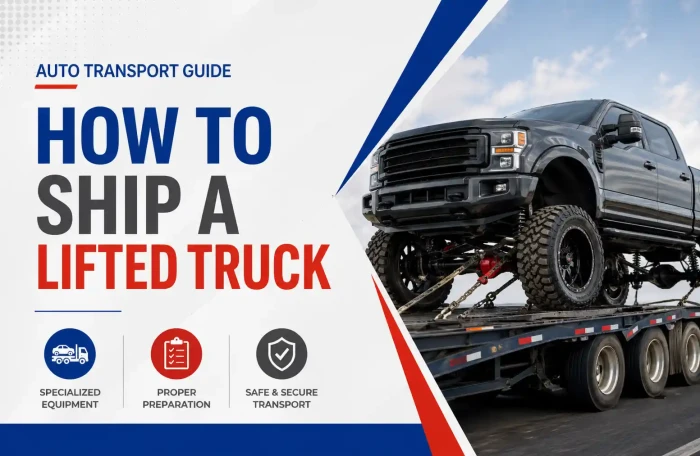
The gap becomes much more noticeable in larger vehicle categories. Full-size electric trucks and SUVs often weigh 6,000 to 9,000 pounds, and many are much heavier than similar gas-powered models. This weight reduces trailer capacity and increases the per-vehicle rate.
Once a vehicle exceeds roughly 5,000 to 5,500 pounds, it often falls into a heavy category for carriers, and a weight-based surcharge becomes more likely.

Insurance and Risk Considerations
Electric vehicles often have higher market values. The battery pack is also the most expensive component and is located low in the chassis, increasing the risk of costly damage during loading or unloading. Carriers factor this exposure into rates. Higher declared values may require higher cargo coverage limits, which can raise shipping costs.
How Weight Affects Loading and Handling
Weight also influences how a vehicle is positioned on the trailer. Federal regulations do not limit total weight alone. They also control how weight is distributed across axles. Heavy EVs must often be placed directly over axle groups rather than at the trailer ends.
This reduces loading flexibility. If your vehicle is scheduled for delivery mid-route, other vehicles may need to be repositioned, which adds labor and time.
Heavier models may also require reinforced trailer components or hydraulic lift equipment, particularly when ground clearance is low. When needed, that equipment increases the overall cost.
Personal Items and Weight Limits
The Department of Transportation does not permit household goods inside vehicles. Some carriers may allow up to 100 pounds of items in the trunk with prior approval, often for an additional fee.
Heavier EVs leave little margin for extra weight. Even small amounts of cargo can push a truck closer to legal limits. If the vehicle exceeds its agreed-upon weight at pickup, the carrier may decline the shipment or apply an overweight fee.
The EV Weight and Shipping Cost
EV weight significantly affects shipping costs. The effect ranges from modest in smaller models to significant in heavy trucks and SUVs. If you are budgeting for transport, focus on three variables: total weight, vehicle size, and route. Those factors shape capacity, fuel use, and risk exposure more than whether the vehicle is an EV or a gas model.
When you request an estimate from AmeriFreight Auto Transport, we provide an estimate based on factors like your route, vehicle type, size, and weight.
Our agents coordinate with nationwide carriers whose equipment and capacity match your vehicle. For heavier EVs, this means confirming that the carrier can legally accommodate the weight, has sufficient trailer space, and understands EV loading requirements.
Disclaimer
Shipping rates vary by vehicle weight, size, route, carrier availability, and fuel costs. Final pricing may change after carrier inspection and pickup confirmation.