Texas Car Shipping by City — Local Knowledge Across the Lone Star State
Texas is not one car shipping market — it's several. Shipping a car in Houston's Energy Corridor is a completely different logistics challenge from a pickup in West Texas oil country or a delivery to a Rio Grande Valley retirement community. AmeriFreight Auto Transport has coordinated vehicle shipments across every region of Texas for more than 20 years.
Houston — The Energy Capital and Biggest Texas Shipping Market
Houston is the largest car shipping market in Texas and one of the most active in the country. The city's combination of energy sector employment, one of the country's busiest port systems, strong international trade ties, and a massive metropolitan footprint creates enormous vehicle shipping volume in both directions.
Houston's sheer scale is both an advantage and a challenge for carrier logistics. On the positive side, I-10, I-45, I-69, and the Beltway system provide excellent carrier access — carrier frequency into and out of Houston is among the highest in the country. On the logistical side, Houston's sprawl means that a 'Houston' shipment can originate from The Woodlands, Sugar Land, Katy, Pearland, or Pasadena — each requiring different routing. Your agent will coordinate pickup at the most carrier-accessible location for your specific part of the metro.
For residents in high-rise buildings downtown, the Galleria area, or Midtown Houston, carrier trucks may need to use a nearby accessible meeting point — a wide commercial street or parking facility where loading can be completed safely.
Dallas and Fort Worth — The DFW Metroplex
Dallas and Fort Worth together form one of the largest metro areas in the country, and one of the most carrier-active markets for Texas vehicle shipping. I-35W, I-30, I-20, and I-635 provide strong carrier access throughout the Metroplex. Most residential pickups and deliveries in suburban DFW areas (Plano, Frisco, Allen, Southlake, Arlington, Irving) can typically be coordinated with Door-to-Door Service (Location Permitting).
In Dallas's urban core — particularly the Uptown, Deep Ellum, and Downtown Dallas areas — carrier trucks may require a nearby meeting point due to street restrictions. Your agent will confirm logistics for your specific address. Fort Worth has generally good carrier access given its more spread-out layout and proximity to I-20 and I-30.
San Antonio — Military Hub and Thriving City
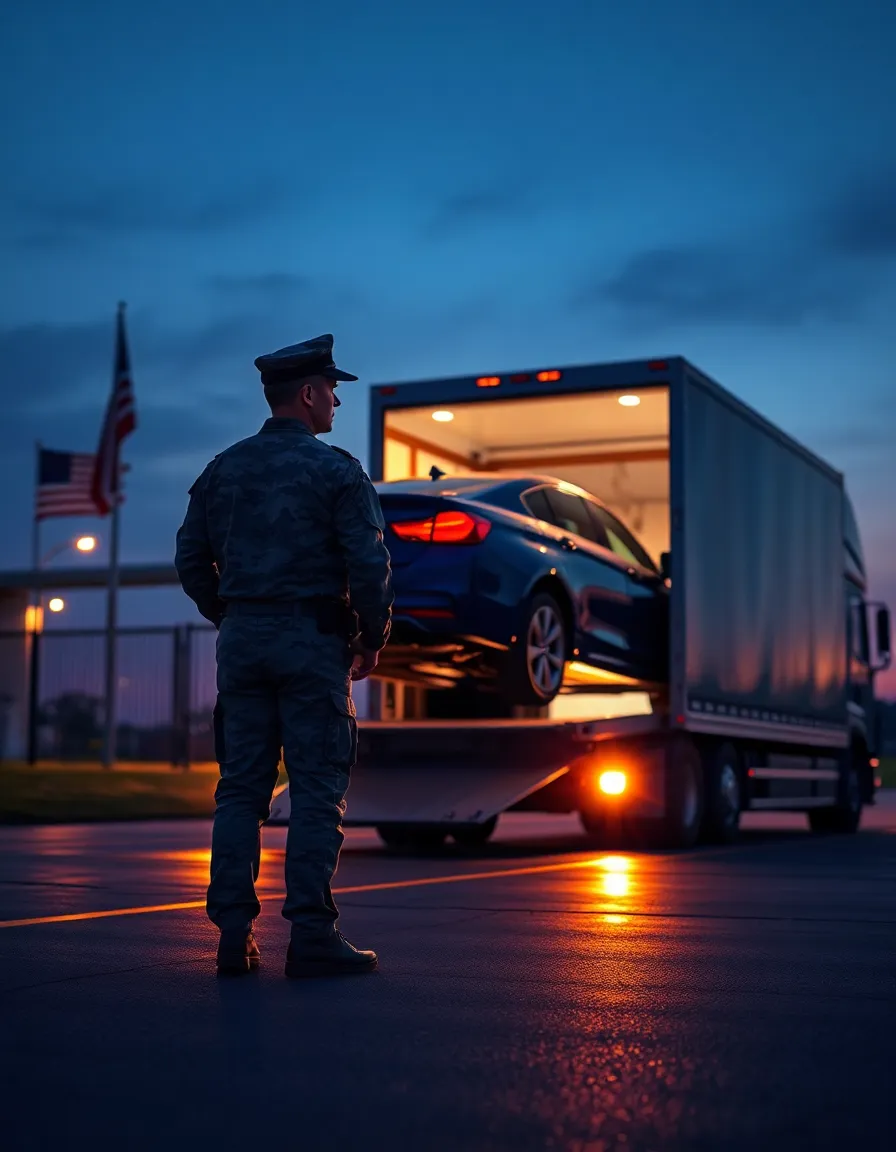
San Antonio is one of the most active military vehicle shipping markets in Texas. Fort Sam Houston, Lackland Air Force Base (Joint Base San Antonio), and Randolph AFB generate consistent PCS-driven vehicle shipping demand in both directions. San Antonio's established residential layout and strong I-35, I-10, and I-37 access generally allow Door-to-Door Service (Location Permitting) throughout most of the metro.
Austin — Tech Hub and Fast-Growing Market
Austin's rapid tech industry growth — Apple, Tesla Gigafactory, Oracle, Dell, Samsung, and dozens of major employers — generates some of the highest professional relocation vehicle shipping activity of any Texas city. Austin's terrain also adds logistics considerations: the Hill Country topography around certain neighborhoods and the city's rapid residential expansion into suburban corridors (Pflugerville, Cedar Park, Round Rock, Dripping Springs) create variable carrier access depending on your specific area.
El Paso — The Border City
El Paso's position on the US-Mexico border, its proximity to New Mexico, and its significant military presence (Fort Bliss is one of the largest Army installations in the country) create distinct vehicle shipping dynamics. El Paso is accessible via I-10 from the east and west — carrier frequency on the I-10 corridor is reasonable, though less frequent than on higher-volume Texas metro routes. Shipments to and from El Paso may have slightly longer pickup windows than Dallas or Houston.
West Texas, the Permian Basin, and the Panhandle
West Texas's energy boom has driven significant vehicle shipping demand — oil and gas workers relocating to Midland, Odessa, and the broader Permian Basin frequently ship vehicles when taking employment in the region. Carrier access in West Texas is lower than in major metro areas — expect longer pickup windows and the possibility of meeting point coordination at the nearest accessible highway corridor.
The Panhandle (Amarillo and surrounding region) is accessible via I-40 and I-27. Carrier frequency here is lower than on Texas's major south-central corridors, and pickup windows may be extended relative to Houston or Dallas.
Rio Grande Valley and South Texas
The Rio Grande Valley — McAllen, Harlingen, Brownsville — is a growing shipping market driven by retirement relocations, cross-border business activity, and seasonal residents. Carrier access is good along the US-83 and US-281 corridor, though pickup windows may be longer than in the major metro areas. Your agent will confirm timing specifics for the Valley.