

Shipping a car to another state goes more smoothly when the plan matches how carriers build routes and load trailers. Route demand, pickup access, vehicle condition, and transport type each change cost, timing, and how much coordination ends up on your plate.
AmeriFreight Auto Transport arranges interstate car shipping by connecting your shipment with a carrier whose route and equipment fit your pickup and delivery areas, location permitting.
How To Ship A Car To Another State
Start by gathering the details carriers actually price from.
Pickup and delivery ZIP codes
Vehicle year, make, and model
Running condition or non-running condition
Notes on size or setup, including lift kits, oversized tires, roof racks, or low clearance
Access limits at both ends, including gated communities, tight streets, or apartment rules
Next, build a planning range using the AmeriFreight Car Shipping Cost Calculator. Use the estimate as a baseline so the rest of the decisions stay focused on tradeoffs, not guesswork.
Then, pick the transport method. Open transport and enclosed transport both move vehicles across state lines, but the choice changes exposure and cost.
Finish by preparing for inspection and paperwork. A clean handoff at pickup and delivery keeps the process predictable.
Rate Examples From AmeriFreight’s Calculator
Example rates below come from one set of inputs using AmeriFreight’s rate estimate tool for a 2025 Toyota Camry, running condition, and a one-week lead time, pulled from the AmeriFreight Car Shipping Cost Calculator.
Across these four lanes, the combined distance equals 4,808 miles. Combined totals equal $3,502 open and $5,954 enclosed. Average per lane equals $875.50 open and $1,488.50 enclosed. Blended across the full mileage, averages land near $0.73 per mile open and $1.24 per mile enclosed. Enclosed runs about 60 percent higher per mile across the same miles.
A clear pattern shows up in the local lane. Ninety-four miles still carries dispatching, loading, and scheduling effort, so the total can look high for the distance. Longer lanes spread fixed effort across more miles, so per-mile averages can land lower even when the total price is higher.
Open Transport Vs. Enclosed Transport
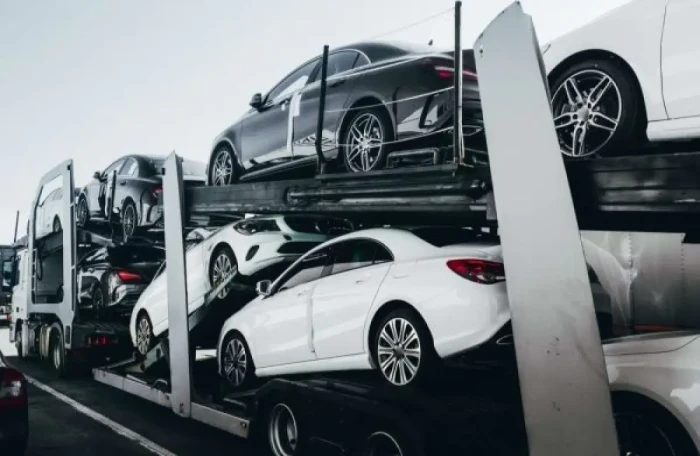
Open transport fits many daily drivers. Road dust, weather, and normal highway debris exposure come with the method.
Enclosed transport reduces exposure and often fits vehicles where even minor cosmetic risk feels expensive to absorb. The calculator lane table above shows the difference using the same vehicle and timing inputs.
Electric vehicle shipments use standard options only: open and enclosed. No hybrid-equipped carriers are used for EVs.
Pickup And Delivery Access
Door-to-door service only works when a transport truck can safely reach the address. AmeriFreight offers Door-to-Door Service (Location Permitting), meaning pickup and delivery happen as close to the addresses as a carrier can safely reach.
Narrow streets, low branches, dead ends, tight turns, steep driveways, construction, and local parking rules can force a nearby meeting point. Planning a backup location near a wider road ahead of time usually prevents a stressful call when a full-size trailer cannot approach the address.
Pickup Windows And Timing
Pickup and delivery usually operate inside windows because routes shift with traffic, weather, load sequencing, and equipment issues. Expedited options can prioritize a shipment, but expedited shipping does not guarantee pickup or delivery dates.
Car shipping operates inside the same national trucking network that moves nearly everything else. Capacity is not unlimited, and carriers constantly choose loads that keep routes efficient and trailers full.
American Trucking Associations says, “In 2024, the nation’s domestic truck tonnage shipped was estimated at 11.27 billion tons of freight transported (primary shipments only),” on its Economics and Industry Data page.
Practical impact shows up fast during interstate car shipping. A carrier is fitting your vehicle into a route that has to make financial sense within a very busy system. Pricing can shift when trucks and drivers are tighter on certain lanes, and pickup timing can move when a route gets rearranged. More pickup flexibility usually gives carriers more options to place your vehicle on a truck already headed your way, instead of forcing extra repositioning miles.
Vehicle Details That Change Price
Vehicle details affect how the carrier loads the trailer and how long loading takes.
Vehicle Size and Weight: Larger vehicles often take more trailer space and can reduce usable capacity on a load.
Vehicle Height and Clearance: Lift kits, oversized tires, roof racks, and low clearance bodywork can affect positioning and loading approach.
Running Condition: A running vehicle can drive onto the trailer under its own power. Non-running vehicles often require equipment like a winch and more labor at pickup and delivery.
Many people assume a rolling vehicle counts as running. Carriers usually need the vehicle to start, steer, and brake so loading stays safe.
Vehicle Prep Before Pickup
A few steps reduce delays and help inspections go faster.
Wash the exterior so that existing chips and scratches show clearly
Photograph the vehicle in good light from multiple angles
Remove toll tags and secure loose accessories
Leave fuel low enough to reduce weight while keeping enough to move the vehicle as needed
Keep the cabin and trunk clear
DOT does not permit personal items to be shipped in vehicles. Carrier exceptions can exist, but added fees often apply, and discussion needs to happen beforehand. Details appear in Can You Ship Personal Items In Your Car?.
Bill Of Lading At Pickup And Delivery
The Bill of Lading is the inspection form you and the driver sign at pickup and again at delivery. It documents the vehicle’s condition both times, so taking a careful walkaround before signing helps prevent confusion later. AmeriFreight breaks down the process in Bill of Lading Explained.
Federal rules also show how seriously the bill of lading content gets treated in regulated transport contexts. The required list of items under 49 CFR 375.505 offers a useful reminder that documentation standards exist for a reason.
A careful walkaround at pickup matters. A second careful walkaround at delivery matters just as much.
Ship State To State With AmeriFreight Auto Transport
State-to-state car shipping gets easier when you can see how the process works end to end, what information you will need for an estimate, and how pickup and delivery get handled on real routes.
To get a full overview of state-to-state shipping, including what to expect during scheduling and transport, go to AmeriFreight’s State-To-State Car Shipping Page.