

The contemporary automotive logistics landscape is a complex infrastructure that facilitates the movement of more than 3.5 million vehicles domestically each year. When handing over the keys to a valuable asset, people often assume the shipping process is standard across the board. The reality is that the exact trailer configuration chosen for a route dictates the mechanical safety, loading procedure, and highway risk of the cargo. The choice between open-air haulers, enclosed containers, and heavy-haul lowboys is a strict mechanical and strategic decision based on the specific requirements of the vehicle.
How Do Open-Air Multi-Car Auto Transport Trailers Work for Vehicle Shipping?
Most people assume the exact same truck that moves a standard sedan will show up to move a lifted truck or a classic sports car. The dimensions, weight, and ground clearance of your vehicle dictate the specific trailer type a dispatcher assigns to your route. This selection directly impacts how the car is loaded, how the suspension is secured, and the level of highway risk it faces.
The multi-level open carrier handles approximately 90 percent of all vehicle shipments in the United States. Built from high-strength steel or aluminum framing, these rigs dominate the highways by keeping fuel and labor costs divided among multiple vehicles.
A standard configuration relies on a stinger-steer setup. By placing the coupling point low and behind the tractor's rear drive axles, the trailer extends a structural cage above the truck cab. This allows a single driver to haul up to 11 vehicles at once.
Living on a narrow residential street presents a physical barrier for a 75-foot semi-truck. Drivers simply cannot navigate tight cul-de-sacs or areas with low-hanging trees. For these routes, dispatchers use hotshot setups. Heavy-duty pickup trucks pull single-level trailers carrying one to four vehicles.

Why Are Enclosed Car Shipping Trailers the Standard for High-Value Vehicles?
Luxury, classic, and high-dollar vehicles require protection from road debris and weather. Soft-sided enclosed trailers use a metal frame wrapped in heavy-duty canvas or vinyl. They block rain and dust while keeping the overall load lighter. Hard-sided enclosed trailers feature rigid aluminum or composite walls, functioning essentially as shipping containers on wheels.
Loading mechanics matter immensely for vehicles with low ground clearance. Standard metal slide-in ramps require careful alignment and present a high risk of scraping front splitters. Premium hard-sided trailers solve this by using hydraulic liftgates. The level platform keeps the car completely horizontal while raising it to the deck height.
Many buyers assume heavy battery packs require specialized equipment. There are no hybrid-equipped carriers designed exclusively for electric vehicles. Only standard transport options are available. Enclosed shipping makes logical sense for high-end electric models because modern battery systems are highly sensitive to extreme heat and undercarriage impacts. Data indicates that these battery-powered vehicles experience a 17 percent higher claim frequency than internal combustion models.
What Flatbed and Lowboy Truck Types Handle Oversized Cargo?
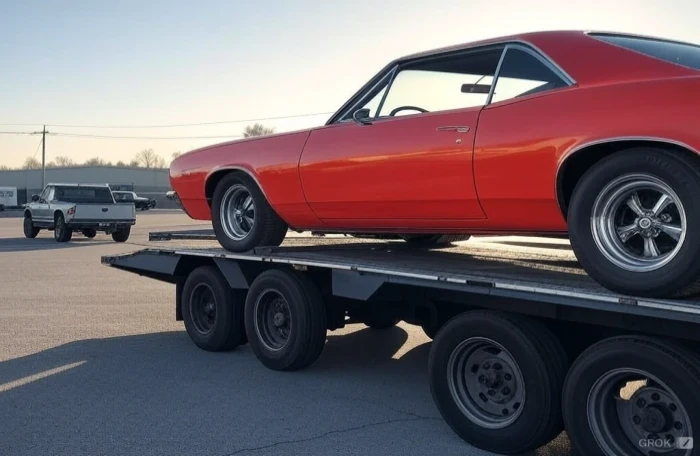
Standard multi-car trailers cannot accommodate lifted suspensions or heavy industrial equipment. Transporting massive loads requires specialized lowboy trailers. The middle section of a lowboy drops 18 to 24 inches above the ground, allowing the rig to carry tall equipment while remaining within legal height limits.
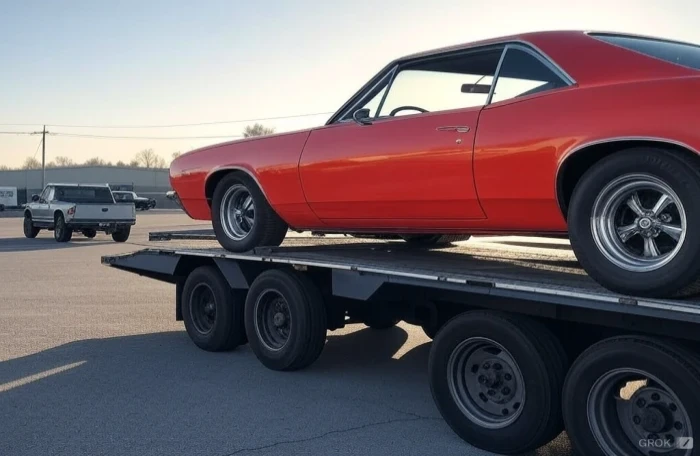
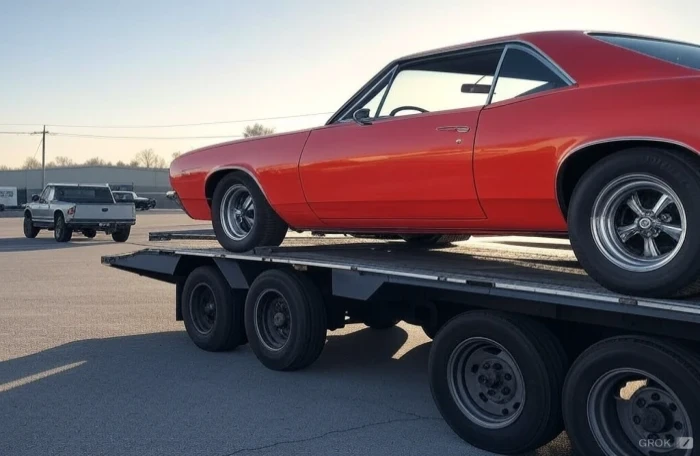
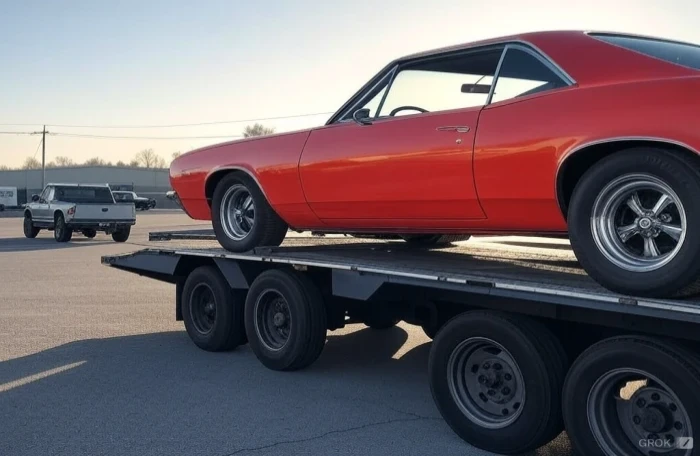
For vehicles that cannot move under their own power, flatbed trailers are the standard solution. Drivers use electric or hydraulic winches to pull the dead weight safely onto the deck.
How Do Car Hauler Securement Mechanics Impact Suspension and Highway Risk?
Trailer type is only half the equation. How a driver anchors the vehicle determines if it arrives with damaged suspension. Axle straps wrap around the axle housing or control arm to provide a rigid connection. While they offer a solid foundation, improperly routed straps can compress suspension components or damage brake lines.
Over-the-tire straps secure the car by the tires rather than the frame. This suspension-friendly approach allows the vehicle to absorb highway bumps naturally. Many luxury haulers demand this method to eliminate the risk of distorted tires or crushed suspension bushings.
How Do Carriers Manage Risk During the Vehicle Shipping Process?
Moving heavy machinery at highway speeds involves inherent risks, yet serious incidents are statistically rare. Fewer than 5 percent of shipped vehicles report any type of damage annually. The most frequent culprit is simple road debris.
The Bill of Lading serves as the most critical document in the transport process. It acts as a vital inspection record before loading and upon delivery. Any new damage must be documented on this form at delivery to validate a claim.
AmeriFreight Auto Transport does not offer insurance. We refer to AFTA plans as optional gap protection plans. Only AFTA coverage recipients have 48 hours to report damages.