



How a dealership gets a new car to your driveway depends entirely on how far away you live. A local dealer might simply hand the keys to a staff member, but an out-of-state car purchase requires booking space on a commercial transport trailer. Because buyers now routinely finalize deals from inventory located hundreds of miles away, vehicle delivery is no longer just an occasional showroom courtesy. It is a core logistical operation. Dealerships must operate as freight coordinators just as much as vehicle retailers, relying on the physical distance between your house and their lot to determine exactly how your new car arrives.
The Local Dealership Car Delivery Process
When your home sits within 100 miles of the dealership, the delivery process is usually managed entirely in-house. A dedicated delivery specialist who works for the dealer drives the car directly to your house. Another staff member follows in a separate vehicle to bring the specialist back to the lot.
Before the car ever leaves the lot, the service department completes a multi-point inspection. Technicians remove the protective factory plastics, complete a full detail, and ensure the gas tank or battery holds a sufficient charge. The driveway handoff replicates the showroom experience. The specialist will help pair your phone to the infotainment system, walk you through specific vehicle features, and collect any final physical signatures. Dealerships willingly absorb the personnel costs and liability for these local runs because a smooth home delivery heavily influences customer retention.

Regional Auto Transport via Contracted Drivers
There is a middle ground for buyers who live beyond the local radius but not quite far enough to justify a cross-country hauler. For trips between 100 and 300 miles, dealerships often utilize driveaway services.
Instead of waiting days for a spot to open up on a commercial trailer, the dealership contracts a professional driver to physically drive the purchased vehicle to your home. This method circumvents the logistical delays of traditional auto transport routing. The primary tradeoff is that the journey adds actual highway miles to your new vehicle's odometer before you ever take the keys. Buyers must decide if the speed of a driveaway service outweighs the desire for a completely un-driven delivery.

Long-Distance Car Shipping by Commercial Haulers
The seamless nature of local delivery disappears when you purchase a vehicle from a dealer located several states away. Buyers often assume large dealerships own the massive transport trucks parked in their back lots. They do not. Once shipping a car from a dealership requires long-distance highway transport, the seller essentially becomes a logistics broker.
They rely on third-party transport networks to secure a spot on a multi-car trailer. Dealerships use digital transportation management software to post the vehicle to a national load board. Independent trucking companies claim the job. The software automatically vets the carrier for active liability insurance and federal compliance.
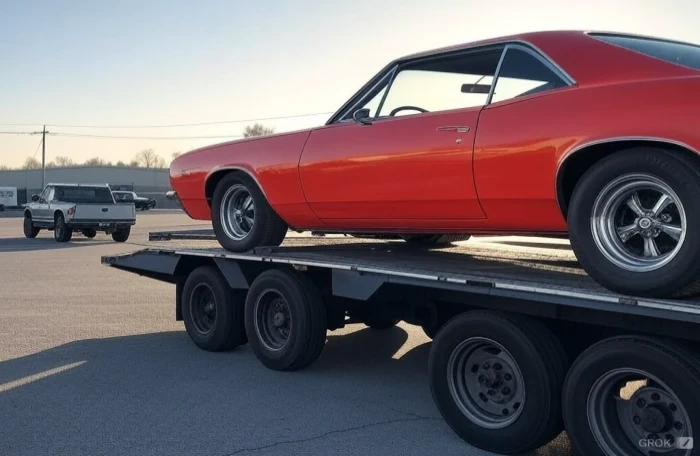
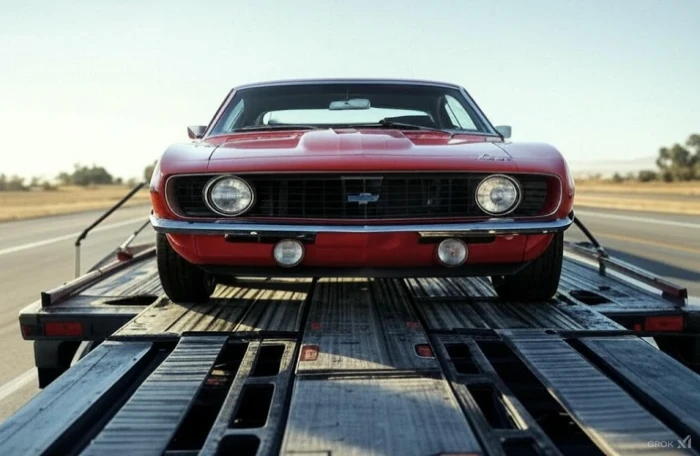
The vehicle will likely travel on an open carrier transport trailer alongside seven to ten other cars. This is the default method for standard sedans and trucks. If you purchased a high-value exotic or a classic car, the dealer coordinates enclosed auto transport to protect the vehicle from weather and road debris. Enclosed shipping commands a massive price premium.
Car shipping costs follow a distinct economic curve. Short trips cost significantly more per mile than cross-country journeys. Industry data indicates short-haul deliveries frequently exceed $1.50 per mile. Coast-to-coast shipments can drop below $0.50 per mile. Carriers have to account for the fixed time it takes to load, secure, and unload a vehicle regardless of how far it travels.
The physical dimensions of your purchase also change the math. Heavy-duty trucks and oversized SUVs take up space that could otherwise hold multiple compact cars. Modern electric vehicles introduce a similar hurdle. Their dense lithium-ion battery packs make them 20 to 30 percent heavier than gas-powered cars. There are no hybrid-equipped carriers for EVs. Only standard transport options are available: open and enclosed. Since carriers operate under strict federal weight limits, shipping a heavy electric vehicle or a large truck usually incurs a surcharge to offset the lost capacity of the carrier.

The Bureaucratic Bottleneck of Out-of-State Purchases
It is natural to assume the physical distance between you and the dealership dictates when your new car will arrive. The actual driving time is rarely the primary holdup. The real friction happens in the business office before the carrier is even allowed to pick up the keys.
Moving a vehicle across state lines triggers a complex legal transfer of title and registration. The dealership is responsible for calculating and collecting sales tax based on your specific residential ZIP code rather than the location of their lot. If you live in a state with layered county and local taxes, the dealership must use specialized software to prevent accounting errors and funding delays.
Many state departments of motor vehicles also refuse to accept digital agreements. They demand traditional "wet signatures" on title applications. You will likely find yourself overnighting physical paperwork back and forth before the vehicle can legally leave the dealership. While most dealers issue a temporary operating plate so you can drive the car immediately upon arrival, the permanent registration process typically takes 14 to 40 business days to complete in the background.

The Commercial Auto Transport Drop-Off
When a long-distance purchase finally arrives at your home, the experience is purely logistical. The person unloading your car is a commercial truck driver. They are not a dealership representative. They will not show you how to adjust the adaptive cruise control or pair your Bluetooth. Their only responsibility is to safely take the vehicle off the trailer and hand you the keys.
The driver will present a document called a Bill of Lading. This piece of paper acts as the official receipt and inspection report for the journey. At this exact moment, your responsibility as a buyer peaks. The dealership's direct liability effectively ended the moment the vehicle was loaded onto the carrier days earlier. You must walk around the car and inspect the paint, glass, and wheels for transit damage before signing the Bill of Lading. Once you sign that document without noting any damage, you legally accept the vehicle in its current condition.
The Final Step of Remote Vehicle Delivery
Buying a car from a distance removes the traditional friction of spending hours sitting at a dealership desk. It replaces that friction with a highly orchestrated logistical operation running entirely in the background. As the automotive industry continues to rely on decentralized inventory, the mechanics of getting a car from a distant lot to a residential driveway dictate the actual timeline of your purchase.
Buyers who understand the differences between local handoffs, driveaway services, and commercial hauling are better prepared for the realities of modern vehicle ownership. The showroom is no longer the final step of the transaction. The process truly ends when the keys change hands at your front door.