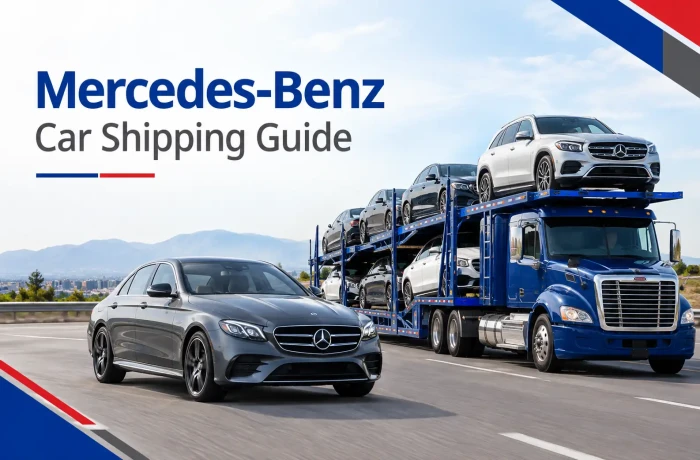


Mercedes-Benz Car Shipping Guide 2027: What to Know
Mercedes-Benz operates by a legendary motto: "The Best or Nothing." From the elegant, executive comfort of the E-Class and the track-dominating prowess of the AMG GT, to the undeniable presence of the G-Class and the whisper-quiet electric Maybach EQS, this brand represents the pinnacle of automotive engineering. However, when it comes time to move these rolling masterpieces across the country, driving them yourself isn't always the best option. A cross-country road trip adds thousands of miles to your odometer, exposes your pristine paint to highway gravel, and burns days of your valuable time.
Instead, partnering with AmeriFreight Auto Transport allows you to hand off the heavy lifting. We connect you with a nationwide network of highly vetted motor carriers who understand the precise tie-down methods, specialized liftgates, and massive weight allowances required to transport modern German luxury vehicles safely.
Why Mercedes-Benz Transport Needs Extra Attention
Shipping a high-performance or specialized vehicle requires customized logistics. The physical profile and digital ecosystem of your specific Mercedes-Benz dictate exactly how a transport carrier must load, secure, and manage the vehicle:
Navigating Low Clearance: The AMG GT and Performance Models
When shipping a high-performance vehicle like the Mercedes-AMG GT, standard auto transport equipment simply will not suffice. These track-focused cars feature incredibly low ground clearance and utilize aggressive, elongated carbon-fiber front splitters and rear diffusers to manipulate airflow.
Standard open car haulers use steep, fixed metal ramps. If an AMG GT attempts to drive up one of these steep inclines, the carbon-fiber front fascia will violently scrape or shatter against the ramp. To protect these vulnerable aerodynamic components, you must specifically request an enclosed carrier equipped with a horizontal hydraulic liftgate.
A liftgate allows the driver to pull your AMG horizontally onto a completely flat platform resting at ground level. The entire platform is then mechanically hoisted straight up into the trailer, entirely eliminating the dangerous angles of traditional loading ramps.
Massive Dimensions: Shipping the G-Class, Sprinter Vans, and Maybach EVs
Mercedes-Benz pushes the absolute boundaries of vehicle size and weight, forcing transport dispatchers to get creative when assigning trailers:
The Towering G-Wagon: The iconic Mercedes-Benz G-Class is already a tall, boxy, heavy SUV. However, special editions like the Mercedes-AMG G 63 4x4 Squared take this to the extreme. Utilizing portal axles, this specific G-Wagon stands roughly 7.5 feet tall and weighs over 6,000 pounds. It is physically impossible to fit this towering SUV inside a standard double-deck enclosed trailer without crushing the roof. These extreme vehicles require highly specialized single-deck enclosed trailers that forgo an upper ramp entirely to accommodate the massive height.
Sprinter Vans and Custom Campers: The Mercedes-Benz Sprinter dominates the commercial and luxury "van life" markets. High-roof Sprinters and custom camper conversions are exceptionally tall and have awkward weight distributions. Because they cannot fit on a standard multi-car hauler without striking highway overpasses, they frequently require specialized commercial flatbeds or step-deck trailers.
The Heavyweight Maybach EQS SUV: The transition to electric power has resulted in incredibly dense, heavy vehicles. The Mercedes-Maybach EQS 680 SUV carries a massive 118-kWh battery pack, bringing its curb weight to roughly 6,658 pounds. Because commercial auto haulers are strictly capped by an 80,000-pound federal weight limit on the highway, loading a nearly 7,000-pound Maybach means the carrier often has to leave other trailer slots completely empty to remain legal.
Protecting AIRMATIC Suspensions and 4MATIC Drivetrains
Transporting a Mercedes-Benz without inflicting structural damage requires strict adherence to the manufacturer's proprietary guidelines, specifically regarding its advanced suspension and all-wheel-drive systems:
Managing the AIRMATIC System: Many Mercedes-Benz models feature adaptive AIRMATIC air suspensions that actively level the vehicle based on speed and load. If a car is loaded onto a bouncing transport trailer, the active suspension sensors will continuously try to "level" the car during the trip. This will rapidly drain your 12-volt accessory battery and can severely stress the pneumatic bladders. Before transport, you must use the digital control panel to engage Transport Mode (or Tow Mode). This digitally locks the air suspension in place so the vehicle remains perfectly static while strapped to the carrier deck.
Soft Straps vs. Steel Chains: Transport drivers must never use old-school steel chains hooked into the chassis of a Mercedes-Benz. Chains cause metal-on-metal abrasion, destroy anti-corrosion undercoatings, and can permanently bend lightweight forged aluminum suspension components. Instead, top-tier carriers use soft synthetic wheel nets or tire baskets that secure the vehicle exclusively by the rubber tread of the tires, allowing the car's suspension to absorb highway bumps naturally.
The 4MATIC Rule: Vehicles equipped with 4MATIC all-wheel drive must always be driven onto the trailer under their own power. They should never be forcefully winched or dragged while in gear, as this can severely damage the transfer case and drivetrain components.
Military PCS and Everyday Relocations (C-Class, E-Class, and GLC)
While the massive G-Wagons and low-slung AMG track cars require specialized logistics, everyday luxury daily drivers like the C-Class sedan, E-Class, and the highly popular GLC crossover make up the vast majority of cross-country shipments.
These models are incredibly popular for corporate relocations, snowbirds heading south for the winter, and active-duty military service members organizing a Permanent Change of Station (PCS). Because these standard vehicles fit flawlessly onto multi-car open trailers without triggering extreme weight or height restrictions, they are incredibly cost-effective to ship and easily qualify for the most budget-friendly base rates on the market.
Where Enthusiasts Find Out-of-State Mercedes-Benz Vehicles
Whether you are hunting down a rare AMG spec or managing a corporate lease, shipping across state lines requires a bit of paperwork savvy:
Remote Dealership Buys: Finding a highly specific Mercedes-Benz build—like a custom-ordered SL Roadster or a specific matte-paint AMG—often means buying from a dealership several states away. When you buy a car sight-unseen, the transport driver steps in as your official proxy. They will perform a meticulous walkaround inspection with the dealership before loading the car, recording any pre-existing scratches on a legal document called the Bill of Lading (BOL). This protects you from being blamed for existing dealership damage.
The "Transport Mode" Quirk: Do not panic if your Mercedes me connect telematics app suddenly goes dark or limits your tracking during transit. Dealerships frequently place new cars into factory Transport Mode to preserve battery life on the trailer, which temporarily restricts telematics and convenience features until the car is officially delivered and unlocked at your home.
Handling Out-of-State Lease Returns: Mercedes-Benz Financial Services manages thousands of leases. If you have moved across the country, driving your leased vehicle back to the original dealership can easily push you over your mileage limit, resulting in steep financial penalties. Shipping the car is often far cheaper than paying those over-mileage fees. Just ensure the transport driver thoroughly fills out the Bill of Lading at drop-off; this is your legal proof that the car was returned without transport damage, protecting you from unfair end-of-lease wear-and-tear charges.
Protecting Classic and Heritage Mercedes-Benz Models
The vintage Mercedes-Benz collector market is renowned worldwide. If you are shipping a pristine 280SL Pagoda, a classic 300SL Gullwing, or a highly sought-after 190E Cosworth, standard shipping simply won't do.
These irreplaceable heritage models require climate-controlled enclosed transport. Unlike standard trailers, climate-controlled units actively manage temperature and humidity. This is absolutely critical for vintage Mercedes models to prevent extreme temperature swings from cracking original single-stage lacquer paint, warping delicate wood interior veneers, or drying out aging rubber weather seals.
Comparing Mercedes-Benz Transport Options: Open vs. Enclosed
Deciding on the right type of trailer comes down to your vehicle's market value, ground clearance, and your budget.
How Mercedes-Benz Shipping Works with AmeriFreight Auto Transport
With over two decades of logistical expertise and an A rating from the Better Business Bureau (BBB), AmeriFreight Auto Transport is here to make your move as refined as the vehicle you drive:
Carefully Vetted Carriers: We tap into a network of over 14,000 motor carriers, but we only work with the best. We double-check that every dispatched driver has a stellar safety record, valid operating authority, and up-to-date cargo insurance.
Friendly Consumer Discounts: We offer a variety of price breaks for active-duty military, first responders, medical personnel, students, and senior citizens to help ease the financial burden of moving.
No Upfront Payments: Transparency is our priority. You won't pay a single penny upfront until a verified, trusted carrier is officially assigned and dispatched to your specific route.
Optional AFTA Protection: While the motor carrier's primary insurance covers physical transit damage, standard policies often carry deductibles. AmeriFreight offers exclusive AFTA gap protection plans, giving you peace of mind and a 48-hour window after delivery to report any unlikely damage.
Realistic Mercedes-Benz Transit Expectations
When planning your budget, shipping rates constantly shift based on seasonal demand and diesel fuel prices. Interestingly, auto transport operates on a sliding scale—the longer the trip, the lower your actual cost per mile becomes because long stretches of interstate driving are highly efficient for truckers. Delivery speed is legally capped by federal safety laws that limit commercial truck drivers to 11 hours of driving per day.
(Note: Enclosed transport typically adds a 35% to 60% premium to these open transport estimates).
Easy Steps to Prepare Your Mercedes-Benz for Delivery Day
Checking off a few simple boxes before the truck arrives ensures everything goes smoothly:
Check the Fuel: Keep your gas tank at about one-quarter (1/4) full. This is plenty of fuel for loading, but it keeps unnecessary weight off the transport trailer.
A Quick Wash: A clean car makes the initial walkaround inspection a breeze, helping you and the driver easily note the car's current condition.
Clear the Cabin: Auto haulers aren't permitted to act as moving vans, so please remove any personal luggage, heavy boxes, and automated toll passes from the interior.
Review the Bill of Lading (BOL): This is your most important shipping document! When the car arrives, take a relaxed walk around it with the driver. If you spot a new scratch, you must write it down on the BOL before you sign it. Signing a clean BOL without noting damage acts as a legal admission that the car arrived perfectly, which will severely complicate your insurance claim.
Frequently Asked Questions (FAQs)
How do carriers safely load low-clearance cars like the AMG GT?
With aggressive aerodynamic front splitters, these cars require special handling to prevent scraping. Professional drivers use enclosed trailers equipped with flat horizontal hydraulic liftgates, which lift the car parallel to the ground, entirely avoiding steep ramps.
Why do I need to deactivate my AIRMATIC suspension and alarm?
If left active, the bouncing and swaying of the transport trailer will cause the vehicle's air suspension to constantly try to "level" the car, and the tilt sensors will repeatedly trigger the anti-theft alarm. Over a multi-day trip, this continuous activity will completely drain your 12V battery, leaving the car dead upon arrival.
Is my Mercedes-Benz insured while on the carrier's trailer?
Yes. Federal law holds the motor carrier strictly liable for any physical damage that occurs during transit. The carrier's commercial cargo insurance covers the vehicle itself, provided you properly document any new damage on the Bill of Lading at the exact moment of delivery.
Ready to Transport Your Mercedes-Benz?
Successfully moving a Mercedes-Benz requires a logistics team that understands the nuances of heavy luxury SUVs, delicate AIRMATIC suspensions, and low-clearance AMG splitters. Reach out to the friendly customer support team at AmeriFreight Auto Transport today, or use our online car shipping cost calculator to secure a transparent, highly accurate estimate for your shipment.