

Most TV vehicles fade once filming ends, yet the A-Team van followed a different path and stayed in the spotlight. It remained recognizable and in demand long after the final episode aired, largely because it combined durability, smart engineering, and a bold design that worked perfectly on screen.
The 1983 GMC Vandura did more than move characters from one scene to another. It carried the identity of the show, and over time, it became just as memorable as the cast.
Built on a Platform That Could Take Abuse
The A-Team van started as a GMC Vandura G2500, part of GM’s long-running G-Series platform, which stayed in production from 1971 through the mid-1990s.
One key improvement helped make that possible. Earlier vans placed the engine between the front seats, which limited space and created heat issues. GM moved the engine forward under a short hood, improving weight balance, cooling, and cabin.
As a result, the Vandura handled stress more effectively, which made it a practical choice for a show built around action scenes. Its body-on-frame construction and heavy-duty suspension allowed it to absorb repeated impacts and stunts without constant structural problems.

The V8 That Made It Reliable for Filming
Most A-Team vans used the 5.7-liter V8, which produced about 160 horsepower and 250 lb-ft of torque.
While that output was not extreme, it was consistent enough to support repeated stunt work. Production crews needed an engine that could handle multiple takes without frequent breakdowns, and the 5.7-liter V8 delivered that balance. Since GM parts were widely available, repairs could be completed quickly, which helped keep filming on schedule.
Automatic transmissions were often used during stunt work, since they handled repeated acceleration and impact more consistently than manual systems.
Key Specifications That Made It Work
The numbers behind the Vandura explain why it held up so well under pressure. Each spec connects directly to durability, load handling, and long-term usability.
These specs helped the van handle repeated jumps, quick turns, and heavy loads without constant failure, while also keeping maintenance manageable during production.
The Design That Made It Instantly Recognizable
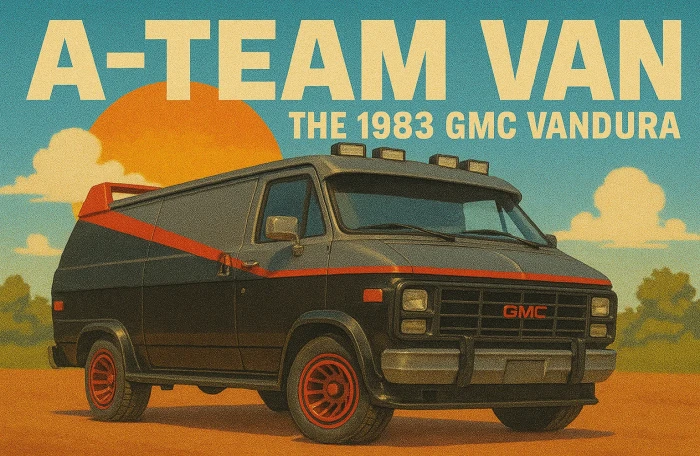
The van’s design played a major role in its lasting appeal, and it went beyond a simple black-and-red paint job. Instead, the finish used a layered approach, with metallic gray on top, deep black along the lower body, and a bold red stripe separating the two sections.
The black paint is commonly associated with GM code WA8555, which produces a deep, high-gloss finish under light. The red stripe is often replicated using shades like Competition Orange or Fusion Orange to match the original look.
At the same time, several custom details helped define its look:
American Racing Vector turbine wheels with red accents
BFGoodrich Radial T/A tires for a wider stance
A fiberglass roof spoiler, often called the Norcal wing
Front brush guards and auxiliary lighting
Together, these elements gave the van a strong and aggressive presence, even when it was not in motion.
Multiple Vans Kept the Illusion Alive

Although viewers saw one van, production relied on several to keep filming efficient and safe.
At least eight primary vans were used throughout the series, and each served a different purpose. Hero vans appeared in close-up shots and scenes with actors, while stunt vans handled jumps, crashes, and other high-risk moments.
For example, some stunt vans were modified with mid-mounted engines to improve balance during jumps. Others were stripped down or replaced entirely for scenes where the vehicle would be destroyed. By the end of the series, several vans had been lost to these stunts, leaving only a few intact examples.
Inside, It Worked Like a Mobile Base
Although the interior was not always shown in detail, it supported the idea of a mobile operations hub.
Hero vans included seating, storage compartments, and communication equipment such as CB radios, which helped reinforce the idea that the team could operate from anywhere. Function guided the design, which aligned with the show’s tone and pacing.
Why the A-Team Van Still Stands Out
The series ran from 1983 through 1987, giving the van consistent exposure across nearly 100 episodes. Over time, it became tied to the identity of the show rather than serving as a simple background prop.
Because of its distinct shape and color scheme, it remained easy to recognize even in brief scenes. That recognition carried into reruns, merchandise, and modern recreations.
When the 2010 film adaptation was released, the updated version stayed close to the original design, which shows how well the original concept held up.

What Survived and What It Costs Today
Only a small number of original vans are known to exist today, since many were damaged during filming or dismantled after production ended. This scarcity affects pricing in a noticeable way.
Well-built replicas often sell between $25,000 and $50,000 or more, depending on accuracy and condition. Higher-end builds can exceed that range, especially when rare parts are included.
Several components tend to drive both cost and difficulty:
Original turbine wheels in the correct size
Period-correct interior materials
Accurate paint matching for the stripe and finish
Labor also plays a major role. A full restoration can exceed $20,000 before factoring in rare parts, which makes planning essential for anyone considering a build.
Finding or Building One Comes With Tradeoffs
Buying a finished replica can save time, although it limits control over details. On the other hand, building one allows for full customization, but it requires sourcing parts, managing fabrication, and coordinating paint work.
Location also becomes a factor. Many available vans are spread across different states or even in Canada, where the platform remained popular. Because of that, transport becomes part of the decision, especially when custom paint and bodywork are involved.
Moving a Classic Like This Without Losing Value
A vehicle like the A-Team van holds value in its details, so transport requires careful handling.
AmeriFreight Auto Transport works with classic and custom vehicles, helping coordinate carriers based on the vehicle’s condition and needs. Customer service agents assist with scheduling and handling, while optional gap protection plans provide added support during transit. Request a quote now!
When dealing with a build like this, the condition on arrival matters just as much as the condition at purchase.


.webp)