
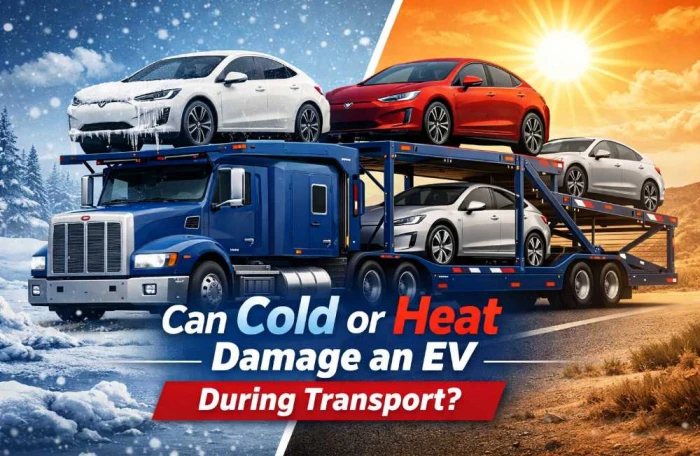


Yes, cold or heat can damage an EV during transport. Damage does not usually mean a battery pack fails. A more common outcome is an EV that arrives with less usable range than expected, charges slowly at first, or shows signs of extra wear after sitting parked in harsh temperatures.
AmeriFreight Auto Transport ships EVs using standard transport options: open transport and enclosed transport.
Why Transport Temperature Exposure Feels Worse Than Normal Driving
Transport adds long idle time. A vehicle can sit on a carrier, at a yard, or during a handoff for hours or days. Temperature soak builds during those idle windows, and temperature soak drives most delivery-day surprises.
A parked EV can still use energy. Remote wake events, security-style monitoring, and background systems can drain the battery during long idle periods. A cold-soaked battery also delivers less usable energy until warm-up begins. A heat-soaked vehicle may run cooling fans right after startup.
Heat Exposure Can Increase Battery Stress and Reduce Range
Heat reduces range during driving because the vehicle spends energy on air conditioning and battery cooling. AAA testing at 95°F found a 4 percent range reduction with HVAC off and a 17 percent range reduction with air conditioning running.
Heat during transport often shows up as a faster-than-expected battery percent drop right after delivery. A heat-soaked vehicle may spend energy cooling the battery and cabin once the car wakes up. A driver can also notice reduced charging speed at first if battery temperatures need to stabilize.
Heat also increases long-term battery stress when a vehicle sits at a high state of charge. High temperatures speed up chemical reactions inside lithium-ion cells. Over time, faster reactions can degrade the protective structure inside the battery, which accelerates aging. Heat exposure does not mean the battery is “damaged” immediately. A long hot soak plus high charge level raises the risk more than a short hot drive.
Cold Exposure Can Cut Usable Range and Slow Charging
Cold reduces usable range because battery chemistry slows down and cabin heat uses extra power. AAA reported up to a 41 percent range loss at 20°F with cabin heat running.
AAA testing at 20°F found a 12 percent range reduction with HVAC off. Cold also changes how the car feels. The electrolyte inside lithium-ion batteries becomes thicker in extreme cold. Thicker electrolyte slows the chemical reactions that move charge through the pack. Charging slows, and regenerative braking becomes less effective until the battery warms up.
Cold-weather range loss can start earlier than many people expect. Consumer Reports notes range loss beginning around 40°F in its cold-weather discussion.
Battery Drain Problems Show Up More During Shipping
An EV can lose meaningful battery percent during transport if the vehicle wakes frequently or runs background systems. A vehicle that arrives with a low state of charge can be harder to recover in winter because charging may be slower until the battery warms.
Low-voltage battery strain can also appear after long idle time in cold weather. A no-start condition at delivery often points to low-voltage weakness rather than a high-voltage failure.
Open Transport vs Enclosed Transport in Heat and Cold
Open transport exposes the vehicle to full outdoor conditions. Cold soak builds faster in winter legs. Direct sun can heat the cabin during summer staging. Wind and precipitation also reach the vehicle.
Enclosed transport reduces exposure to road debris and precipitation. Enclosed spaces can trap heat during long sun exposure and delays. Airflow varies by carrier and route, so heat buildup varies.
Neither option removes temperature risk. The main difference is how fast temperature soak builds and how much cosmetic exposure occurs.
Practical Steps That Reduce Heat and Cold Problems
Battery level at pickup makes a difference. PCMag describes a general guideline of keeping charge between 20 percent and 80 percent for regular use.
A mid-range charge helps in both directions.
High charge plus long hot soak increases stress and heat-related aging risk.
Low charge plus extreme cold increases the risk of a stressful delivery day, especially if charging speeds drop until warm-up completes.
Reduce parked energy drain before pickup. Turn off features that keep the car awake more often than needed. Reduce remote wake activity. A quieter vehicle during transit usually arrives with a more usable battery.
Plan a delivery-day warm-up and first charge stop in winter conditions. A cold-soaked battery often charges slowly at first. Driving a short distance can warm the pack and improve charge performance.
Shade and airflow reduce heat soak when possible during pre-pickup staging. Cooling time before charging can help after a hot soak.
Shipping Cost Context for EV Transport
Cost often influences open transport versus enclosed transport decisions. Get a baseline estimate to support your planning and expectations.
Calculate your car shipping cost now with the AmeriFreight car shipping cost calculator. Remember, no upfront payment is required until you choose a carrier.