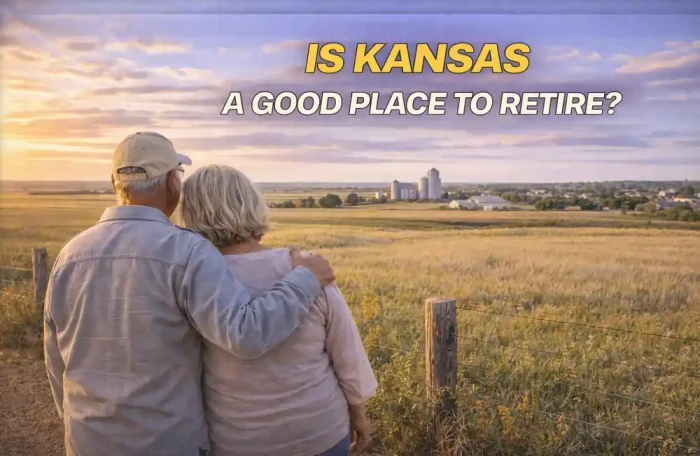


Yes, Kansas can be a good place to retire. Many retirees look past the coasts and start weighing cost, pace, and daily comfort. Kansas draws interest with lower housing costs, quiet towns, and access to nature. At the same time, taxes, weather, and distance from amenities matter.
Pros of Settling in Kansas for Retirement

Financial Affordability
The cost of living in Kansas is around 11 percent lower than the national average. This is because residents in the Sunflower State pay less for certain cost factors. Chief among these is housing. Average home prices in Kansas are more than 40 percent lower than the national average.

Other cost factors, such as rent, groceries, electricity, and healthcare, are also lower in the Sunflower State.
The table below shows how retiring in Kansas costs compared to the national average:
Although these costs are already lower, some state programs can further offset many of these expenses. The Program of All-Inclusive Care for the Elderly, known as PACE , is available for older adults who need regular care and can cover medical, dental, and personal care services. Senior Health Insurance Counseling for Kansas, or SHICK, offers free counseling on Medicare, coverage options, and cost-saving strategies.
Lifestyle & Environment
Kansas offers four seasons and wide open spaces that fit outdoor hobbies like hiking, camping, and fishing. Many towns are safe with low crime and easy daily drives.
College towns in Kansas, such as Lawrence and Manhattan, have art, music, and social options. Larger cities like Kansas City offer extra services near where you live at a low cost.
You can visit state parks like Fall River State Park and Meade State Park , which have ADA-accessible camping sites, showerhouses, and restrooms. Museums like the Marianna Kistler Beach Museum of Art and the Mahaffie Stagecoach Stop and Farm Historic Site offer ways to discover the state’s culture and heritage.
If you plan to reach parks, trails, or rural towns with ease, the right off-road vehicle matters. Use our guide to find options that fit dirt roads, comfort needs, and your lifestyle.

Tax Drawbacks
Kansas has a combined state and local sales tax that often ends up high compared with other states. The base state sales tax is 6.5 percent, and local rates are added on top in many cities and counties. This can make everyday purchases cost more.
When it comes to income tax, private pensions and most retirement plan distributions can be fully taxable under state income tax rates, which range from about 3.1 percent to 5.7 percent. That means money you take from a private pension, IRA, or 401(k) may be taxed by the state. Social Security benefits, though, are no longer taxed starting in 2024 .
Another thing to consider is property tax rates in the Sunflower State. These are the 12th highest in the country , with an effective rate of 1.19 percent. In some Kansas counties the rate is higher. Riley County has an average effective property tax rate of 1.53 percent. Wyandotte County has an average effective property tax rate of 1.44 percent.
Safety & Healthcare Limits
Choosing Kansas means being prepared for severe weather risks from storms and high heat. The state lies in Tornado Alley, so tornado watches and warnings are common in spring and summer, and extreme heat can have health consequences without proper preparation.
Across rural parts of Kansas, access to comprehensive healthcare can be limited. Many small towns have fewer doctors, specialists, and hospital services, which can mean longer drives for care and less frequent screenings in rural areas.
Handling these issues may involve signing up for local emergency alerts. Some cities, like Hutchinson , have dedicated alert systems. You can also connect with support networks. Organizations such as United Way can help connect you to local services for housing help or health assistance.
Emergency readiness means being able to drive when it matters. A well-kept vehicle supports safe travel. Read our preventive car maintenance guide.
Lack of Infrastructure/Scenery
Outside of the big cities in Kansas, public transit options are limited. Most rural areas rely on local rides or demand-response services, but buses and scheduled routes are scarce compared with urban centers.
Kansas is also landlocked and known for plains and gently rolling hills, rather than mountains or ocean views. Much of the state lies on the Great Plains with wide open fields and subtle terrain changes from east to west. If you enjoy open skies and farmland views, this can be appealing, but you should expect long drives between larger cultural or entertainment hubs like Wichita or Kansas City.
To manage these issues, you can explore transportation assistance programs. The Kansas Department for Aging and Disability Services lists services that help seniors use public transit or find volunteer drivers. You can also build a local support circle by reaching out to neighbors, friends, or church groups for rides or errands together.
Final Thoughts: Retiring in Kansas
Kansas offers a steady place to settle where open land, small towns, and cultural pockets shape daily life. You can enjoy state parks, museums, and college towns, then reach major cities when you want more options. Lower housing costs balance taxes and long drives.
With planning, reliable transportation, and use of local resources, you can build a retirement that feels calm, connected, and manageable across the state as years pass.
Move Your Car to the Sunflower State with AmeriFreight
Let AmeriFreight Auto Transport manage your vehicle shipment before you move to Kansas towns, college communities, and wide open plains. Our agents work with licensed carriers across the country, whether you are relocating to an aerospace job in Wichita or settling in the state’s quieter rural areas.
With more than 20 years of experience, AmeriFreight Auto Transport helps your vehicle arrive in Kansas safely and ready for the road ahead.
Frequently Asked Questions (FAQs)
Do I need to maintain a car to live comfortably in a Kansas retirement community?
Yes. In Kansas, owning and maintaining a car is important for everyday life outside major cities. Public transit is limited in rural areas and small towns, so most people rely on personal vehicles to reach errands and services. Even in cities with buses, many errands still require a car.
What are the pros and cons of retiring in a rural Kansas county versus an urban center?
If you retire in a rural Kansas county, you may enjoy lower housing costs, less noise, and quiet open space that fits a slower pace of life. Small towns often feel close-knit and calm, and your money may go further in daily living.
In contrast, living in Kansas City offers more healthcare access, amenities, and social options nearby, with shorter drives for services and cultural activities. Rural living can be peaceful, but you may travel farther.
What are the best small towns in Kansas for retirees who want a low crime rate and a walkable downtown?
Before moving to Kansas, consider these towns. Lindsborg has a historic main street and shops. Wamego has a friendly downtown and local events. Abilene offers quiet streets and historic buildings you can walk to. Fort Scott has a brick-lined downtown that is easy to explore on foot. These towns blend charm, low crime, and small-town pace.
Is the humidity in Kansas summers manageable for seniors with respiratory issues?
Kansas summers can be warm with moderate to high humidity that often pushes the heat index up, especially in areas like Kansas City. Typical summer humidity levels can make the air feel heavy to breathe for people with asthma, since moist air is harder on the lungs and can trap allergens and pollutants. Many seniors manage this by limiting time outdoors on hot, humid days and using air conditioning.
Disclaimer
The information provided in this guide is for general informational purposes only and does not constitute legal, financial, or professional advice. While efforts have been made to ensure the accuracy and timeliness of the content, laws, regulations, and local conditions are subject to change without notice.
Readers should not act upon this information without seeking appropriate professional counsel, especially in financial and legal matters.


.webp)