
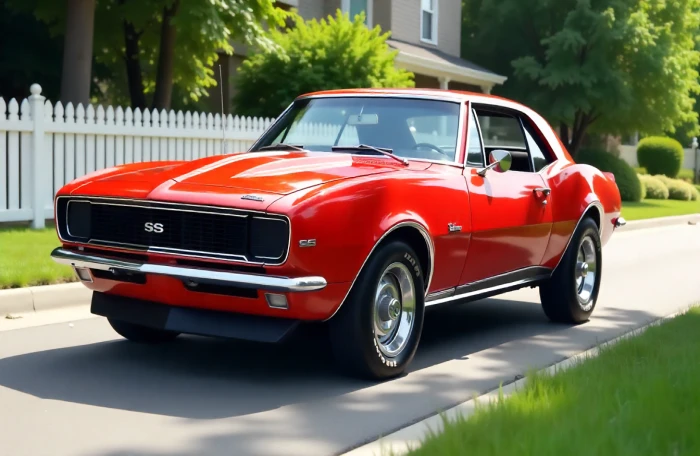


Chevy cars in the 1960s helped define what many now call the golden age of American muscle. These machines brought real power, bold design, and performance that turned heads on the street and the track.
In 1965 alone, Chevrolet sold more than 1 million Impalas. This was more than any other car in U.S. history at the time. It marked a shift in what people expected from a car. Drivers wanted more than space and reliability. They wanted speed, control, and something that stood out in a crowd.
When it comes to transporting a 1960s Chevy, it's not about moving metal. It is about protecting a piece of history. But decades later, their value presents new challenges: fragile paint, sensitive chrome, and stringent transport regulations.
The solution lies in proper preparation, professional carriers, and modern protection methods that keep your classic Chevy safe from the moment it leaves the garage to when it is back on solid ground.
What You’ll Learn
In this guide, we will answer:
What are the best 1960s Chevy performance cars, and why do they still matter today?
How did the lineup change throughout the decade to meet a faster, younger market?
What do you need to know if you're planning to ship or preserve one of these cars properly?
Overview
Chevy in the 1960s: A Decade of Transformation
Chevy started the 1960s focused on comfort, size, and affordability. But the brand didn’t stay in that lane for long. As American car culture shifted toward performance, Chevy adapted quickly and helped lead the way.
What Chevy Focused on Early in the Decade:
Full-size sedans like the Impala and Bel Air
Family-friendly features such as big trunks, soft rides, and roomy cabins
Value-focused pricing that appealed to middle-class buyers
These models were reliable and widely sold, but the market was changing. A younger generation of drivers was more interested in speed and bold styling than rear seat space.
What Changed the Direction:
The rise of muscle cars was led by public demand for faster vehicles
Growing competition from rivals like the Ford Mustang and Pontiac GTO
New interest in racing and drag strips, especially among younger buyers
Chevy answered the call with smaller, lighter, more powerful models. The brand introduced:
The Chevelle SS 396: Known for big-block torque in a mid-size body
The Chevy Nova SS: A low-priced option with serious power
The first-generation Camaro: Aimed squarely at the Mustang’s market
Multiple coupe and convertible body styles: Designs built for style and speed
Chevy didn’t only change engines. The cars themselves became wider, lower, and more aggressive. Suspension systems improved. Trim options got sportier. Buyers could pick from a full range of price points, styles, and performance levels.
Iconic Chevrolet Muscle Cars Of The Sixties
Chevy didn’t only follow the muscle car trend in the 1960s. It helped shape it. The decade produced a lineup of standout models that left a lasting mark on American car culture. Each one brought something different to the road, whether it was horsepower, style, or affordability.

1960 Chevrolet Impala
One of the most popular full-size sedans of the era
Known for its wide body, signature tailfins, and available V8 engines
Offered in multiple body styles, including coupe, convertible, and four-door
Helped define the early part of the decade before the muscle car wave took over
1963 Corvette Sting Ray
A major leap forward in both design and handling
First year to feature independent rear suspension
Introduced the split rear window in the coupe, now a collector's favorite
Packed with small-block and big-block engine options
Still considered one of the most balanced sports cars of its time
1965 Chevy Biscayne
A budget-friendly full-size car that often came equipped with V8 power
Simple design with minimal trim, which made it lighter and quicker
Popular choice for drivers who wanted performance without flash
Sometimes called a “sleeper” because of its low-profile appearance and strong engine options
1967 Chevrolet Camaro
Introduced as a direct response to the Ford Mustang
Launched the start of Chevy’s pony car legacy
Available with SS and RS performance packages
Offered with a wide range of V8s, including the 396 cubic inch engine
Helped establish a new category of compact, aggressive street cars
1969 Chevelle SS 396
One of the most iconic muscle cars of the decade
Powered by a 396 cubic inch big-block V8
Available as a coupe or convertible with bold styling and strong acceleration
A top pick for drag racing and performance builds
Represented the peak of Chevy’s mid-size muscle offerings before the 1970s oil crisis changed priorities
Honorable Mentions:
Chevy Nova SS: A small, lightweight option with big performance potential
Chevrolet Corvair: Rear-engine design and unique handling, though controversial
Bel Air: Continued through the 1960s as a low-priced, full-size option
Chevelle Malibu: Later evolved into its own standout nameplate
Monte Carlo: Though it launched in 1970, development started in the late ‘60s
How Chevy Improved Performance and Design in the 1960s
Chevy’s success in the 1960s wasn’t only about looks. Under the hood and beneath the surface, the brand was pushing performance, testing new ideas, and giving drivers more control, speed, and power. This decade became a test bench for what muscle cars could do.

Engines That Defined the Decade
Chevy offered a wide range of engine options. These weren’t built for show; they were made for torque, track use, and real-world street speed.
Small-block V8s, such as the 283, 327, and 350 cubic-inch engines, became performance staples.
Big-block V8s like the 396 and 427 delivered serious horsepower, often used in the SS packages
Some first-generation engines were built for both daily driving and quarter-mile runs.
Models like the Chevelle SS 396 and Camaro Z/28 could produce more than 375 horsepower in stock form.
These powerful engines made mid-size cars feel fast without sacrificing control. That mix of size and speed became a defining characteristic of a true Chevy muscle car.
Suspension, Handling, and Braking Upgrades
By the mid-1960s, Chevy was refining how these cars felt on the road.
Independent rear suspension was introduced in the 1963 Corvette Sting Ray.
Wider wheelbases and improved weight balance contributed to enhanced grip and cornering.
Disc brakes became more common on higher-performance models.
Tire and axle improvements allowed for better launches and smoother high-speed control.
Design That Matched the Power
Muscle cars weren't only about engines. Chevy also reshaped how these vehicles looked and felt.
Cars became lower, wider, and more aggressive
Fastback rooflines and bold grilles added edge to popular models
The vinyl roof trend added a premium touch to mid- and full-size cars
Stripes, badging, and SS or RS trims created clear performance signals
Chevy offered body styles that matched different needs: sedans, convertibles, coupes, and wagons
2026 Snapshot: Demand & Value Drivers
These classic Chevy muscle cars remain strong investments today. Their timeless design, raw performance, and historical significance drive demand. The availability of replacement parts also makes them viable to own and maintain.
The current market values for these cars are primarily affected by a few factors:
Documentation: Factory paperwork, build sheets, and original titles are critical.
Originality: Cars with factory-matching numbers (including drivetrain, paint, and trim) fetch higher prices.
Options: Rare performance options like the L78 engine or heavy-duty suspension boost value.
Condition: A frame-off restoration will command much more than a project car.
The scarcity of specific models also drives values. The 1963 Split-Window Corvette, along with the highly limited Z/28 and Z16 models, stands in a league of its own among collectors.
Restorability and Driving Experience
Many classic Chevy cars from the 1960s are still running today. That’s partly because they were built as simple, strong, and serviceable vehicles. Drivers also enjoy them on the road.
You don’t need track-ready tuning to feel the response of a small-block V8 or hear the rumble of a dual exhaust. Even with lower fuel efficiency and older brakes, these cars offer a more connected driving experience than many modern vehicles.
Customer Guidance: Tips for Shipping Your 1960s Chevy Safely
When you buy a classic, transporting it safely is the final, crucial step. Protecting your investment requires careful planning and the right shipping method.
Open vs. Enclosed Transport
Open transport is the most common and cheapest method. However, for high-value, rare, or freshly restored classics, we strongly recommend enclosed auto transport.
Enclosed carriers protect your 1960s Chevy from weather, road debris, and dirt. It is the best choice to ensure the car arrives in the exact condition it left.
Pre-Ship Checklist for Classics
Before your car is picked up, follow these steps:

Detailed Photos: Take clear, close-up photos of the entire car. Document existing paint chips, trim, and interior condition.

Fluids Check: Ensure the battery is fully charged. Check for any fluid leaks and inform the carrier immediately.

Loose Parts: Remove any loose items from the interior and trunk.

Clearance Notes: If your classic vehicle has a low-clearance suspension or an air dam, please inform the driver. This helps them navigate ramps safely.


Carrier Credentials & Securing Classics
Always confirm your auto transport carrier is reputable. Verify their USDOT and MC numbers. Ensure they carry sufficient insurance coverage for high-value vehicles. Always review the bill of lading (BOL) upon pickup. The BOL must accurately note the car’s condition.
Professional carriers secure classics using soft straps or axle straps. These are preferred over chains to prevent damage to the frame or finish. Drivers must also be mindful of clearance angles and avoid damage to trim and spoilers.
Typical Cross-Country Considerations
Plan for transit time and seasonality. Long-distance shipping often takes several days. If you're moving your classic in winter, enclosed transport is even more essential. Arrange for covered storage at the delivery location if you are unable to receive it immediately.
Final Thoughts: Keeping Legends Alive on the Road Ahead
Owning a 1960s Chevy is more than a hobby. It is a tribute to American craftsmanship and culture. Whether it is a roaring Chevelle SS or a sleek Corvette Sting Ray, every drive connects past and present. Preserving these icons takes care, knowledge, and the right partners.
Ship a 1960s Chevy With AmeriFreight Auto Transport
If you plan to transport a classic 1960s Chevy, AmeriFreight Auto Transport connects you with trusted carriers who handle vintage vehicles carefully. Our agents help select the best transport option (open or enclosed) based on the car's condition, value, and your preferences.
Get your free, no obligation quote today.
Frequently Asked Questions (FAQs)
What’s the difference between Chevy's small-block and big-block engines in the 1960s?
Small-blocks were lighter and high-revving for better handling, while big-blocks were larger, heavier, and built for powerful torque and straight-line speed.
How do I verify an SS package on a 1960s Chevy?
Check VIN codes, factory build sheets, or dealer invoices, and confirm heavy-duty SS parts like suspension, badging, and drivetrain stampings.
Should I choose enclosed transport for a classic Chevy?
Yes, enclosed transport offers maximum protection from weather, dirt, and road debris, keeping your classic Chevy in pristine condition.
What prep steps protect paint and trim during shipping?
Photograph the car, secure or remove loose trim, clean it for inspection, and alert the driver about any low-clearance areas.
How is a classic documented at pickup and delivery?
Both parties inspect and record the car’s condition on the Bill of Lading (BOL) at pickup and delivery, signing to confirm accuracy.
How to identify a true 1969 COPO Camaro?
A genuine 1969 COPO Camaro can be verified through factory paperwork showing COPO codes 9561 (iron 427) or 9560 (ZL1 aluminum 427), matching VIN, and heavy-duty parts.
What is the history of the Chevy Super Sport (SS) package?
The Chevy Super Sport (SS) package, introduced in 1961, evolved from a trim option on the Impala into a performance line featuring big-block engines, stronger suspensions, and sporty styling on models like the Chevelle, Nova, and Camaro.
What is the most powerful 1960s Chevy big block engine?
The most powerful 1960s Chevy big-block was the aluminum 427 ZL1, factory-rated at 430 hp but capable of producing over 500 hp.


.webp)