

Safe vehicle transportation hinges on anticipating the physical and legal risks of moving heavy machinery across the country. Prioritizing car shipping safety ensures a vehicle arrives in its original condition, which requires selecting the appropriate carrier type, preparing the vehicle to minimize mechanical hazards, and maintaining a strict chain of custody from pickup to delivery.
The auto transport industry handles complex logistical variables, with recent data showing a total loss frequency reaching nearly 23 percent. Safeguarding a vehicle during transit demands active involvement, from neutralizing internal risks to mastering the documentation that dictates financial liability.
Understand How FMCSA Regulations Affect Transport Timelines
The motor vehicle transportation industry moves millions of cars a year under strict Federal Motor Carrier Safety Administration regulations. People often assume that shipping a car resembles standard parcel delivery. In reality, it involves coordinating heavy machinery across vast distances. Maintaining DOT compliance means carriers operate within a rigid framework governed by weight limits, driver qualification files, and mechanical inspections. The primary threshold for federal oversight triggers when a vehicle combination reaches 10,001 pounds or more.

Long-haul vehicle transport demands precise fatigue management. Federal Hours of Service regulations limit drivers to 11 hours of driving within a 14-hour window, followed by a mandatory 10 consecutive hours off-duty. The industry uses electronic logging devices to track these hours, and strict ELD compliance ensures drivers take mandatory rest periods. Because weather, traffic, and these necessary breaks dictate the pace of every journey, transport timelines require flexibility. Expedited shipping does not bypass the laws of physics or federal rest mandates.
Driver qualification standards also strictly enforce English language proficiency. Drivers must be able to read critical signage and communicate clearly with emergency personnel during roadside inspections.
Choose the Right Trailer for Auto Transport Safety
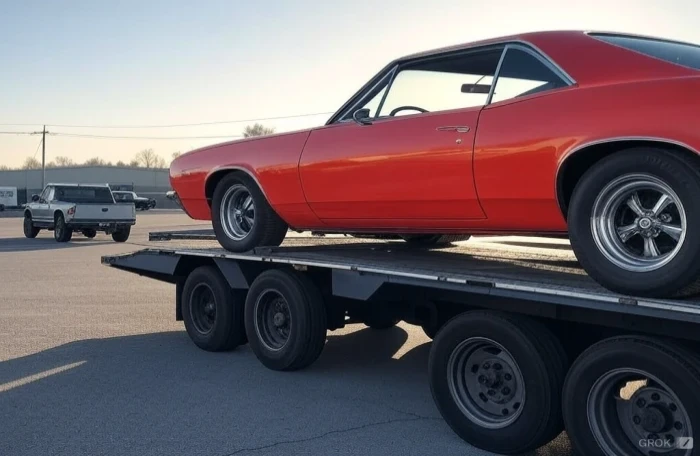
Choosing how a car travels directly impacts cargo securement and its exposure to the elements. Standard open transport is the method manufacturers use to move more than 80 percent of new cars to dealerships. It exposes the vehicle to rain, road dust, and highway debris in the same way regular driving does. Enclosed transport provides a protective physical shell. It is the recommended choice for luxury cars, classic vehicles, or models with low ground clearance.

Modified vehicles with lowered suspensions require enclosed trailers equipped with hydraulic lift gates. Standard loading ramps create a sharp angle that can easily tear off bumpers or scrape the undercarriage during the loading process.
Electric vehicles represent nearly 18 percent of new car sales and present distinct weight and safety factors. Heavy lithium-ion batteries reduce the total number of vehicles a carrier can legally transport under the 80,000-pound federal weight limit. These batteries are classified as hazardous materials and require specialized fire management protocols. Enclosed trailers are frequently used for these vehicles to provide better security and temperature management, which alters the overall transport cost.
Modern industry carriers have moved away from using metal chains directly on the vehicle frame. Today, operators secure vehicles using soft nylon straps placed directly over the tires. This allows the car's own suspension system to absorb road vibrations during transit without stressing the chassis. Mechanical integrity is closely monitored, with inspectors requiring brake systems to maintain a 50 percent efficiency rate and tires to be completely free of cracks.
Minimize Handling in Vehicle Hauling Logistics
The safest way to move a vehicle is to minimize the number of times it is handled. Door-to-Door Service (Location Permitting) keeps the vehicle on the same trailer from the origin to the destination, creating a consistent chain of custody.
Commercial transport trucks are massive and cannot safely navigate narrow residential streets or tight cul-de-sacs. In those situations, buyers and sellers meet the driver at a nearby open area like a shopping center parking lot to load or unload the vehicle. This minor logistical adjustment prevents potential property damage and allows the driver to maneuver safely.

Prepare Your Vehicle for Safe Interstate Transport
A smooth transport experience requires specific physical preparation from the vehicle owner before the truck arrives. Dirt can hide existing paint chips or scratches, making it difficult to establish an accurate condition report. A clean exterior is necessary for a proper pre-shipment inspection. Reducing the fuel level to a quarter tank minimizes load weight and reduces fire risks.
Mechanical readiness prevents mid-transit complications. A dead battery requires the carrier to winch the vehicle onto the trailer, which places unnecessary stress on the car's frame and adds significant delay to the loading process. Active fluid leaks, such as oil or coolant, pose a direct hazard to vehicles loaded on the lower decks of a multi-car carrier.

Retracting antennas and folding in side mirrors reduces the risk of these parts catching on low-hanging branches or flying road debris. Active car alarms must be disabled. An alarm triggered by the normal vibration of a transport trailer will distract the driver and drain the vehicle's battery during a multi-day trip.
The Department of Transportation does not permit personal items to be shipped in vehicles. Even if a carrier allows a few items in the trunk, federal guidelines explicitly exclude household goods from standard auto transport liability. Electronic toll tags must also be removed. Transport trucks pass through numerous tolling gantries, and active transponders left in the vehicle will accumulate charges for a trip the car isn't actually driving.
Verify the USDOT Number and Carrier Safety Rating
Many shippers mistakenly believe that federal carrier liability requirements cover every possible financial loss. Federal law mandates that all carriers operating in interstate commerce maintain active cargo liability coverage. A carrier's liability limit is sometimes calculated by the weight of the cargo, which often falls short of the replacement value of a late-model vehicle. Released value protection might only cover 60 cents per pound. Modern vehicles feature advanced driver assistance systems that require expensive recalibration after minor incidents, pushing the average claim cost to nearly $13,000. Consumers must verify coverage limits directly by requesting the carrier's insurance certificate. You should also check their official Carrier Safety Rating, known as SMS, and verify their active USDOT Number through the FMCSA federal portal.
Identify Predatory Pricing to Ensure Transport Security
Financial safety is just as critical as physical protection when maintaining interstate transport security. The auto transport industry experiences issues with fraudulent operators who use a "bait and switch." They provide an unrealistically low quote to secure a deposit and then demand hundreds of dollars more once a driver is supposedly found. A more severe risk involves a "hostage load," where a carrier picks up a vehicle and refuses to deliver it until the customer pays undisclosed cash fees.
Another significant risk involves chameleon carriers. These operators shut down to escape poor safety ratings and reopen under a new USDOT Number. A company claiming decades of experience but operating under a 90-day-old registration requires immediate scrutiny. Recognizing that legitimate pricing reflects actual market conditions helps you avoid these scenarios.

Document Every Detail on the Bill of Lading (BoL)
The Bill of Lading, or BoL, is the most important legal document in the transport process. It acts as both a binding contract and the official condition report. Under federal regulations, a legally binding Bill of Lading must include 17 specific pieces of information, including valuation statements and the USDOT numbers of participating carriers. A driver will note any existing damage at pickup.
A proper inspection requires adequate lighting and attention to easily overlooked areas. Buyers and sellers should check the roof, undercarriage, and wheel wells for transit damage. Taking high-resolution time-stamped photos at both pickup and delivery provides objective evidence if a dispute arises. The receiving party must inspect the car carefully at delivery before signing this document. If new damage is discovered, it must be noted on the Bill of Lading to file a valid insurance claim. Signing a clean document legally releases the carrier from liability.
Approach Car Shipping Safety as a Shared Responsibility
Navigating the auto transport network safely is ultimately a matter of risk mitigation. Federal oversight sets the baseline for driver qualifications and equipment standards, but the physical protection of an asset relies heavily on the decisions made before the engine is ever turned off on the trailer. By treating preparation as a defense mechanism and the final paperwork as a non-negotiable legal safeguard, vehicle owners can effectively neutralize the vulnerabilities of interstate transit.