

The automotive retail landscape of 2026 is defined by a massive structural shift operating on a K-shaped economic trajectory. High new vehicle prices hovering near the $50,000 mark have pushed value-conscious buyers, particularly millennials and Gen Z, into the pre-owned market. This creates a highly active but discerning buyer pool searching for a reliable used car for sale without the burden of record-high monthly payments.
The used car market is currently absorbing an influx of lease returns. A 230 percent spike in expiring electric vehicle leases means individuals executing a private party car sale are competing directly against professional certified pre-owned lots. The historic price gap has vanished, with 18 of 26 major brands now offering used EVs at average prices below their gasoline-powered equivalents.
The impulse is to just type "sell my car," into a search engine and follow the path of least resistance. That is a mistake. Success requires understanding how algorithmic search behaviors and new digital transaction frameworks dictate asset liquidity.

Enter Your VIN for an AccuTrade Valuation and Choose a Sales Path
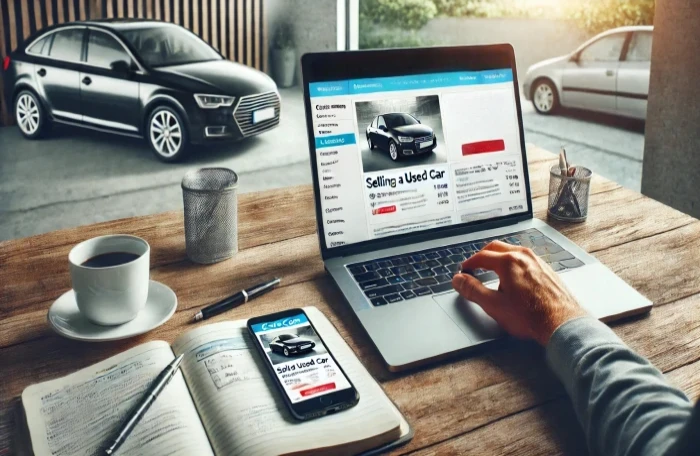
The process starts the second you type your Vehicle Identification Number into the site to calculate your baseline trade-in value 2026. The platform immediately forces a choice between a Cars.com Instant Offer and a private listing.
The cash offer is not an arbitrary algorithm. It is an actual bid generated through the AccuTrade network. Local dealerships use this system to bypass volatile wholesale auctions and acquire retail-ready inventory directly from the public. The system actively targets vehicles between one and five years old, which currently make up more than 50 percent of AccuTrade acquisitions.
If your vehicle is older than 17 years, carries a salvage title, was used as a police or livery vehicle, or has modified emissions equipment, the automated acquisition path will reject it. The minimum valuation threshold is $1,000.
Taking the Cars.com Instant Offer is the fastest exit for eligible vehicles. You drive to the dealer, they verify your self-reported tire wear and condition, and you walk away with a check.

Select a Listing Tier to Boost Your Private Party Car Sale
If you bypass the dealer bid to sell it yourself, you take on the burden of merchandising. You are now competing directly against professional dealership listings across a nationwide audience. Cars.com offers a free basic listing, but securing visibility in a flooded market usually requires paying for a Plus or Premium tier.
This upgrades your placement in the search results and expands your technical limits. While basic listings cap your imagery, premium packages allow you to upload up to 30 photos. Buyers are perfectly willing to cross state lines for the right vehicle. Paying for enhanced visibility is a calculated investment to secure a faster sale and minimize depreciation while you wait.
Write a Description That Acts as a Maintenance and Battery Health Report
Once your tier is set, you have to build the advertisement. Modern search engines and platform algorithms operate on an AI citation economy. They prioritize verifiable human authority.
Instead of wasting the 3,000-character description limit on standard factory features, you need to write a narrative of ownership. Detail exactly when the timing belt was replaced. Mention that the car was kept in a climate-controlled garage. You also need to establish a unique angle that elevates your car above generic inventory, whether that means highlighting a pristine set of all-weather liners or a history of meticulous hand-washing. Buyers mentally calculate immediate post-purchase costs while reading.
If you are navigating the used EV marketplace, exterior photos matter less than battery transparency. You must provide a Recharged Score or a verifiable battery health report proving the remaining pack capacity.
Research shows most EV models retain 97 percent of their original range after three years. Highlighting this data eases range anxiety. If your vehicle utilizes a Lithium Iron Phosphate (LFP) battery, emphasize that it ages slower than nickel-based alternatives and can be charged to 100 percent daily.
Upload the Exact Photos and Video Buyers Expect to See
The visual requirements are highly specific. The platform demands photos in landscape orientation that are smaller than 8MB.
A standard exterior walkaround is not enough to build trust. You need an offset front angle to show the vehicle stance and a direct rear shot to highlight cargo capacity and trim badges. You must include a photo of the dashboard with the engine running to prove there are no warning lights. A tight close-up of the tire tread removes immediate friction regarding maintenance costs.
For electric vehicles, a dedicated shot of the charging port and active charging screen is mandatory. Recording a short continuous video on your phone is even better. Digital buyers trust raw footage more than highly polished photography.

Execute a Digital Title Transfer Through Verified Checkout
The final hurdle is the transaction itself. Cars.com uses an integration called Caramel to create a Verified Checkout. You and the buyer both scan your IDs for biometric identity verification. The system checks motor vehicle records in real time to ensure your title is clear and entirely free of title-washing flags.
The buyer deposits the funds into an FDIC-insured account. A legally binding digital bill of sale is signed within the app and stored in the cloud. You receive 50 percent of the money when you hand over the keys and the rest when the digital title transfer is finalized.
This verified checkout system is completely free for sellers holding a clear title. If you still owe money on a loan, paying a $95 advanced fee allows the platform to handle the payoff coordination with your bank.
You also need to understand your state's electronic titling landscape to avoid logistical delays. Florida sellers operate on a mandatory electronic system and must pay a nominal fee to print a paper title for an out-of-state sale. Virginia residents can handle the entire transfer online through a myDMV account. In California, sellers have exactly five days to submit a Notice of Transfer and Release of Liability (NRL) after the transaction closes.
Navigate Pricing Regulations and the Used EV Tax Credit
Federal Trade Commission regulations now heavily scrutinize digital automotive pricing following warning letters sent to 97 auto dealer groups. Your listed price must be the total price the consumer pays.
The FTC explicitly prohibits zero-dollar listings designed to game search visibility. Pricing referrals like "Call for Price," are banned. You can only exclude mandatory government taxes and registration fees. Advertising a conditional price based on specific financing will get your listing flagged.
Keeping the financial mechanics straightforward provides a massive advantage, especially if you are selling a used electric vehicle. Buyers can only claim the $4,000 federal used EV tax credit in a private sale if the transaction runs through a qualified entity like Caramel. You can effectively lower the net cost for your buyer by thousands of dollars without reducing your own asking price.