

Buying a used car online often begins with a simple search and quickly turns into a maze of open tabs. One marketplace shows a promising listing. Another reveals a slightly lower price. Soon, you are comparing dozens of nearly identical vehicles across multiple websites.
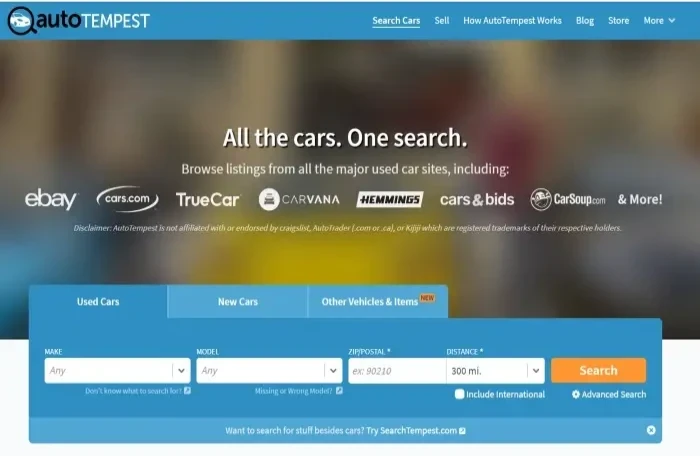
AutoTempest was built to eliminate that fragmented process. This AutoTempest review examines a platform designed as a used car search engine rather than a marketplace. It operates as an automotive aggregator, gathering listings from multiple sources and displaying them in a single search interface.
Prices for similar vehicles can vary widely between platforms and regions. A listing that appears expensive in local search might look competitive compared to nationwide inventory. Seeing the entire market at once gives buyers a clearer sense of a vehicle's actual value.

AutoTempest 2026 Ratings Summary
Our 2026 evaluation reviews AutoTempest across the factors that most influence used car buyers researching vehicles online. These categories reflect how effectively the platform helps users discover inventory, compare pricing, and evaluate listings before moving to the purchase stage.
The “One Search” Approach to Finding Used Cars
AutoTempest functions as a meta search engine rather than a direct sales platform. It does not host vehicle listings itself. Instead, it collects listings from several automotive marketplaces and organizes them on a single search page.
The process begins with familiar inputs such as make, model, year, and location. From there, the platform pulls matching listings from partner sites and displays them side by side. The scale of this aggregation is significant. A single search can surface more than 5 million vehicle listings.
That breadth becomes especially useful when a buyer is searching for a specific configuration. Rare trims, unusual color combinations, or discontinued models often appear in scattered locations across the country. A nationwide vehicle search makes those listings easier to discover.
Filtering the Market Instead of Browsing It
Many car websites provide filters, but the filtering structure on AutoTempest is unusually detailed. Users can refine results using standard criteria such as price, mileage, transmission type, drivetrain, and fuel economy. The system also allows more specialized refinements, including interior color, certified pre-owned listings, auctions, and private sellers.
The advanced search syntax adds another layer of control. Quotation marks return exact phrases. Minus signs remove unwanted terms or trim. Pipes allow alternative keywords to be used within a single search.
These tools help buyers narrow thousands of listings into a focused group of vehicles that match specific preferences. For example, someone searching for a manual sports sedan without a touring package can eliminate most irrelevant results within seconds.

Tracking Vehicle Price Trends and Market Movement
One of the most valuable additions to the platform in recent years is the Price Trends tool. This feature displays historical pricing data for specific vehicle models.
Understanding changes in used-car depreciation affects how buyers interpret listings. Most vehicles lose between 20 percent and 30 percent of their value during the first year of ownership. After that initial drop, depreciation typically settles near 15 percent annually. Viewing those patterns helps buyers decide whether a vehicle’s current price aligns with market behavior.

AutoTempest also highlights a Price History dotted line next to certain listings. Selecting this option reveals the vehicle’s past price changes. A car that has undergone several reductions often indicates slower sales activity. That information can influence negotiations with the seller.
What the 2026 Used Car Market Looks Like
Market conditions play a major role in how useful a search platform becomes. The Manheim Used Vehicle Value Index reached 210.5 in January 2026, representing a 2.4 percent increase compared with the previous year. The data suggests that the post-pandemic car market normalization continues to unfold rather than reversing course.
Vehicle supply has also improved. Dealer lots held approximately 2.31 million used vehicles nationwide at the end of 2025, about six percent higher than at the end of 2024. Wholesale markets are contributing additional inventory. Auction sales of one to two year old off rental commercial vehicles rose roughly 60 percent year over year.
This influx of near-new vehicles gives buyers more choices, particularly for low-mileage models. Greater supply combined with broader search visibility makes vehicle price trends easier to identify across regions.
How Popular the Platform Has Become
Usage data offers a glimpse into how buyers approach car research today. AutoTempest recorded approximately 3.46 million visits in January 2026. That represented about a 16.35 percent increase compared with the previous month.
User behavior patterns are also revealing. About 64.78 percent of visitors reach the platform directly, while roughly 19.05 percent arrive through Google searches. Those numbers suggest that many users treat the site as a starting point rather than discovering it by accident.
Mobile browsing now accounts for the majority of activity. Around 60.4 percent of visits come from smartphones and tablets, compared with 39.6 percent from desktop devices. The mobile application reflects this shift. The AutoTempest mobile app's rating in 2026 stands at approximately 4.8 stars on iOS and 4.7 on Google Play, with more than 100,000 Android installs.

Where AutoTempest Traffic Goes Next
Because AutoTempest aggregates listings rather than hosting them, users eventually leave the platform to complete the transaction. Data indicates that about 48.02 percent of outgoing clicks lead to Cars.com listings, while approximately 18.29 percent redirect to TrueCar listings. This referral structure reinforces the platform’s role as a discovery engine rather than a sales marketplace.
Within the broader web ecosystem, the site holds an authority score of roughly 58, supported by more than 69,000 backlinks. That level of visibility reflects its position as one of the most recognized used-car search engines online.
What AutoTempest Gets Right
The platform performs one function exceptionally well. It simplifies comparing vehicle listings across multiple marketplaces. By aggregating inventory from different sources, AutoTempest exposes pricing differences that might otherwise remain hidden. Buyers can quickly compare vehicles across regions and platforms without repeating the same search multiple times.
Historical pricing tools add another layer of insight. Buyers can see how a vehicle’s price has evolved over time and use that information during negotiations. Access to this research capability without subscription costs makes the platform appealing for both casual shoppers and serious enthusiasts.
Limitations Buyers Should Expect
AutoTempest simplifies discovery but does not replace the traditional car-buying process. The transaction itself still takes place on the original website where the listing appears. Financing arrangements, paperwork, and seller communication all occur outside the AutoTempest interface.
Listing accuracy also depends on how quickly source websites update their inventory. Occasionally, a vehicle may appear in search results shortly after it has already been sold. Another challenge is scale. Millions of listings require careful filtering to avoid information overload.
These limitations reflect the platform’s design. It functions as a research tool rather than a full marketplace.
When AutoTempest Becomes the Most Useful Tool
Buyers searching for common vehicles may find suitable listings locally. The advantage of an automotive aggregator becomes clearer when the search criteria become more specific. Rare trims, discontinued performance models, or uncommon color combinations often require a broader search radius.
AutoTempest makes cross-border vehicle acquisition possible within North America by revealing listings across the United States and Canada. For buyers looking for the best website to buy used cars under $20,000 or to explore options for buying from private sellers safely, the platform offers one of the fastest ways to survey the market.
Where AmeriFreight Fits in the Process
A nationwide vehicle search often leads buyers to cars located hundreds or even thousands of miles away. Once the right vehicle is found, the next step is to arrange transportation to bring it home. AmeriFreight supports this stage of the purchase.
AmeriFreight Auto Transport is a top-rated auto transport broker with more than 20 years of experience coordinating vehicle shipping across the United States. We connect customers with professional carriers that specialize in vehicle transport.
AmeriFreight reviews carriers before matching them with customers. The vetting process examines operating authority, insurance documentation, safety records, and performance history. For buyers who discover vehicles outside their region, working with an experienced transport broker helps complete the purchase.
Get your free, no obligation quote today.