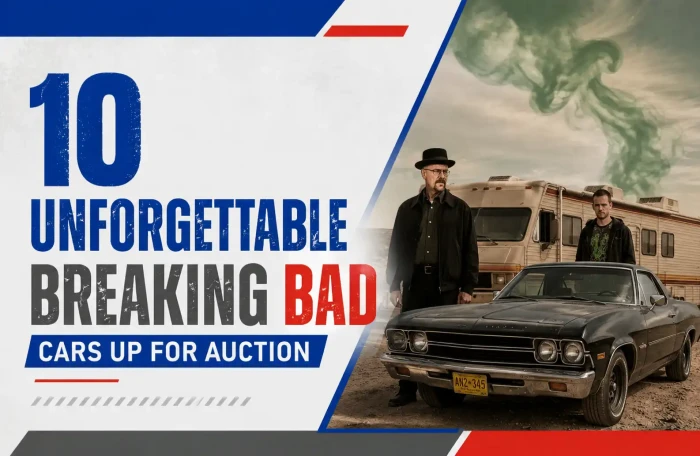


Breaking Bad turned ordinary vehicles into cultural icons. Walter White’s Pontiac Aztek, Jesse Pinkman’s battered Monte Carlo, and the Fleetwood Bounder RV were never high-end collector cars. Most were aging daily drivers with high mileage, cosmetic damage, or mechanical problems. Once those vehicles became tied to major scenes from the series, their value changed completely.
After the show ended in 2013, Sony Pictures Television partnered with ScreenBid to auction hundreds of props, costumes, and vehicles connected to the series. CBS News reported that the overall memorabilia sale generated nearly $1 million, which highlighted how valuable authenticated television props had become in the collector market.
Many of the vehicles sold for several times their normal used-car value. Buyers were not focused on performance, rarity, or restoration quality. Instead, they were paying for screen history, studio authentication, and a direct connection to one of television’s most influential dramas.

Walter White’s Pontiac Aztek Became The Face Of The Series
The 2004 Pontiac Aztek remains one of the most recognizable vehicles from Breaking Bad. Production designers intentionally selected the Aztek to reflect Walter White’s financially strained and unremarkable life before his transformation into Heisenberg.
The vehicle already carried a poor reputation in the automotive world because of its awkward styling and unusual proportions. That worked in the show’s favor. The Aztek visually reinforced Walt’s image as an overlooked chemistry teacher struggling to support his family.
As the series progressed, the vehicle became tied to several major moments, including the Season 3 scene where Walt ran down Gus Fring’s street dealers to save Jesse Pinkman. Damage accumulated throughout the show, including broken glass and body damage that mirrored Walt’s increasingly violent decisions.
Sony reportedly used multiple Azteks during production. One remained with the studio for display purposes, another was dismantled for parts, and the damaged stunt version eventually reached the public auction market.
The auctioned Aztek opened with a $1,000 bid and later sold for between $7,800 and $9,800, depending on the reporting source. Even though the vehicle was no longer fully functional, collectors still competed aggressively for it.
That final price mattered because a heavily damaged Pontiac Aztek from the early 2000s normally carried very little resale value. The television connection completely reshaped the car’s market appeal.
The Crystal Ship RV Drew The Biggest Attention
Few television vehicles carry the same level of recognition as the 1986 Fleetwood Bounder RV known as the “Crystal Ship.” During the show’s early seasons, the RV served as Walter and Jesse’s first mobile meth lab and became one of the series’ defining visual symbols.
Much of Breaking Bad’s tension, humor, and character development unfolded inside that cramped interior. The motorhome itself was built on a Chevrolet P30 chassis and powered by a 454 cubic inch V8 engine. Its size allowed the production team to fit chemistry equipment, storage, and living space into a believable mobile lab.
In the storyline, the RV was eventually destroyed at Old Joe’s junkyard to prevent DEA discovery. Fans treated that moment almost like the loss of a major character because the vehicle represented the beginning of Walt and Jesse’s criminal operation.
A surviving promotional version associated with the series later reached an estimated value near $80,000. That figure far exceeded the value of a standard 1986 Fleetwood Bounder in similar condition.
As a result, the RV became one of the clearest examples of how entertainment history can dramatically reshape the collector vehicle market.
Jesse Pinkman’s Monte Carlo Reflected Chaos On Wheels
Jesse Pinkman’s 1982 Chevrolet Monte Carlo matched his personality during the show’s early seasons. The car featured bright paint, hydraulic suspension, and a rough appearance that fit Jesse’s reckless and unpredictable lifestyle.
The Monte Carlo appeared in several memorable scenes, including the confrontation involving Tuco Salamanca. During the auction period, however, the vehicle’s condition had deteriorated significantly. Reports noted faded paint, worn seals, and nonfunctional hydraulics.
Even with those issues, collectors pushed the final price to roughly $7,500 after bidding opened near $2,500.
That sale reinforced a pattern visible throughout the entire Breaking Bad auction market, where screen presence consistently mattered more than restoration quality.

Jesse’s Toyota Tercel Became An Unexpected Collector Piece
After losing the Monte Carlo, Jesse transitioned to a far more practical vehicle, a 1986 Toyota Tercel 4WD wagon. The Tercel represented a different stage of Jesse’s character arc because the flashy confidence from earlier seasons had largely disappeared.
The car looked weathered, tired, and heavily used, which aligned with Jesse’s increasingly difficult circumstances.
One of the production Tercels gained attention in Albuquerque even before official auction activity started. Local reports described offers climbing into the thousands for a vehicle that normally carried very little market value.
The ScreenBid auction version reportedly had more than 181,000 miles. Even with that mileage, the car still sold for about $7,200.
That result placed the Tercel far above its typical resale range and demonstrated how strongly collectors responded to recognizable television vehicles.
Skyler White’s Jeep Grand Wagoneer Had Real Collector Appeal
Unlike several other Breaking Bad vehicles, Skyler White’s 1991 Jeep Grand Wagoneer already carried legitimate collector appeal outside the television world.
Classic Grand Wagoneers had been building strong enthusiast demand for years because of their woodgrain styling, full-size SUV design, and limited surviving inventory. The Breaking Bad connection pushed the value even higher.
The auction listing described the SUV as running and driving, although reports noted cosmetic flaws and an oil leak. Even with those issues, the Wagoneer sold for $11,250.
That figure showed how cinematic provenance and existing collector demand can combine to elevate a vehicle’s value well beyond standard pricing guides.
Gus Fring’s Volvo Was Built For Stealth
Gus Fring drove a dark blue 1998 Volvo V70 wagon, one of the most understated vehicles in the series. The choice fit Gus perfectly because he operated carefully and avoided drawing unnecessary attention.
The Volvo reflected the public image he wanted to project as a disciplined businessman and restaurant owner. Its ordinary appearance helped him blend into everyday traffic without attracting suspicion.
The car gained renewed attention years after Breaking Bad ended when actor Giancarlo Esposito consigned the vehicle to Mecum Auctions in 2022.
Auction estimates ranged from roughly $14,000 to $20,000. The wagon featured a turbocharged five-cylinder engine and remained in much better condition than many other vehicles tied to the series.
Its later resale proved that interest in Breaking Bad memorabilia continued long after the original ScreenBid auction cycle ended.
Walter White’s Cadillac Marked The Rise Of Heisenberg
Late in the series, Walter White replaced the Aztek with a 1977 Cadillac Sedan de Ville. The Cadillac represented status, confidence, and Walt’s complete transition into Heisenberg.
The vehicle also became tied directly to the series finale, including the automated machine gun setup used during the final confrontation.
As a result, collectors immediately recognized the importance of that association and pushed bidding far beyond the car’s ordinary resale value.
The Cadillac opened around $5,000 and eventually sold for nearly $20,000, making it one of the highest-selling passenger cars connected to the auction. Reports noted faded paint and interior wear, yet those flaws had little impact once buyers connected the vehicle to the show’s climactic ending.
Marie Schrader’s Volkswagen Beetle Sold Differently Than The Others
Marie Schrader’s 2008 Volkswagen New Beetle stood apart from many other Breaking Bad vehicles because it was newer, cleaner, and mechanically more reliable than the heavily damaged prop cars tied to Walt and Jesse.
The Beetle eventually sold for about $10,000, essentially matching its opening bid.
That outcome suggested collectors approached the car differently. Many buyers likely viewed it as both a functional used vehicle and a television collectible with recognizable screen history.
Mike Ehrmantraut’s Chrysler Matched His Personality
Mike Ehrmantraut’s 2001 Chrysler New Yorker never demanded attention, which made it perfectly suited to the character.
Mike handled problems quietly, avoided unnecessary risks, and worked methodically throughout the series. The Chrysler reflected that same restrained attitude.
The vehicle eventually sold for around $7,000 during the auction period. Although it was not among the headline-grabbing sales, fans strongly associated the car with one of the show’s most respected characters.
Badger’s Pontiac Fiero Showed The Limits Of Character Value
Still, not every Breaking Bad vehicle became a premium collectible.
Badger’s Pontiac Fiero sold for roughly $500, making it one of the least expensive vehicles connected to the series.
The result highlighted a simple reality within entertainment auctions, where narrative importance often drives value more than mechanical quality or rarity.
Walter White’s vehicles carried major symbolic weight throughout the series, while supporting characters generated far less bidding competition.

Why Breaking Bad Cars Still Matter To Collectors
The Breaking Bad auction market demonstrated how powerful television provenance can become.
Many of these vehicles had poor mechanical condition, high mileage, visible damage, or outdated styling. Under normal market conditions, several would have sold near scrap value. Studio authentication completely changed the equation.
Collectors were purchasing verified pieces of television history tied to specific scenes, characters, and emotional moments. Sony Pictures Television reinforced that authenticity through official certification and organized auction partnerships.
The market also revealed how entertainment collectibles behave differently from traditional automotive investments. In some cases, visible damage actually increased desirability because collectors wanted vehicles tied directly to major scenes.
The long-term appreciation of vehicles like Gus Fring’s Volvo suggests that interest in Breaking Bad memorabilia has remained stable well beyond the show’s finale.
For collectors transporting television vehicles across the country, enclosed auto transport often becomes the preferred option. Screen-used cars can include fragile props, unique modifications, or historical significance that owners want protected during shipping.
The Highest-Selling Breaking Bad Vehicles At Auction
The table highlights how dramatically television provenance influenced resale value, especially for vehicles tied directly to major scenes and central characters from the series. In several cases, auction prices climbed far beyond what these vehicles would normally command on the used-car market.
Auction Numbers That Defined The Breaking Bad Market
Several statistics continue to define the Breaking Bad memorabilia market:
Approximately 337 props and costumes were sold during the 2013 auction cycle.
The overall auction reportedly generated close to $1 million in revenue.
Walter White’s damaged Pontiac Aztek sold for up to $9,800.
The Fleetwood Bounder RV associated with the series reached an estimated value near $80,000.
Walter White’s 1977 Cadillac Sedan de Ville sold for nearly $20,000.
Jesse Pinkman’s Toyota Tercel sold for roughly $7,200 despite having more than 181,000 miles.
Screen-used authentication from Sony Pictures Television played a major role in final sale prices.
Breaking Bad transformed ordinary vehicles into lasting pop culture artifacts. Years later, those cars still attract collectors willing to pay far beyond traditional used-car values for a verified piece of television history.