
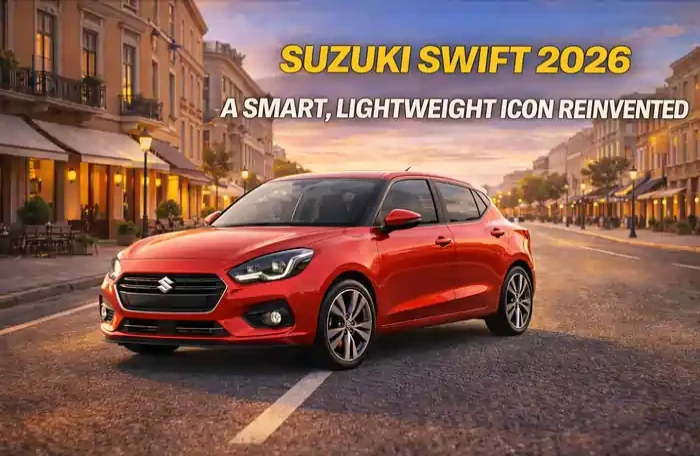


Suzuki Swift 2026: A Smart, Lightweight Icon Reinvented

The 2026 Suzuki Swift is a small hatchback where a few measurements shape daily use more than trim names. Turning radius affects parking effort. Ground clearance affects scrape risk on speed humps and steep driveway aprons. Kerb weight influences responsiveness and crosswind feel. Market and trim differences can also change transmission type, tire size, and published fuel-use figures, so local-market specs are the safest reference point.
Small cars often get judged on horsepower first, yet daily satisfaction usually comes from packaging and tuning. A tight turning circle can matter more than peak power in city driving. Cargo volume can matter more than rear-seat comfort for errands and airport runs. Tire size can quietly change ride firmness, noise, and steering feel.
Specification Table
Source: Suzuki New Zealand, “Swift” specifications page. https://www.suzuki.co.nz/Specifications/Swift
Parking And Road Fit
Overall length at 3,860 mm keeps curbside parking and tight garage bays manageable. Overall width at 1,735 mm can feel comfortable on narrow streets and older parking layouts.
Minimum turning radius at 4.8 m often shows up during routine errands. U-turns can happen without multi-point maneuvers on many two-lane streets. Parking garages with tight ramps usually feel less stressful when steering lock allows a clean line.
Wheelbase at 2,450 mm matters on faster roads. A longer wheelbase relative to overall length can support calmer straight-line tracking. Ride tuning and tire choice still play a big part, yet wheelbase remains a useful anchor for comparison across small cars.
Ground Clearance And Driveway Risk
Ground clearance listed at 115 mm can bring scrape risk in predictable scenarios. Steep driveway transitions, tall speed humps, and uneven pavement edges can contact undertrays or bumper lips. Passenger load and cargo weight can reduce clearance further.
Wheel and tire changes can also affect clearance. A larger wheel with a lower-profile tire can alter ride comfort and can slightly shift clearance depending on total rolling diameter. Factory tire sizes listed across grades already point to ride and noise differences between trims.
Engine And Mild-Hybrid System
The Swift listing shows a 1.2 L Smart Hybrid VVT engine paired with 12V ISG hardware. Mild-hybrid setups in this format typically focus on efficiency support and smoother stop-start operation rather than EV-style driving. Torque and power delivery still come mainly from the combustion engine.
Maximum output at 60 kW and torque at 108 Nm describe modest performance oriented toward daily commuting. City driving usually feels strongest when revs stay in the midrange. Highway passing can require more planning, especially with passengers and luggage.
Fuel requirement listed as 95 RON or greater can be a cost and availability factor in some regions. Fuel economy figures from the 3P-WLTP conversion range from 4.0 to 4.3 L/100 km, with CO₂ listed from 91 to 97 g/km. Grade selection can shift published figures even when engine hardware stays similar.
Transmission Options And Driveline
Suzuki lists a 5-speed manual on one grade and CVT on other grades, with front-wheel drive across the range. Manual gearing can feel more direct during low-speed cornering and quick merges. CVT behavior often prioritizes smoothness and efficiency.
Driving feel can change with trim level beyond transmission alone. Tire size and equipment weight can affect acceleration feel and steering response. Kerb weight figures at 949 kg and 984 kg show meaningful variation for a small car.
Suspension, Brakes, Steering, And Tire Sizes
The spec sheet lists MacPherson strut front suspension and torsion beam rear suspension. Many small hatchbacks use a similar layout, so ride quality depends heavily on spring and damper tuning, wheel size, and tire sidewall height.
Ventilated front discs paired with rear drums is a common setup in the segment. Brake pedal feel and fade resistance depend on pad compound and cooling, yet the listed hardware gives a baseline for maintenance expectations.
Tire sizes listed include 175/65R15 and 185/55R16. A move from 15-inch to 16-inch wheels often reduces sidewall height, which can sharpen steering response and can increase impact harshness on rough pavement. Road noise can also change with tire model and tread pattern.
Cargo Space, Fuel Tank, Towing, And Seating
Luggage volume listed at 265 L with rear seats raised and 589 L with rear seats folded uses the VDA method. Cargo numbers matter most when planning daily practical use, such as groceries, strollers, or airport bags. Folded-seat capacity can also influence home-improvement runs and small furniture pickups.
Fuel tank capacity listed at 37 L pairs naturally with low fuel-use figures for a longer range between fill-ups, depending on driving conditions. Short-trip driving can raise fuel consumption even when published numbers look low.
Towing capacity listed at 400 kg unbraked and 650 kg braked can support light trailers, yet legal towing limits also depend on local regulations, hitch ratings, and trailer braking equipment. Many owners never tow with a small hatch, yet towing limits can still signal drivetrain and cooling expectations.
Local Model Verification Note
Suzuki New Zealand also hosts a “Swift 3rd Gen” specification page with different figures for several items, including length, ground clearance, engine designation, and cargo volume. Matching the correct local model page helps avoid spec mixing.
Ship A Suzuki Swift With AmeriFreight Auto Transport
AmeriFreight Auto Transport arranges open and enclosed carrier options for customers shipping a Suzuki Swift within the continental U.S., with Door-to-Door Service (Location Permitting). No upfront payment until you choose a carrier.


.webp)