
 Call Us:
  Email Us:
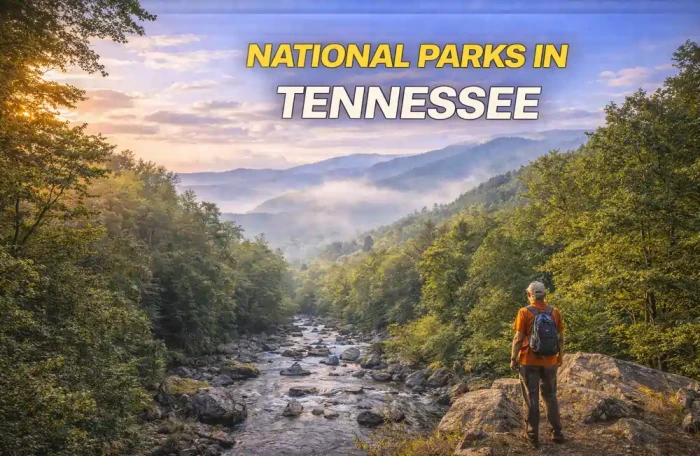

From Smoky Peaks to Story Trails: National Parks in Tennessee

Tennessee’s national parks are less a single destination and more a network of protected places that tell different stories. Mountain ridgelines and temperate rainforests sit on one end of the spectrum. River gorges, historic travel corridors, and preserved battlefields sit on the other. Trip planning gets easier when each unit is treated as its own experience, with its own pace and purpose.
List Of The National Parks In Tennessee
Tennessee includes 13 National Park Service units:
Andrew Johnson National Historic Site
Appalachian National Scenic Trail (Tennessee segments)
Big South Fork National River and Recreation Area
Chickamauga and Chattanooga National Military Park
Cumberland Gap National Historical Park
Fort Donelson National Battlefield
Great Smoky Mountains National Park
Manhattan Project National Historical Park (Oak Ridge unit in Tennessee)
Natchez Trace National Scenic Trail
Natchez Trace Parkway (Tennessee portion)
Obed Wild and Scenic River
Shiloh National Military Park
Stones River National Battlefield
Great Smoky Mountains National Park
Great Smoky Mountains National Park anchors the state’s best-known park experience. Elevation changes create a wide range of habitats, so a single visit can move from shaded coves to ridge views without long travel. Visitor patterns shape the day as much as scenery, since popular drives and trailheads concentrate people into a handful of corridors. The park reported 13.3 million recreation visits in 2023.
Big South Fork National River and Recreation Area
Big South Fork offers gorge country, sandstone bluffs, and a river corridor that creates distance from the usual tourist density. Scale spreads visitors across multiple trailheads and overlooks, so crowds often feel less compressed than in the Smokies. Longer drives between areas and fewer developed services shift more responsibility onto visitors for planning and timing.
Obed Wild and Scenic River
Obed protects free-flowing river segments through steep gorge terrain, with a strong reputation for paddling and climbing alongside hiking. Minimal development keeps the landscape in control of the experience, which suits visitors who want a quieter, more self-directed day. Fewer facilities and narrower access points make conditions and preparation feel more central than amenities.
Natchez Trace Parkway
Natchez Trace Parkway fits travelers who prefer a scenic corridor rather than a single destination. Pull-offs, short walks, and historic interpretation create a natural road-trip rhythm. A satisfying visit often comes from treating the parkway as a sequence of small experiences rather than a checklist of stops.
Natchez Trace National Scenic Trail
Natchez Trace National Scenic Trail adds hiking and equestrian segments along the historic corridor. Many visitors use the trail in repeatable pieces, returning to favorite sections rather than approaching it as one continuous trek. Planning around a specific segment and access point usually feels more natural than trying to cover large distances in one outing.
Appalachian National Scenic Trail, Tennessee segments
Appalachian Trail segments connected to Tennessee deliver steep climbs, high ridges, and rapid weather shifts that shape the experience more than mileage does. Through-hikers encounter iconic ridge travel when the route runs through Great Smoky Mountains National Park. Day hikers often choose shorter stretches that still capture elevation, exposure, and long views.
Cumberland Gap National Historical Park
Cumberland Gap combines cultural history with mountain terrain in a way that feels cohesive on the ground. A preserved passage through the Appalachians gives migration history a physical shape that maps and textbooks cannot replicate. Viewpoints, short hikes, and interpretive stops often fit comfortably into one day without forcing an either-or choice between scenery and story.
Chickamauga and Chattanooga National Military Park
Chickamauga and Chattanooga preserves a battlefield landscape where ridgelines, open ground, and wooded approaches explain tactical choices. Monument clusters and interpretive points support a slow drive-and-walk rhythm, which suits visitors who want context more than spectacle. The park reported 1,021,822 visits in 2023. High visitation often concentrates around auto loops, overlooks, and major interpretive areas, so pacing the visit around a few zones can feel less rushed.
Shiloh National Military Park
Shiloh preserves a battlefield where the landscape remains the primary exhibit. Trails and driving routes move visitors through key areas without turning the day into a scavenger hunt. The site also holds layers beyond the battle itself, giving additional context for why the location mattered before the war and why preservation remained important afterward.
Stones River National Battlefield
Stones River balances battlefield preservation with the role of a green space near a growing city. Terrain features remain legible on-site, and short walks often clarify how quickly conditions can shift across a battlefield landscape. Interpretive stops work best when paired with time on foot, since topography carries much of the meaning.
Fort Donelson National Battlefield
Fort Donelson ties its story to rivers, fortifications, and early-war momentum shifts that changed the regional map. Earthworks and elevation lines give visitors a clear sense of position and approach routes. Time spent reading the ground often adds more value than moving quickly between markers.
Manhattan Project National Historical Park, Oak Ridge unit
Oak Ridge brings wartime secrecy, industrial scale, and scientific urgency into Tennessee’s park portfolio. Interpretation tends to balance engineering breakthroughs with the human logistics behind the work, including labor systems, housing pressure, and segregation-era realities. A visit often feels heavier than expected because the preserved place points to consequences, not only innovation.
Andrew Johnson National Historic Site
Andrew Johnson National Historic Site grounds Reconstruction-era political conflict in preserved places rather than abstract debate. The unit suits visitors who prefer depth over spectacle, since meaning comes through context, reading, and reflection. Greeneville’s town setting can make national history feel immediate and personal.
How These Parks Fit Together
Tennessee’s National Park System reads like a connected map of the state’s identity. The Great Smoky Mountains hold the best-known natural landscape and the most concentrated demand pressure. Big South Fork and Obed protect gorge country where quiet and conditions matter more than amenities. Natchez Trace preserves movement itself, with history embedded in the act of traveling the corridor. Cumberland Gap marks a crossing point that shaped where people went and what came next.
Battlefield parks keep pivotal ground intact, so the story stays rooted in place rather than drifting into abstraction. Oak Ridge preserves a chapter of American science and wartime mobilization that still feels close enough to be uncomfortable. Greeneville holds a Reconstruction-era story that continues to shape how power, law, and citizenship are argued in the present.
If vehicle shipping is part of a Tennessee trip, relocation, or seasonal move, AmeriFreight Auto Transport can help arrange transport to or from Tennessee.