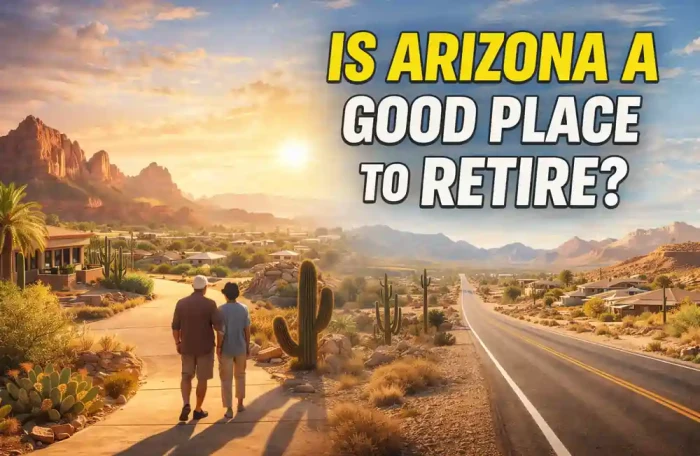


Yes, Arizona can be a good place to retire. And there are many reasons why. Many see warm days, open desert views, and active outdoor living as obvious benefits. In fact, many certainly saw it that way, and they voted with their feet. According to one estimate, the over-65 population in Arizona grew by more than 50 percent between 2009 and 2019.
But settling in Arizona takes more than liking sunshine. It means choosing a place that matches your health needs, budget, and lifestyle.
Some retirees love the dry climate because it can ease joint pain, while others struggle with asthma or find the heat overwhelming. Some enjoy the low taxes on Social Security, but still worry about state taxes on retirement withdrawals, high sales taxes, or rising utility bills in the summer.
And while cities like Prescott or Sedona offer strong medical access and four seasons, others come with higher housing costs or limited public transportation.
This guide walks you through the real picture. You’ll see where Arizona shines for retirees, where it falls short, and how daily life feels across different regions.
What You’ll Learn
The advantages of retiring in Arizona
The drawbacks of settling in the Grand Canyon State
The frequently asked questions retirees ask about choosing Arizona for retirement
Summary
Pros of Retiring in Arizona

Financial Benefits
If you retire in Arizona, you pay no state income tax on your Social Security benefits. Homeowners also enjoy relatively low property taxes. The state’s average effective rate is about 0.44 percent of a home’s assessed value. This ranks the Grand Canyon State as having the third-lowest effective property tax rate nationwide.
Another benefit for retirees is that there’s no state-level inheritance tax or estate tax in Arizona.
All these benefits mean:
Your retirement income goes further: Your fixed income or savings can cover more of your everyday needs.
You may have more predictable housing costs: This helps you allocate your income to other needs, like healthcare.
Climate and Lifestyle
Arizona offers about 300 days of sunshine each year. Because the air is dry, this can help you if you’re dealing with health conditions, such as arthritis.
The sunny climate also means more things to do in Arizona, such as:
Engage in easy hiking: Arizona national parks such as the Grand Canyon and Petrified Forest have several viewpoints and trails that are paved and accessible.
Volunteer at community gardens: Some organizations, like the Desert Botanical Garden, offer opportunities for individuals to produce their own food.
Community and Healthcare
The Grand Canyon State features many age-restricted communities designed for seniors. At the same time, you’ll have strong access to top-tier health care. Some of these nationally recognized medical facilities include:
Mayo Clinic in Arizona: Ranked the top hospital in Arizona, with specialties in heart care, neurology, and orthopedics.
Banner-University Medical Center Phoenix: Operates as a full-service teaching hospital with a Level 1 trauma center. Employs experts in specialties like cardiology and neurology.
Affordable Options
Some of the best places to retire in Arizona are not expensive to live in. Tucson, for example, is generally cheaper than the U.S. average for housing, food, utilities, and overall living costs. Housing in Yuma and similar cities also tends to stay well below the state average, making home-buying or renting more affordable.
The table below shows how housing in certain Arizona cities costs compared to the national average:
Source: 2025 Zillow data
Affordability is not just about housing, though. When choosing among the list of less expensive cities, try to:
Check total living costs, not just housing: This gives a clearer idea of what your monthly expenses will be.
Make sure healthcare access and services match your needs: Pick a city that offers solid hospitals, clinics, and senior-friendly health services.
Cons of Retiring in Arizona

Extreme Summer Heat
Although Arizona is not even in the top 10 of the country’s hottest states, some areas are still prone to extreme temperatures. One example is Phoenix. It’s not unusual for the capital of Arizona to experience more than 100 days of over 100 °F heat.
During the hottest months, many seniors stay mostly indoors. That means your air conditioning will likely run a lot longer. Utility bills can rise sharply, especially for cooling and electricity.
Managing the extreme Arizona may involve:
Drink plenty of water: Staying hydrated helps avoid dehydration and heat exhaustion.
Look for public “cooling centers”: Libraries, community centers, or malls are accessible if you need to avoid the outdoor heat.
Housing Costs
Some parts of the Grand Canyon State offer low costs, but certain cities come with higher living expenses, especially when it comes to housing. The table below shows how housing in certain Arizona cities costs compared to the national average:
Source: 2025 Zillow data
These cities are expensive for multiple reasons, such as:
High-end amenities: Sedona, for example, has beautiful landscapes and scenery that attract buyers wanting natural beauty and resort-town living.
Vacation spots: Many of the homes there are built to luxury standards, such as larger lots, thus attracting snowbirds.
Resource and Service Issues
One of the challenging aspects of living in Arizona is its water scarcity. The state has suffered from a decades-long drought, shrinking rivers, and falling groundwater levels. This makes the water supply uncertain.
Another potentially challenging issue is limited public transportation. Outside major cities like Phoenix and Tempe, many rural parts of the state offer few public transit options.
Dealing with the Grand Canyon State’s limited public transportation may require you to:
Use volunteer ride services: Many communities offer free or low-cost shuttle options for older adults and people with limited mobility.
Reach out to aging-services agencies: Local offices, like Area Agencies on Aging in Arizona, can help you find community transport services.
Taxation and Fraud
Although you won’t pay taxes on your Social Security benefits, your 401(k), IRA, or pension benefits are still subject to state income tax. You’ll also face a fairly high sales tax rate. This can be around 8 percent on many purchases once local taxes are included.
It doesn’t help that Arizona has the ninth-highest-ranked state for total losses arising from cyber-related crime. According to the FBI, Arizonans lost more than $4 billion in total in 2025.
This means if you’re looking to settle in the Grand Canyon State, it pays to:
Buy smart: Consider timing big-ticket purchases during tax-free promotions.
Pick among the safest cities in Arizona to settle in: Scottsdale, for example, doesn’t just have an overall crime index that is below the U.S. average. The city’s police department also has a dedicated Computer Crime Unit.
Final Thoughts: Retiring in Arizona
Arizona brings together warm weather, desert scenery, and a slower pace that appeals to many retirees. Cities and small towns across the state offer their own mix of comfort, outdoor space, and community, making it easy to find a place that fits your lifestyle. You can enjoy sunshine, gentle trails, gardens, museums, and day trips almost year-round.
Whether you want an active Arizona retirement or a quiet routine, the state gives you room to settle in and enjoy life at your own pace.
From affordable towns to well-known medical centers, the Grand Canyon State offers many options for seniors looking for a fresh start in the Southwest.
Move to the Grand Canyon State with AmeriFreight
Let AmeriFreight Auto Transport handle your vehicle shipment before you settle into Arizona’s mix of desert towns, mountain views, and sunny days. Our agents work with licensed carriers across the country to help make your move smooth and dependable.
With more than 20 years of experience, AmeriFreight has the knowledge to get your vehicle to your new home. You can then enjoy your first drive through Arizona’s wide landscapes and welcoming communities.
Frequently Asked Questions (FAQs)
How does the dry Arizona climate affect long-term health issues like arthritis or asthma, compared to a humid climate?
Arizona’s dry climate can help with arthritis. Lower humidity and warm, dry air often ease joint swelling and stiffness, which may reduce pain and improve mobility. On the other hand, dry air can irritate airways, dry out mucus membranes, and trigger breathing problems. These can make asthma or sinus issues worse.
Where are the best spots for RV retirement communities in Arizona that offer full hookups and high-speed internet access year-round?
Sunrise RV Resort, Gold Canyon RV & Golf Resort, and Desert Shadows RV Resort are top-rated senior communities in Arizona offering full hookups, year-round amenities, and internet access. These locales feature facilities like pickleball courts, golf courses, and swimming pools.
Are there many volunteer opportunities available for retired professionals in Phoenix’s cultural or educational non-profit sectors?
Yes, many organizations offer opportunities for seniors to engage with the wider community. These groups include:
Phoenix Art Museum: Offers docent and gallery-volunteer roles, ideal for retirees with an interest in art or history.
HandsOn Greater Phoenix: Matches older adults with many short-term and long-term volunteering options, such as literacy tutoring for children.
Which areas of Northern Arizona, like Prescott or Sedona, offer four distinct seasons and reliable access to high-quality medical facilities?
Prescott and Sedona are some of the best Arizona retirement cities for retirees looking to experience a four-season climate and a solid healthcare sector.
Prescott, for example, contains Yavapai Regional Medical Center (YRMC) and a local branch of Northern Arizona VA Health Care System. These healthcare centers offer emergency care, specialty services, rehab, and outpatient clinics.
Sedona, meanwhile, contains Northern Arizona Healthcare. The hospital’s campuses offer emergency care, imaging, specialty clinics, and comprehensive medical services.
Disclaimer
The information provided in this guide is for general informational purposes only and does not constitute legal, financial, or professional advice. While efforts have been made to ensure the accuracy and timeliness of the content, laws, regulations, and local conditions are subject to change without notice.
Readers should not act upon this information without seeking appropriate professional counsel, especially in financial and legal matters.


.webp)