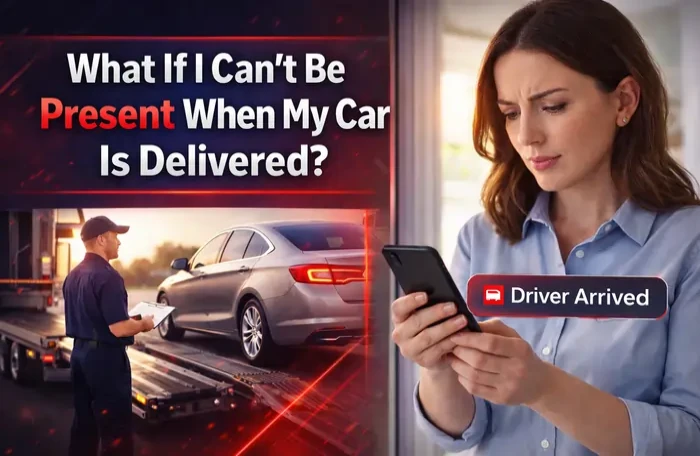


If you cannot be present for car delivery, you can still complete the shipment safely by assigning a trusted representative to accept the vehicle, inspect it, and sign the Bill of Lading on your behalf. The key is planning ahead, as most problems arise when handoff details are not clearly communicated.
Delivery is when responsibility officially transfers, so it deserves careful attention. If you will not be there, the situation remains under control as long as you designate a representative and provide clear instructions in advance.
Naming Someone To Receive The Vehicle

You do not need to be there in person. You can appoint someone who becomes your authorized agent for delivery. Their signature carries the same weight as yours. Choose someone detail-oriented. They need to be present, reachable by phone, and comfortable speaking up if something looks off. The carrier will expect them to inspect the vehicle and sign the Bill of Lading.
Why The Inspection Matters More Than The Timing

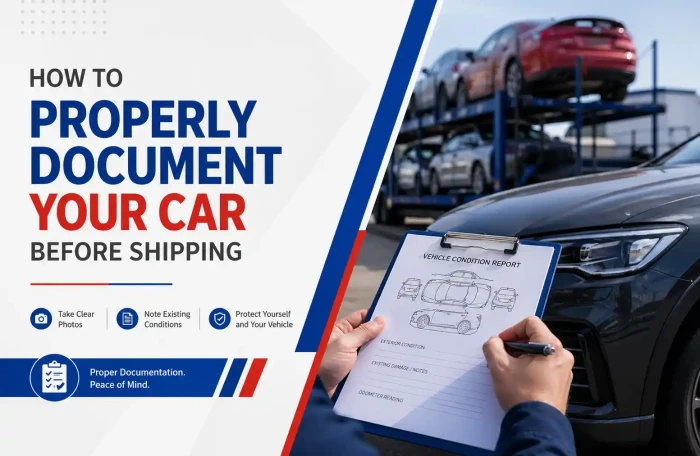
While delivery timing appears to be the main concern, the actual issue usually lies with documentation. The Bill of Lading is not a receipt. It is the legal record of how the vehicle looked when it left the carrier’s custody.
Here’s what your authorized agent should do before signing the Bill of Lading:
Walk the vehicle slowly.
Check panels, glass, wheels, roof, and bumpers.
Compare against the pickup notes.
Take photos if needed.
It’s important to remember that a clean signature is interpreted as a clean delivery.
What If No One Can Be There At All
Unattended delivery may be possible in limited cases, but it carries risk. Some carriers will agree to leave the vehicle and document the condition themselves. In that situation, you lose the chance to verify the vehicle’s condition in real time, and resolving any damage claim afterward can be much harder.
Payment And Release Details People Overlook
Payment is another detail that can catch people off guard. If there is a balance due to the carrier, your agent must know how the payment will be handled. A car will not be released until payment terms are satisfied.
Due to fraud concerns, carriers now rarely accept cashier’s checks. Electronic payments such as Zelle, Cash App, and Venmo are widely used. The customer should check in advance which payment method the carrier prefers or accepts.
If the vehicle cannot be released due to an outstanding payment or authorization, storage fees may accrue.
Damage Claims And The 48-Hour Assumption
Many people assume they have days to find issues after delivery. That is not how the process works.
Claims depend on what is documented at delivery. Optional AFTA gap protection plans are designed to address specific scenarios, but they are not insurance. Only AFTA coverage recipients have up to 48 hours to report qualifying damages under those plans. Without proper notes at delivery, even that window may not help.
If you cannot be present, your agent becomes your safeguard.
Personal Items And Access Problems

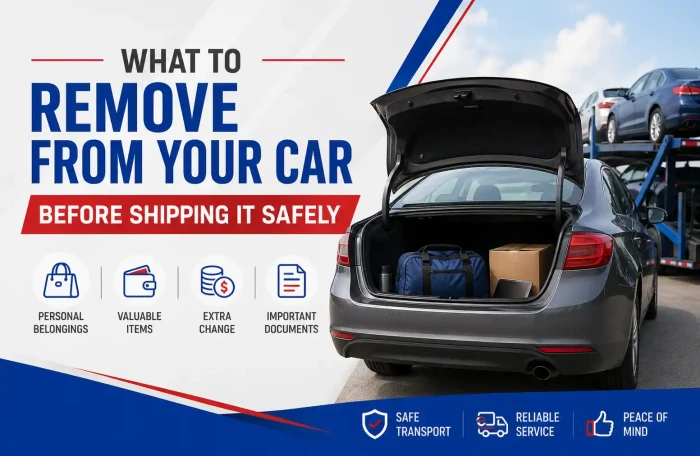
Vehicles should be empty. The DOT does not permit household goods or personal items to be shipped inside vehicles. Some carriers may allow limited items for a fee, but this must be discussed and approved in advance. If items are left inside without approval, liability becomes unclear fast.
Access also matters. Large trucks cannot always reach residential streets. Door-to-Door Service may not be possible, and the carrier may need to meet at a nearby location. Your agent should know this in advance to avoid issues caused by a blocked turn or a narrow road.
Ready to Ship With Confidence?
If coordinating pickup or delivery feels overwhelming, you do not have to handle it alone. With more than 20 years of experience as a top-rated auto transport broker, AmeriFreight Auto Transport knows how to plan around real-life schedules.
We carefully vet every carrier using FMCSA records, so your vehicle is in experienced hands. Get your free quote today and let us handle the details while you enjoy peace of mind from start to finish.
Frequently Asked Questions (FAQs)
Can I authorize a friend to sign the Bill of Lading if I'm not home for car delivery?
Yes, you may designate an agent to sign the Bill of Lading and conduct the inspection if you are unavailable at the time of delivery.
Is there a minimum age requirement for a representative to accept a car delivery in the U.S.?
The representative must generally be at least 18 years old to legally sign and accept car delivery in the U.S.
Can I record a video of the car delivery if I'm not there to do a formal walkthrough?
You can certainly have a representative record a video of the truck unloading and the trailer exit to document the load condition, though this does not replace the requirement for a physical signature on the fixed inspection report.
Can a car dealership deliver a new vehicle to my house and leave the keys in a lockbox?
Yes, many car dealerships can deliver a new vehicle to your home and leave the keys in a secure lockbox, provided you have completed all required remote signing and identity verification.
Disclaimer
This article is provided for general informational purposes only and reflects AmeriFreight Auto Transport’s standard practices based on its Terms and Conditions. Actual obligations, fees, and outcomes may vary depending on the specific shipment, carrier, and circumstances. In the event of any discrepancy, AmeriFreight’s official Terms and Conditions govern.