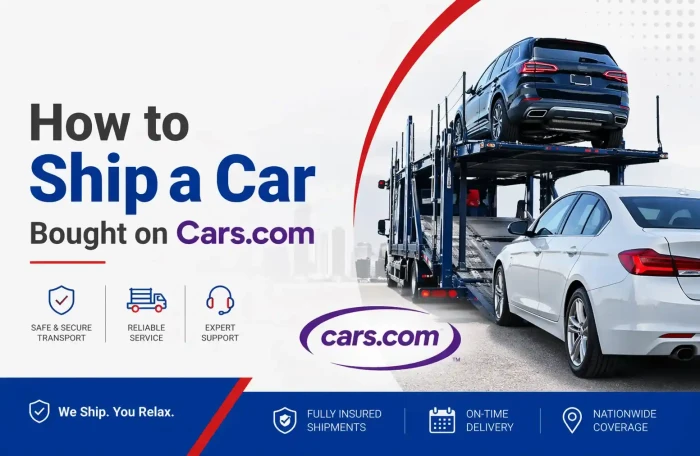


Shipping a car bought on Cars.com starts with arranging auto transport by providing the vehicle details, pickup and delivery locations, and then having a carrier assigned that can move your car along an existing route.
Buying a vehicle online feels simple, and Cars.com delivery makes it seem like pickup is the final step. The process quickly shifts to logistics, where timing, location, and flexibility carry more weight than the purchase itself.
Location has a direct impact. Vehicles near major highways or urban areas tend to move faster and at more stable rates, while rural pickups can take longer and increase costs due to routing.

What Happens After the Purchase Is Finalized
Once the transaction is complete, auto transport becomes a coordination effort rather than a simple booking.
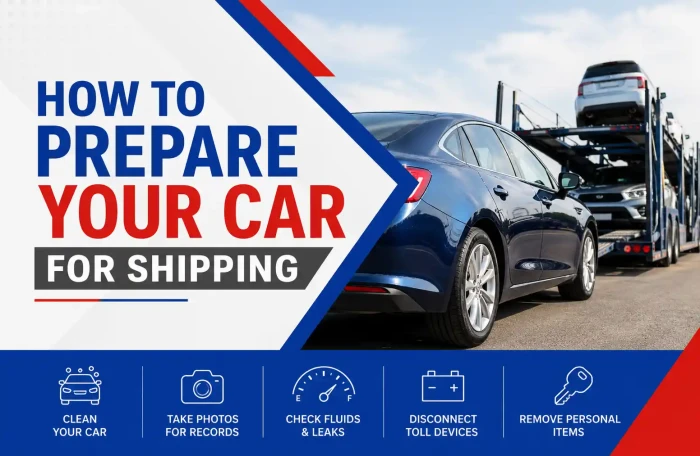
Carriers operate on route efficiency. Your vehicle is typically one of several that are loaded onto a stinger-steer carrier and moved across multiple states. Availability exists across national networks, but each shipment still depends on matching the right route, timing, and price.
This is why pickup is not immediate. You are reserving space on an existing route, not dispatching a truck solely for your vehicle.
Vehicle Shipping Costs Follow Patterns, Not Flat Rates
The cost to ship a car typically ranges from about $500 to $2,000, depending on distance, vehicle type, transport method, and market conditions. This gives a practical baseline, but pricing is always situational rather than fixed.
Short-distance shipments under 500 miles often fall between $1.00 and $2.00 per mile due to loading and fuel setup costs. As distance increases, the per-mile rate drops. Longer routes above 1,500 miles tend to average closer to 60 cents per mile, while mid-range shipments around 1,000 miles commonly land near $1.28 per mile.
This pricing structure reflects how fixed costs, such as loading time and scheduling, are distributed across distance. Vehicle size also affects pricing. Larger vehicles require more space and weight capacity. Rural pickup or delivery locations can add cost due to additional routing. Seasonal demand can further influence pricing as carrier availability shifts.

Open Car Transport vs. Enclosed Car Transport Is About Exposure
Open car transport is the most widely used option. It allows multiple vehicles to be transported at once, which keeps costs lower.
Enclosed car transport offers additional protection by shielding the vehicle from weather and road debris. This added protection typically increases the cost by 30 percent to 40 percent.
The choice depends on your comfort level with exposure. Standard vehicles are commonly shipped using open transport, while higher-value vehicles often benefit from enclosed transport.
Timing Is Built Around Industry Constraints
Most shipments fall within a seven to 10-day window from pickup to delivery. This reflects how carriers build routes and manage multiple vehicles. Drivers are limited to 11 hours of driving per day under FMCSA regulations. This directly affects how far a vehicle can travel in a single day.
The industry average for on-time delivery is about 92 percent. Delays can still occur due to weather, traffic, or route adjustments. Expedited shipping may reduce wait time, but it does not lock in exact pickup or delivery dates.

The Bill of Lading Is Where Risk Gets Managed
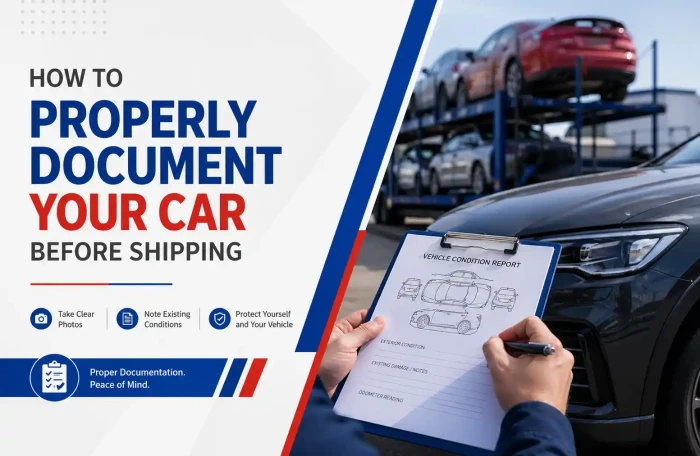
The Bill of Lading (BOL) is the most important document in the process. At pickup, the vehicle’s condition is documented. At delivery, it is checked again against that record.
About 80 percent of damage occurs during loading and unloading, making inspection critical. Missing this step or rushing through it can limit your ability to report issues later.
The overall damage rate in auto transport is about 3 percent. While relatively low, proper inspection remains essential. The adoption of Electronic Bill of Lading has reached about 60 percent. Digital inspections with photo documentation are becoming standard and help reduce disputes.

Insurance Coverage Has Limits Most Buyers Miss
Car carrier insurance is required, but coverage varies and is often misunderstood. The FMCSA requires a minimum of $750,000 in public liability coverage. Many brokers and contracts operate at or near $1,000,000. Some platforms include additional umbrella protection reaching $10,000,000.
These figures can create a false sense of security. Coverage may apply per load rather than per vehicle, which affects the level of protection each shipment actually has. Repair costs are rising. About 87 percent of repair estimates now include diagnostic scans due to modern vehicle systems. Around 27 percent of claims result in total loss decisions.
Private Seller Purchases Add Another Layer
If you are figuring out how to ship a car from a private seller on Cars.com, coordination becomes more involved. You need accurate pickup details, confirmation that the vehicle is operational, and a location that can accommodate a large carrier. If access is limited, a nearby meeting point may be required. Overlooking these details early can lead to delays or added costs.
The Market Behind the Scenes Affects Your Shipment
The industry is facing a projected shortage of 82,000 drivers at the end of 2025. This impacts long-term capacity and carrier availability. Repair timelines also matter. The average repair cycle is about 19.3 days. If damage occurs, resolution may take time. These factors operate in the background but influence how smoothly shipments move.
What Buyers Tend to Assume Without Saying It
Many buyers expect car shipping to work like standard e-commerce delivery, which can be frustrating when timing feels less predictable. Some assume the lowest quote is the best option. Lower pricing can lead to delays if carriers do not accept the rate.
Others expect fixed delivery schedules, but the process depends on route alignment, which requires flexibility. There is also a perception that damage is common. The data suggests otherwise, but inspection remains critical to protect your position.
Where AmeriFreight Auto Transport Fits In
Working with AmeriFreight Auto Transport shifts the coordination process away from the buyer. Customer service agents manage carrier matching and help navigate the logistics involved in auto transport.
No upfront payment until you choose a carrier. This structure reduces the risk of committing funds before a carrier is secured. AmeriFreight Auto Transport is one of the best-reviewed in the industry. That reputation reflects consistent handling of shipments and attention to detail throughout the process.
Get your free, no obligation quote today.
Disclaimer
All pricing and transit times are estimates based on typical market conditions and may vary. AmeriFreight Auto Transport is not affiliated with Cars.com. Pickup and delivery dates are not guaranteed. Carrier availability, route demand, weather, and vehicle condition can affect timing and cost.