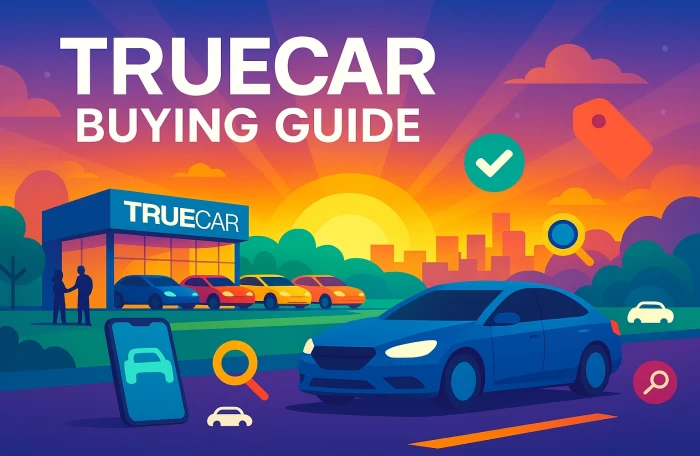


TrueCar Buying Guide: Get the Best Deal
The traditional dealership experience relies on asymmetric information. Buyers walk onto the lot knowing only the manufacturer suggested retail price. Dealers know the actual market clearing price down to the dollar. In an economic environment defined by high interest rates, giving up that leverage is a costly mistake. Modern digital retailing tools attempt to balance the scales. They expose localized transaction data and force transparent pricing structures before you ever step foot in a showroom.
The Regional Mathematics of Car Pricing
The automotive market is increasingly split. High borrowing costs and average new vehicle prices of more than $50,000 mean buyers continue to support luxury and midsize SUV segments. Elevated monthly payments push price-sensitive shoppers toward the used market. Most consumers assume the manufacturer sticker price is the baseline for negotiation. Car pricing is actually entirely regional. A surplus of midsize SUVs in one zip code means steep discounts. A shortage a few towns away results in premium markups.
The TruePrice algorithm aggregates millions of historical transactions in your specific area and normalizes the data to account for optional packages and trim levels. The system relies on sales from the past four weeks to calculate a target market price. You are not looking at a broad national average. You are looking at a highly specific mathematical baseline that prioritizes recent sales and filters out extreme outliers like employee discounts. The platform claims a 99.1 percent confidence level that its projected price lands within $20 of the national average for that week. This precision prevents you from comparing a base model's historical price to a fully loaded showroom model.
Regulatory Shifts Force Pricing Clarity
Federal Trade Commission guidelines have fundamentally changed how dealerships advertise. The FTC now mandates that online prices match showroom reality and clearly strip out deceptive hidden fees. TrueCar enforces these rules by requiring participating dealers to provide regular sales verification files directly from their management systems. This creates a closed loop where bait and switch tactics are easily identified and penalized.
Dealers are encouraged to provide individualized upfront offers that are lower than their lowest publicly advertised price. Premium brands maintain strict minimum advertised price rules that restrict clearance or bargain language. When a dealer offers a price through the platform, that number excludes standard government taxes and registration but should not hide mandatory protection packages.
Securing the Trade-In Value
Selling your current vehicle is usually the hardest part of buying a new one. For many buyers, the trade-in is the deciding factor. Roughly 65 percent of shoppers choose their dealership based on who offers the highest trade-in value. TrueCar shifted away from broad estimates toward an artificial intelligence valuation model that generates a firm cash offer valid for three days. The system analyzes specific details like color, mileage, and optional features against real-time market data.
You complete a physical side-by-side inspection at the dealership to verify the condition matches the online profile. This locks the dealer into a set value and prevents them from deflating your trade value at the last minute to offset the discount they provided on the new vehicle. If the condition matches, the dealer issues a check directly.
Integrating Affinity Partnerships and Financing
Connecting your vehicle search to an affinity partner like Navy Federal Credit Union, AARP, or Sam's Club changes the financial math of the transaction. The platform reaches more than 100 million buyers through these integrated networks. Buyers coming through these portals often receive targeted financing rates, military discounts, or cash bonuses.
Securing a loan rate discount of 0.50 percent is far more impactful than negotiating a slightly lower purchase price when average new-car annual percentage rates sit near 7.5 percent. These integrated ecosystems allow you to find the vehicle, lock in the trade value, and secure financing simultaneously. This reduces the time spent inside the dealership and limits your exposure to backend finance product upselling.
Post-Purchase Protections
The financial structure of a deal extends past the point of sale. Consumers purchasing through the platform often gain access to the Buyers Bonus program. This program includes a reimbursement policy for your auto deductible. This coverage provides a maximum payment of $500 for a loss in any one occurrence.
Buyers also gain access to technicians who review third-party repair estimates to ensure maintenance pricing remains fair. These built-in protections insulate buyers from immediate out-of-pocket costs and predatory service center pricing during the early stages of ownership.
Controlling the Final Variables
Getting the best deal on a vehicle requires controlling multiple financial levers simultaneously. The purchase price, the trade-in value, and the financing rate all interact to determine your actual out-of-pocket cost.
Securing a massive discount on the sticker price means nothing if a dealer recoups that margin through an undervalued trade or an inflated loan rate. Using verified local data, locking in a firm cash offer upfront, and leveraging pre-arranged financing transforms an unpredictable negotiation into a defined transaction.