

Rural America is eager to benefit from the shift to electric vehicles (EVs). But many communities still face long challenges with rural EV charging. These affect families, workers, and small businesses. Many of them rely on extended travel and heavy-duty vehicles.
This guide walks through those barriers and highlights practical solutions. Knowing this can help rural drivers feel confident, supported, and included in the nation’s growing EV future.
What You’ll Learn
In this guide, we will answer:
What challenges make EV adoption harder in rural areas than in cities?
What funding programs and incentives can help rural communities build more charging stations?
Which business strategies and technologies can improve rural charging stations?
Overview
Why Rural EV Charging Still Lags Behind in 2026
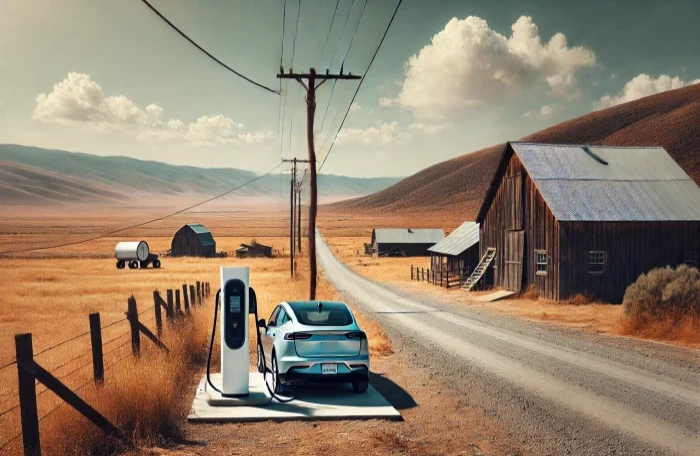
While national EV adoption is surging, growth in rural areas is slower. Rural drivers still deal with longer distances, fewer charging options, and older electrical grids. This results in what are often called charging deserts.
The difficulties in installing electric car chargers in the countryside remain complex. They often require significant investments in power delivery, equipment, and complex permitting.
Current State of EV Adoption in Rural America
EV Ownership Trends Outside Cities
Rural counties continue to register far fewer electric vehicles than urban areas. Many non-metro counties have fewer than five, and often zero, EVs per 10,000 residents. Metro counties typically range from 10 to well over 100 per 10,000.
How Infrastructure Gaps Shape Rural EV Adoption
Public charging is still hard to find in many rural areas. Some counties lack a single fast charger. This makes long trips challenging, especially when towing equipment or trailers. Because public charging options are limited, most drivers rely on home charging.
Key Barriers to Electric Vehicle Adoption in the Countryside

Charging Deserts and Distance Between Stations
A “charging desert” is an area where public EV chargers are so spread out. Drivers have to travel long distances to find one. This makes everyday travel much harder. This is especially difficult for people who tow trailers or haul heavy loads. Because not knowing where the next reliable charger is creates significant range anxiety.
Rural installation often faces several obstacles:
Remote sites that require long and expensive grid connections
Shortages of certified EV installers in rural counties
Local permitting rules that add time and complexity
Upfront EV and Infrastructure Costs
Home Level 2 chargers and public fast chargers can be costly to install. Even though EVs often cost less to operate over time. Initial investment is still a significant concern for many rural households and small businesses.
Grid Capacity Limitations for DC Fast Chargers in Agricultural Areas
Many farming areas lack the three-phase power needed for high-power fast charging. Grid upgrades are expensive and slow. This includes new transformers or improvements to substations. It becomes harder to build reliable fast-charging sites along rural truck routes.
Impact of Cold on EV Charging Speed in Rural Northern States
Cold temperatures reduce EV range and slow charging speeds. This creates added risk in rural northern states and mountain areas. The stations in these locations are far apart and often lack shelter from harsh weather.
Policy, Market, and Access Barriers
Rural drivers have fewer EV options that meet their needs, such as affordable pickup trucks suited for towing and off-road use. Limited dealership availability and fewer local test-drive opportunities also slow adoption.
Awareness, Signage, and Information Gaps
Weak signage on rural roads makes it hard to locate existing chargers. Clear information about charger reliability and speed is often missing.
Funding and Incentives for Rural EV Charging in 2026

NEVI Program Funding for Rural Corridors 2026
The National Electric Vehicle Infrastructure (NEVI) Formula Program will award its final round of funding in fiscal year 2026. This program remains one of the most important federal tools for bringing fast chargers to rural areas that currently have very few or none.
Key points:
2026 is the last planned year of NEVI funding.
The program focuses on closing charging gaps in rural regions.
States now have more flexibility in choosing charger locations.
Rural communities have a limited window to secure fast-charger projects.
EV Charging Station Grants for Small Towns in the Midwest 2026
Small towns across the Midwest will continue to qualify for EV charging station grants in 2026, along with similar programs in other regions. These grants support rural areas that are not located on major highway corridors.
Key points:
State DOTs and energy offices can cover much of the installation cost.
The federal Charging and Fueling Infrastructure (CFI) Program is another strong option for rural and community-based charging projects.
Utility Company Programs for Home EV Charger Installation in Rural Zip Codes
More utilities are offering support for home EV charging in rural areas, especially through rural electric cooperatives.
Common incentives include:
Rebates for Level 2 home chargers
Time-of-Use rates that make overnight charging cheaper
Make-ready programs that help offset wiring and electrical upgrade costs
Rural residents should contact their local cooperative or municipal utility to understand which incentives are available.
How to Find Incentives:
Check Federal Tax Credits: Verify the status of the 30C tax credit and consumer EV purchase credits.
Contact State and Local Agencies: Look for state-specific EV grant programs and local economic development funds.
Consult Your Utility/Co-op: Ask about residential and commercial rebates and TOU rates.
Use Online Tools: Utilize databases that track incentives by zip code.
Check Federal Tax Credits: Verify the status of the 30C tax credit and consumer EV purchase credits.
Contact State and Local Agencies: Look for state-specific EV grant programs and local economic development funds.
Consult Your Utility/Co-op: Ask about residential and commercial rebates and TOU rates.
Use Online Tools: Utilize databases that track incentives by zip code.
Business Models for Profitable Rural EV Charging Stations
Rural fast chargers face financial and operational hurdles. Several business models and technologies can help make these stations more reliable and profitable.

Why Rural Chargers Struggle with Utilization
Rural chargers often see low traffic. This makes it hard to cover operating costs and high demand charges. Installing a high-power charger that few people use is a major financial risk.
Business Models That Improve Profitability
Strong rural stations use more than electricity sales to make money. Examples include:
Co-location with gas stations, grocery stores, diners, or motels
Amenity charging that brings customers into nearby businesses
Membership plans that offer discounts and basic perks such as Wi-Fi, safe lighting, or clean restrooms
Solar-Powered vs Grid-Tied Charging for Rural Businesses
Solar-plus-battery systems can lower demand charges and add resilience on weak grids. They cost more upfront but work well for farms, wineries, and remote tourism sites with limited grid access.
Maintenance and Repair in Remote Locations
Reliable service is crucial. High uptime, remote monitoring, and fast repairs help maintain driver trust. Service contracts that guarantee quick response times are essential.
Mobile Charging for Roadside Assistance
Mobile charging units offer backup power in areas with long gaps between chargers. They reduce range anxiety and help new EV drivers as the rural network grows.
Planning and Siting Rural EV Charging Infrastructure
Technology Trends Supporting Rural EV Drivers
These technology trends are making it easier and more practical for people in rural areas to drive and charge electric vehicles.
Final Thoughts: Empowering the Road Ahead
Building a strong rural EV network will take planning, partnerships, and patience. By combining new technologies, incentives, and community-driven solutions, rural regions can create a reliable charging network. And when it comes to EV or hybrid shipping, choosing a trustworthy partner is a must.
Need To Ship an EV?
If you are buying an electric vehicle from out of state, AmeriFreight Auto Transport can help make the transition smooth and stress-free.
With more than 20 years of experience in vehicle shipping, we connect you with thoroughly vetted, top-rated carriers who know how to handle EVs.
Get your free, no obligation quote today.
Frequently Asked Questions (FAQs)
How do grid capacity limitations affect DC fast chargers in agricultural areas?
Weak rural grids cannot supply enough power for fast chargers, causing costly upgrades and long delays.
What are the best long-range EVs for driving in mountainous regions?
Top choices include long-range, all-wheel-drive EVs like the Lucid Air, Tesla Model S or X, and Rivian R1S or R1T.
How can rural drivers reduce range anxiety if they live in a charging desert?
Drivers can rely on home Level 2 charging, choose long-range EVs, prep batteries in cold weather, and use mobile charging services when needed.