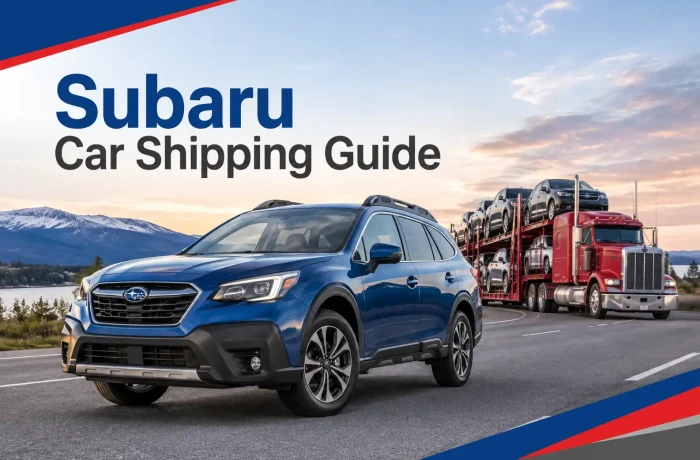


Subaru Car Shipping Guide 2026: What to Know
Subaru's 2026 lineup—from the rugged Outback to the sporty WRX and all-electric Solterra—is built for adventure. However, shipping these specialized vehicles across the country requires more than standard towing methods.
Whether you're relocating, buying out-of-state, or moving a classic Impreza, driving cross-country adds unnecessary wear, risks windshield damage, and drains your valuable time.
Coordinating your move through AmeriFreight Auto Transport connects you with professional motor carriers who understand the strict mechanical and electronic requirements unique to the Subaru brand.
Why Subaru Transport Needs Extra Attention
Shipping a modern Subaru is far more complex than moving a standard front-wheel-drive sedan. Carriers must navigate strict mechanical limitations, sensitive safety electronics, and federal weight laws:
The Symmetrical AWD Dilemma: Subaru’s proprietary full-time All-Wheel Drive (AWD) system requires that all four wheels move at the same speed. If a standard tow truck lifts only the front wheels and leaves the rear wheels rolling on the pavement, it creates a massive mechanical conflict that can destroy the center differential and transmission in a matter of miles. Subarus must always be shipped on a flatbed or a multi-car trailer where all four wheels are off the ground.
EyeSight Safety Systems: Subaru's EyeSight Advanced Driver Assist System uses highly sensitive stereoscopic cameras to control adaptive cruise control and lane centering. If a transport driver uses outdated metal chains to tie the car down by its chassis, compressing the suspension during transit, it can misalign the vehicle's thrust angle. This can completely disable the EyeSight system until it undergoes a costly recalibration. Always insist on "soft" over-the-tire straps.
The Weight of the Solterra EV: The 2026 Subaru Solterra electric vehicle weighs roughly 4,500 pounds due to its massive battery pack. Because federal highway laws cap commercial trucks at a maximum weight of 80,000 pounds, carriers often have to haul fewer cars when moving heavy EVs, which can lead to slight pricing surcharges. Furthermore, Solterra EVs must strictly adhere to a 20% to 50% State of Charge (SoC) limit during transit to prevent battery thermal risks.
Aftermarket Modifications: Lift Kits and Rooftop Tents
Subarus are immensely popular in the overlanding community. However, modifications significantly alter the vehicle's dimensions, weight distribution, and aerodynamics:
Lift Kits: If your Forester Wilderness has a 2-inch lift kit, it occupies significantly more vertical space on a transport trailer. Auto haulers operate under strict federal height maximums (usually 13.5 to 14 feet). Lifted vehicles often require specific placement on the lower deck of a trailer.
Rooftop Tents (RTTs): Heavy rooftop tents and modular awnings change the aerodynamic profile and raise the center of gravity of your vehicle. You must declare these additions to your broker, as the driver has to carefully calculate weight distribution across the trailer axles to prevent trailer sway on the highway.
Understanding Auto Transport Costs in 2026
Auto transport pricing is highly dynamic. It fluctuates based on the carrier's route, fuel prices, and the size of your vehicle. While a cross-country move has a higher total invoice, the cost per mile actually drops significantly over longer distances because the driver's loading labor and dispatch fees are spread out over more miles. Other factors that influence your live quote include:
Route Density: Shipping a car along major interstates (like from New York to Florida) is usually cheaper because there is fierce competition among thousands of available carriers. Shipping to rural, off-the-beaten-path locations costs more because the driver has to go out of their way.
Vehicle Size Modifications: As mentioned above, lifted suspensions or heavy accessories require special placement on the trailer and can incur a small size surcharge.
Inoperable Vehicles: If you bought a project car that doesn't start, steer, or brake, the driver has to use a specialized winch to pull the Subaru onto the trailer.
Navigating Seasonal Shipping Trends
Timing plays a massive role in securing a great rate. Auto transport behaves a lot like the airline industry, with prices shifting based on supply and demand.
The Winter "Snowbird" Migration: Every fall, thousands of retirees and seasonal travelers leave northern states for warmer climates like Florida, Texas, and Arizona. From October through December, this massive southbound demand eats up available truck space, pushing prices up. When spring arrives (March through May), the trend flips as everyone heads back north.
The Summer Rush: The period between June and August is the absolute peak season for the entire moving industry. College students, military personnel, and families are all relocating. Because trailer space is limited, carriers routinely attach baseline seasonal surcharges during the summer months.
Comparing Transport Options: Open vs. Enclosed
Selecting the right trailer type depends on your Subaru’s value, ground clearance, and your personal budget.
Realistic Subaru Transit Expectations
Cross-country delivery times fluctuate based on total mileage, severe weather, and federal safety laws that restrict how many hours a commercial truck driver can legally operate per day (max 11 hours of driving).
How Subaru Shipping Works with AmeriFreight Auto Transport
Choosing the right logistics partner is the most effective way to guarantee a stress-free move. With over 22 years of trusted experience and an A rating from the Better Business Bureau, AmeriFreight Auto Transport has successfully moved vehicles for thousands of satisfied customers.
Extensive Carrier Vetting: We tap into a massive network of over 14,000 trucking partners. Before a driver ever touches your Subaru, we rigorously verify their FMCSA operating authority, dedicated cargo insurance, and safety records.
No Upfront Fees: You never pay a single dime upfront. We only process your payment details after we have secured a verified carrier and your route is officially locked in.
Optional AFTA Gap Coverage: While the assigned motor carrier provides the primary cargo insurance, we offer an optional AFTA gap plan for ultimate peace of mind. This helps cover out-of-pocket carrier deductibles and extends your damage reporting window to a full 48 hours after delivery.
Door-to-Door Convenience: Enjoy seamless Door-to-Door Service (Location Permitting). Our drivers will load and deliver your Subaru as close to your driveway, chosen dealership, or business as local street clearances allow.
Easy Steps to Prepare Your Subaru for Delivery Day
Taking a few quick preparation steps guarantees a smooth handoff and protects your vehicle while it's out on the highway:
Wash the Exterior: Clean off road dirt so existing paint chips, minor scratches, or body dents can be easily documented on the official Bill of Lading (BOL) during the pre-trip walkaround.
Take Baseline Photographs: Capture clear photos of all four sides, including the wheels and lower air dams. Verify that the driver uses soft synthetic tire straps to secure the vehicle rather than metal chains hooked into the chassis.
Check Fuel and Battery Levels: Keep gas models at roughly a 1/4 tank of fuel to save weight while allowing adequate fuel for loading. For the electric Solterra, keep the battery State of Charge (SoC) firmly between 20% and 50% to comply with federal safety recommendations.
Remove Toll Passes and Personal Belongings: DOT regulations strictly prohibit shipping personal household items inside passenger vehicles. Empty your trunk, and remove automated toll tags so you don't rack up fees as the truck goes through highway checkpoints.
Disable Alarms and Secure Accessories: Fold in side mirrors, completely secure (or remove) aftermarket rooftop tents and awnings, and turn off your factory security system so it doesn't drain the battery during transit.
Frequently Asked Questions (FAQs)
Why can't I just tow my AWD Subaru with two wheels on the ground?
Towing a Subaru with two wheels elevated and two wheels rolling on the pavement forces the internal drivetrain to spin at highway speeds while the engine is off (meaning there is no hydraulic lubrication). This severe rotational friction will rapidly destroy the center differential and transmission, leading to thousands of dollars in uninsured repair bills. It must be shipped on a flatbed or a carrier where all four wheels are off the ground.
Will shipping my Subaru mess up my EyeSight camera calibration?
It shouldn't, as long as the carrier secures the vehicle properly. Transport drivers must use soft "wheel nets" that strap the tires to the deck, allowing the Subaru's suspension to float naturally. If a driver uses outdated metal chains hooked into the frame, the suspension gets compressed during the bumpy ride, which can warp the alignment and permanently disable the EyeSight cameras until a dealer recalibrates them.
How do carriers load low-clearance models like the BRZ or WRX?
Because sports cars sit very low to the ground (often around 5 inches of clearance), standard steel loading ramps are too steep and will scrape the front bumper. To keep the vehicle safe, you should request a carrier equipped with low-angle race ramps or an enclosed trailer with a hydraulic horizontal liftgate.
What happens if my Subaru gets damaged during transit?
By federal law (the Carmack Amendment), the motor carrier is strictly liable for your vehicle during transport. The most vital step is to note any new damage in writing on the Bill of Lading (BOL) upon delivery before you sign it. Signing a clean BOL without noting damage makes it incredibly difficult to file a successful claim later.
Ready to Transport Your Subaru?
Shipping a specialized vehicle like a Subaru safely comes down to clear communication and proper trailer equipment. Visit the AmeriFreight Car Shipping Cost Calculator today to instantly generate a fast, personalized, and transparent estimate for your vehicle!