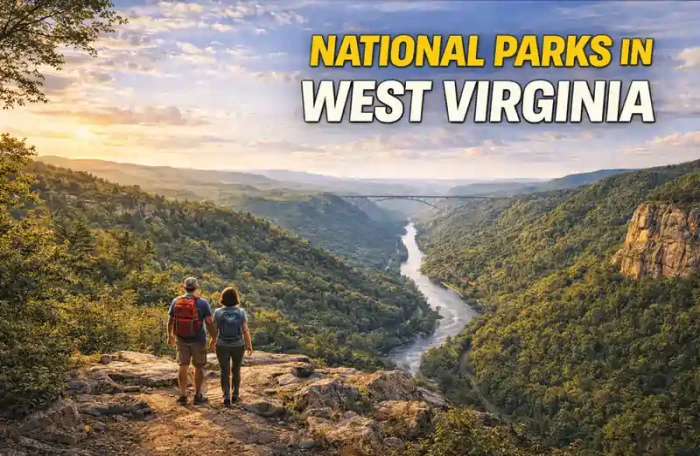


National Parks in West Virginia are structured differently from the large, wilderness-dominated parks many travelers expect. The National Park Service presence in the state centers on river corridors, recreation-driven public lands, and partnership-based heritage areas rather than one vast, contiguous preserve.
The NPS state listing reflects this river-focused framework, with major units tied to whitewater systems and historic landscapes.
That structure shapes management decisions. River corridors concentrate seasonal use. Historic districts absorb heavy foot traffic into compact spaces. Visitation volume directly influences staffing, infrastructure, and long-term preservation strategy.

New River Gorge National Park & Preserve
New River Gorge National Park & Preserve is the state’s only national park. The area first became an NPS unit in November 1978 and was redesignated as a National Park & Preserve in December 2020 under Public Law 116-260.
The preserve designation matters. As the National Park Service explains, portions of the unit allow traditional hunting, which requires clearly defined zoning and public communication.
In 2024, New River Gorge recorded 1,811,937 recreation visits, according to the IRMA-derived visitation compilation cited in the research document. That level of visitation influences trail maintenance cycles, river access management, and parking capacity throughout the gorge.
The park is administered jointly with Gauley River National Recreation Area and Bluestone National Scenic River. In 2023, those three southern West Virginia river units hosted 1.9 million visitors and generated $96.5 million in visitor spending in nearby communities, supporting 1,268 jobs. Recreation here is both a conservation issue and a regional economic engine.
If you’re traveling from out of state to explore New River Gorge or the southern river corridor, driving long distances through mountain roads may not be ideal. Many visitors choose door-to-door auto transport so their vehicle arrives safely while they fly in and start exploring right away. Learn how AmeriFreight Auto Transport’s door-to-door shipping works before planning your trip.
Gauley River National Recreation Area
Gauley River National Recreation Area was established on October 26, 1988 under Public Law 100-534, which authorized protection of river segments in West Virginia.
In 2024, the Gauley recorded 272,898 recreation visits, based on the same IRMA-derived compilation cited in the research document.
The Gauley is nationally known for its seasonal dam-controlled releases each fall, which create high-intensity whitewater conditions. That release window compresses demand into a short timeframe, increasing the need for coordinated river safety oversight and resource protection.
Because the Gauley shares administration with New River Gorge and Bluestone, staffing and infrastructure decisions affect the broader southern river corridor.
Bluestone National Scenic River
Bluestone National Scenic River was also established on October 26, 1988 under Public Law 100-534.
In 2024, it recorded 7,327 recreation visits, according to the IRMA-derived compilation cited in the research document. Bluestone protects a 10.5-mile river segment and is described by the National Park Service as offering an unspoiled experience within a protected gorge landscape.
Lower visitation does not eliminate management demands. Dispersed use and limited facilities require visitors to plan carefully, particularly in backcountry conditions.
Harpers Ferry National Historical Park
Harpers Ferry National Historical Park sits at the confluence of the Potomac and Shenandoah Rivers and blends historic preservation with dramatic topography.
In 2024, Harpers Ferry recorded 488,049 recreation visits. Nearly half a million annual visits in a compact historic district requires careful management of pedestrian flow, transportation, and preservation of 19th-century structures.
Chesapeake & Ohio Canal National Historical Park
The Chesapeake & Ohio Canal National Historical Park extends across multiple jurisdictions, including West Virginia.
In 2024, it recorded 4,421,276 recreation visits, making it the most visited NPS unit associated with West Virginia in the latest available dataset. A linear canal corridor with millions of annual visits carries ongoing maintenance demands, particularly in areas prone to flooding and infrastructure wear.
National Trails Connected to West Virginia
The Lewis and Clark National Historic Trail is listed as associated with West Virginia and recorded 267,118 recreation visits in 2024, according to the IRMA-derived compilation.
The Appalachian National Scenic Trail also passes through West Virginia as part of its larger multi-state corridor. National trails depend heavily on coordinated management across jurisdictions, which affects maintenance consistency and visitor experience.
Monongahela National Forest
Monongahela National Forest, managed by the U.S. Forest Service, covers more than 919,000 acres across ten West Virginia counties and was officially designated on April 28, 1920.
Estimated average visitation is 500,000 annually, according to the Forest Service fact sheet, which notes that some information may be estimated.
The forest includes Spruce Knob, the state’s highest point at 4,863 feet. Management priorities include hazardous fuels reduction, prescribed fire, timber programs, and maintenance of an extensive road system, reflecting the balance between recreation access and resource management.
Within the forest, the Spruce Knob–Seneca Rocks National Recreation Area encompasses 99,862 acres. High-elevation terrain and prominent rock formations concentrate use in specific locations.
National Wildlife Refuges
Canaan Valley National Wildlife Refuge was established on August 11, 1994, becoming the nation’s 500th refuge. Acreage reporting varies by source. Recreation.gov lists 19,243 acres, while a U.S. Fish & Wildlife Service draft hunting plan identifies a 16,983-acre main tract and additional acquisition boundaries.
In March 2024, the refuge added a 1,971-acre tract known as Big Cove, expanding access and habitat protection. The refuge protects the largest contiguous high-elevation wetland complex in West Virginia and supports migratory birds and threatened species. The draft hunting plan outlines a transition away from lead ammunition by 2026 to reduce wildlife exposure risks.
Ohio River Islands National Wildlife Refuge was established in 1990 and protects 3,440 acres of land and underwater habitat. The refuge emphasizes conservation of migratory birds and endangered freshwater mussels. Many islands are accessible only by boat, which shapes both visitor experience and habitat protection strategy.
The Broader Pattern
Across the state, visitation ranges widely. The Chesapeake & Ohio Canal exceeded 4.4 million recreation visits in 2024, while Bluestone recorded just over 7,000 . Southern West Virginia’s three river-focused NPS units together generated $96.5 million in visitor spending in 2023.
Those numbers explain why management in West Virginia’s national park landscape revolves around capacity, seasonal flow, and economic reliance on recreation. River systems, historic corridors, working forests, and wildlife refuges form an interconnected conservation network shaped as much by visitor behavior as by geography.
If your visit is time-sensitive, such as planning around seasonal river releases or fall foliage windows, expedited auto transport can help align vehicle delivery with tight travel schedules.


.webp)