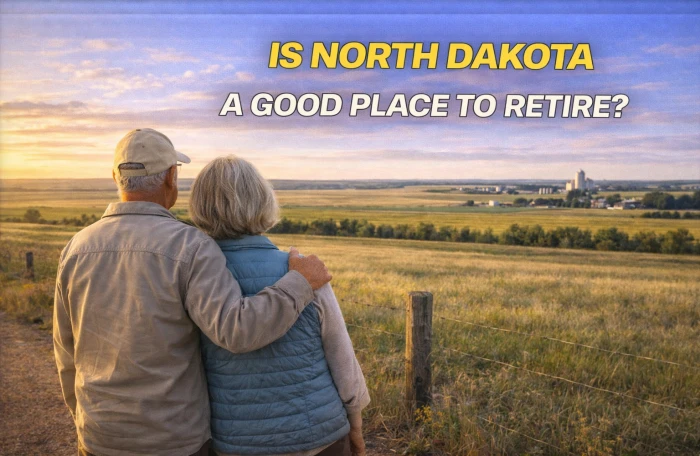


Yes, North Dakota can be a good place to retire. Many people look north for lower living costs, quiet towns, and strong community ties. Still, it is not the right fit for everyone.
Some retirees like open space and a slower pace. Others want walkable areas, nearby care, and simple daily routines. North Dakota can offer these, depending on where you settle.
Cold winters are a real challenge. Travel can take more planning. Cultural options may feel limited outside larger cities. Distance from family matters too.
This guide lays it out clearly. You will see both the benefits and the drawbacks, from taxes and healthcare to weather, travel, and daily life across the state.
What You’ll Learn
The pros and cons of retiring in North Dakota
The noteworthy factors one must consider before settling in the Peace Garden State
The frequently asked questions retirees ask about retirement in North Dakota
Summary
Pros of Choosing North Dakota for Retirement

Affordability
The cost of living in North Dakota is one of the lowest in the country. Residents of the Peace Garden State pay less for certain cost factors. Chief among these is housing. Average home prices are 25 percent lower than the national average.
Other cost factors, such as rent, groceries, and electricity, are lower in North Dakota. Nevertheless, healthcare remains more expensive in the state, at around 10 percent higher than the rest of the country.
The table below shows how retiring in North Dakota costs compared to the national average:
There are other factors that make the Peace Garden State a compelling destination for retirees:
No tax on Social Security: This helps you keep more of that fixed income.
Available property tax relief: This helps reduce your yearly tax bill.
Quality Healthcare
You will find quality medical care through facilities like Sanford, Altru Health, Essentia Health, and others that serve both city and rural areas. The state also earns high grades for senior healthcare quality.
Some of these healthcare centers operate senior-dedicated units, such as:
Sanford Health: Through its Senior Services unit, individuals have access to independent and assisted living options.
Essentia Health: Through its Spiritual Care unit, individuals have access to a team of chaplains that can assist with a range of requests, from providing a listening ear to encouragement before and after surgeries.
Lifestyle
North Dakota offers a calm life and outdoor charm. You can live in a quiet place with friendly neighbors. You can spend free time hiking trails, fishing lakes, or exploring wide open spaces at Theodore Roosevelt National Park.
Other things to do in North Dakota include:
Wildlife and bird watching: The Audubon National Wildlife Refuge’s Prairie Nature Trail allows you to see birds such as ducks, geese, songbirds, and shorebirds.
Scenic driving: The Killdeer Mountains, part of the North Dakota mountains, offer numerous viewing spots you can reach within a short drive from Dickinson.
Cons of Choosing North Dakota for Retirement

Harsh Winters
North Dakota’s winters can be hard as a retiree. Winter days can stay far below freezing, with lows often under 0 °F and sometimes near −30 °F on cold snaps. Snow totals average roughly 30 inches to 50 inches a year, with heavy storms that can make travel and outdoor chores difficult.

This means you may need to:
Dress for cold weather: Buy good winter coats, hats, gloves, and boots rated for very low temps.
Access state resources: NDResponse.gov delivers information on how to be prepared for severe winter weather.
Limited Cultural Scene
Many places outside big cities in the Peace Garden State have fewer art shows, live music, museum days, sports events, and festivals. Small towns often focus on local fairs and community meetups.
This does not mean there are zero things to see in North Dakota. Some that showcase the state include:
North American Bison Discovery Center: One of the top North Dakota tourist attractions, the museum helps you learn about bison and frontier history. You can also see the “World’s Largest Buffalo” statue outside.
North Dakota Cowboy Hall of Fame: Exhibits cover ranching, rodeo history, and stories from Western culture.
Remoteness
North Dakota’s remote location can be hard as a retiree. Travel can take more time and planning when you live far from big airports or major roads. Visits from family or friends who live in other states may mean long drives or flights, which can make visits less frequent.
Managing these issues may involve:
Researching North Dakota towns before settling in: If you plan to
Reserve a ride with the Statewide Transit program: These include fixed routes, demand response, and door-to-door paratransit services for seniors and riders with mobility needs.
Notable Considerations
Top Locations
Major centers like Bismarck, Fargo, Grand Forks, and Minot offer a mix of services that suit retirees well. These places have more shops, health care, and classes tied to local colleges.

Bismarck
The capital of North Dakota, where you can stroll through charming streets lined with local shops, cafes, art galleries, and old buildings.
Population: ~77,722
Average home price: $362,024
Notable attractions: North Dakota’s Gateway to Science, North Dakota Heritage Center & State Museum
Fargo
One of the biggest cities in North Dakota, where you can walk through downtown’s brick streets with local shops, eateries, museums, and art.
Population: ~136,285
Average home price: $310,206
Notable attractions: Fargo Air Museum, Plains Art Museum
Grand Forks
A lively Red River city where you can wander historic downtown past art galleries, specialty shops, and riverfront spots.
Population: ~59,845
Average home price: $282,720
Notable attractions: King’s Walk Golf Course, North Dakota Museum of Art
Minot
A riverfront city where you can walk through historic downtown with locally owned shops, cafes, and galleries.
Population: ~47,440
Average home price: $267,220
Notable attractions: Dakota Territory Air Museum, Taube Museum of Art
Financials
You may need a nest egg of more than $725,000 to live comfortably in North Dakota based on cost of living and retirement spending estimates in recent studies. You can begin taking Social Security benefits at age 62 under federal rules, and most people become eligible for Medicare at age 65.
Financial Advice
Talking with a qualified adviser who knows retirement issues, taxes, and long-term care costs can help you plan ahead. A professional may provide helpful info on a wide range of topics, such as property taxes and medical care needs. These can vary widely as you age.
Final Thoughts: Retiring in North Dakota
North Dakota offers calm towns, cultural hubs, outdoor areas, and friendly neighborhoods that appeal to retirees. You can enjoy nature trails, museums, art spots, community events, and strong health services while being close to family or friends.
With careful planning for taxes, weather, and travel, the Peace Garden State can be a rewarding place to settle for years.
Move Your Car to the Peace Garden State with AmeriFreight
Having your own car makes exploring North Dakota easier. Driving lets you reach parks, lakes, small towns, health centers, and scenic areas that sit far apart. For retirees moving or staying long-term, keeping your vehicle close brings comfort, choice, and ease as you adapt to life across the state.
If you are moving to North Dakota, shipping your vehicle with AmeriFreight Auto Transport makes settling in easier. With over 20 years of experience moving cars to and from the Peace Garden State, our agents work with licensed carriers nationwide.
Frequently Asked Questions (FAQs)
How do North Dakota property tax rates compare to neighboring states like South Dakota or Minnesota for seniors?
North Dakota’s effective property tax rate on owner-occupied housing is about 0.94 percent, near the U.S. average. Minnesota’s rate is slightly higher at about 0.99 percent. South Dakota’s rate is around 0.99 percent, too.
What are the most common foundation issues in North Dakota homes due to the freeze-thaw cycle?
The freeze-thaw cycle in North Dakota often causes frost heave and shifting soil under foundations. You can see cracks, uneven settling, bowing walls, and moisture issues as soil expands when frozen and contracts when it thaws each season.
These conditions strain foundations and can lead to structural problems over time.
Which North Dakota cities offer ‘dial-a-ride’ or specialized transit for seniors who can no longer drive in snow?
Cities in North Dakota with ‘dial-a-ride’ or senior-focused transit include Grand Forks and Bismarck.
What are the best North Dakota towns for ‘solo retirees’ who need high walkability and proximity to grocery stores?
Some North Dakota towns that offer walkable streets and nearby grocery stores include Valley City and Lisbon.
Disclaimer
The information provided in this guide is for general informational purposes only and does not constitute legal, financial, or professional advice. While efforts have been made to ensure the accuracy and timeliness of the content, laws, regulations, and local conditions are subject to change without notice.
Readers should not act upon this information without seeking appropriate professional counsel, especially in financial and legal matters.


.webp)