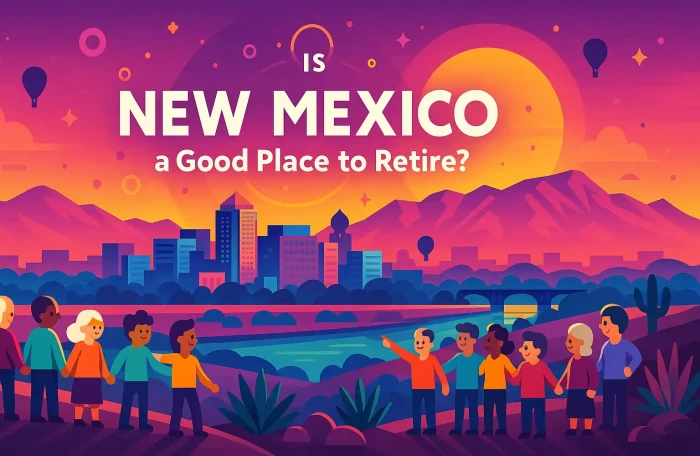


Yes, New Mexico can be a good place to retire. In fact, many people already picture open skies, art markets, and desert views before they move to the state. But then, they start wondering if daily life fits their needs and budget.
The truth is that a move here is not about choosing the most famous town. It is about finding a place that matches what you want at this point in your life.
You might love the look of Santa Fe but worry about the high housing costs. You might be drawn to quiet spots like Truth or Consequences yet feel unsure about the limited amenities or long trips for specialty care. You might also feel cautious about the state’s drought risk or wildfire seasons.
This guide walks you through the pros and cons of living in New Mexico as a retiree, so you can determine whether the Land of Enchantment is the right place for your next chapter.
What You’ll Learn
The pros and cons of retiring in New Mexico
The contrast between typical housing costs and prices in popular towns
The frequently asked questions people ask about retiring in New Mexico
Summary
Pros of Retiring in New Mexico

Diverse Environment and Culture
Living in New Mexico means being near the thriving art galleries of Santa Fe and its adobe-style architecture. You can stroll through annual events like the Santa Fe Indian Market or wander the exhibits at the Albuquerque Museum.
Other festivals that showcase the diversity of New Mexican culture include:
Gathering of Nations: This event in Albuquerque features North America’s largest Native American powwow.
Zozobra: This annual ceremonial event in Santa Fe features the burning of a giant effigy called “Old Man Gloom,” symbolizing the release of worries and renewal of community spirit.
Moderate Climate and Outdoors
If you live in New Mexico, you’ll find a dry, high-desert climate, with over 300 sunny days a year. This means you can do a wide range of activities, such as hiking scenic trails in the state’s mountain parks and skiing in the snow-capped peaks during winter.
You also have the opportunity to explore New Mexico’s natural attractions, such as:
Carlsbad Caverns National Park: Features a vast underground world with more than 119 caves formed when sulfuric acid dissolved limestone beneath the desert surface.
White Sands National Park: Protects the planet’s largest gypsum dune field, with blinding white sands that shift across the Chihuahuan Desert.
Generally Lower Cost of Living
The cost of living in New Mexico is lower than the rest of the country. New Mexicans pay less for certain cost factors, such as housing. In fact, the median home price in the state is almost 16 percent lower than the national average. Electricity and healthcare expenses are also less expensive in the state.
Nevertheless, other cost factors in the Land of Enchantment are higher than the rest of the country, such as:
Rent: New Mexicans pay almost 5 percent more than those living in other states.
Groceries: New Mexicans pay almost 6 percent more than the rest of the country.
The table below shows how retiring in New Mexico costs compared to the national average:
Strong Retiree Communities
There are numerous cities throughout the Land of Enchantment where many peers are already settled, creating a warm community vibe. You’ll move into a place where local clubs, walking groups, and retiree-friendly events are common.
Some of these retirement-friendly New Mexico cities include:
Las Vegas: Offers a historic downtown, access to the Santa Fe National Forest, live community events, and a hospital nearby.
Silver City: Provides easy access to nature at the nearby Gila Wilderness, a lively arts scene, and affordable housing in a small-town atmosphere.
Cons of Retiring in New Mexico

Safety Concerns
Before relocating to New Mexico, keep in mind that the state had a property crime rate of about 2,751 incidents per 100,000 people in 2024. This is roughly 56 percent higher than the national average.
Managing safety concerns in the state may involve:
Reviewing local crime data: It’s crucial to find neighborhoods that are safe before settling in.
Joining a neighborhood watch: This helps you stay informed and connected.
Isolation and Sparse Population
Large stretches of the state are sparsely populated, with many counties having fewer than two people per square mile. If you prefer New Mexico living where shops, restaurants, healthcare, and social options are just steps away, these remote areas may feel too quiet or isolated for your retirement needs.
If you do plan to settle in a rural area, here are a few tips that can support your well-being:
Join a volunteer group: One example is the New Mexico Department of Cultural Affairs, which invites seniors to participate in raising awareness of the state’s historic sites.
Use local transport services: This helps you stay connected with friends, doctors, and events when neighbors are far apart.
Natural Disaster Risks
Moving to New Mexico means dealing with the possibility of natural disasters. In fact, since 1980, the state has recorded 18 major drought events and 12 wildfires. Each cost over $1 billion.
Here’s a recent example: two fires in June 2024 near Ruidoso burned more than 80,000 acres. It is a reminder of how quickly conditions can shift.
This also means it’s crucial to:
Build an emergency “go-kit”: Include at least a three-day supply of water, non-perishable food, medications, medical records, a flashlight, batteries, and a list of emergency contacts.
Sign up for local alert systems from your county or city: This keeps you updated on weather shifts, fire conditions, road closures, and any immediate safety concerns in your area.
High Costs in Desirable Areas
The Land of Enchantment feels affordable in many towns. Nevertheless, many of the best places to live in New Mexico, like Santa Fe and Corrales, come with higher housing costs. You may enjoy their art, dining, and scenery, but you should plan your budget with care.
The table below shows how prices in desirable cities and towns throughout New Mexico stack up against the state average:
Source: 2025 data from Zillow
If you’re aiming to live in those areas, you may need to:
Consider downsizing to a smaller home: That can reduce mortgage payments, taxes, utilities, and maintenance.
Rent out a spare room: That extra income can help offset housing expenses.
Lack of Amenities in Some Affordable Spots
Although cities like Deming and Truth or Consequences have attractive affordability, they often lack some amenities found in larger cities.
In Deming, the cost of living is low and the outdoor scenery is inviting, but options for shopping, healthcare, and cultural venues are limited.
In Truth or Consequences, you’ll enjoy hot springs, art, and tranquil surroundings. Nevertheless, choices in specialty healthcare, major retail, and transit are fewer than in places like Albuquerque or Santa Fe.
If you plan to live in New Mexico’s affordable locales, you could find yourself needing to:
Organize regular trips to larger cities: This helps you access specialized healthcare, shopping, or cultural events, instead of relying solely on local options.
Make connections in your community: Attend local club meetings or senior-volunteer activities to build friendships and keep engaged with others.
Final Thoughts: Retiring in New Mexico
Choosing New Mexico for retirement gives you a mix of culture, scenery, and calm living in one place that feels steady and welcoming. Each region offers something different, from high-desert trails to mountain towns with strong art traditions.
You can choose quiet communities like Deming or Truth or Consequences or settle in cities with more activity. No matter what pace you prefer, the state gives you room to enjoy mild weather, outdoor recreation, and a slower way of life.
With such varied settings across New Mexico, you can shape a retirement that matches your comfort, interests, and long-term plans.
Move Your Car to the Land of Enchantment with AmeriFreight
Let AmeriFreight Auto Transport take care of your vehicle shipment before you settle into New Mexico’s blend of desert towns, mountain views, and cultural attractions. Our agents work with licensed carriers across the country to help keep your move steady and simple.
With more than twenty years of experience, AmeriFreight knows how to coordinate a smooth shipment so your vehicle is ready for your first drive through the Land of Enchantment.
Frequently Asked Questions (FAQs)
Which New Mexico cities are the best for retirees who prioritize year-round outdoor activities like hiking, golf, and fly fishing?
Some New Mexico cities that are ideal for retirees who want year-round outdoor activity include:
Farmington: Offers hiking, trout fishing at nearby rivers, and golf with views of the San Juan Mountains.
Taos: Offers mountain-town charm, high-elevation trails, fly fishing in alpine lakes, and a mild year-round golf season.
How accessible are specialty healthcare services (e.g., cardiology, orthopedics) outside of the main metropolitan areas like Albuquerque?
In rural parts of New Mexico, the gap in specialty healthcare stands out. Only about one-quarter of the population lives in rural areas, yet almost every county in the state carries a shortage designation. In fact, out of New Mexico’s 33 counties, 32 are designated as Health Professional Shortage Areas.
What is the long-term outlook for water availability and drought conditions in popular retirement spots like the Rio Grande Valley?
The long-term outlook for water availability in the Rio Grande Valley of New Mexico shows growing risk. Snowpack feeding the river has declined by about 20 percent over the past fifty years.
Ongoing drought and storage pressures mean retirees should assume water supply will be tighter and plan accordingly.
Is New Mexico still one of the states that taxes Social Security benefits, and how does that affect my total retirement income?
Yes. In most cases, you won’t pay state tax on Social Security benefits in New Mexico if your income is below $100,000 (single) or $150,000 (joint).
Disclaimer
The information provided in this guide is for general informational purposes only and does not constitute legal, financial, or professional advice. While efforts have been made to ensure the accuracy and timeliness of the content, laws, regulations, and local conditions are subject to change without notice.
Readers should not act upon this information without seeking appropriate professional counsel, especially in financial and legal matters.


.webp)