
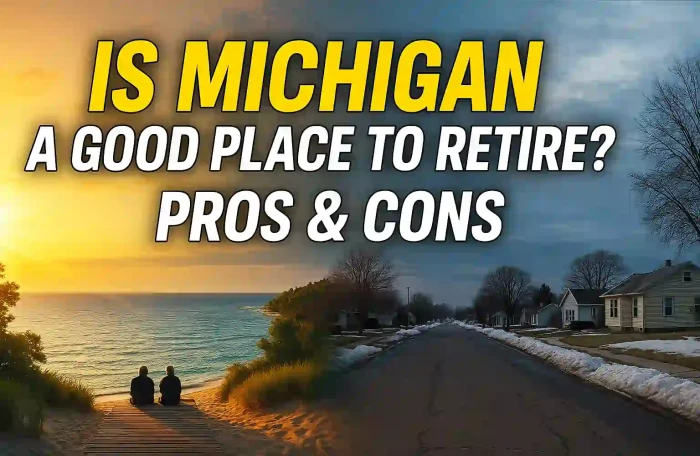


Yes, Michigan can be a good place to retire. Many people look to the Great Lakes State for its calm towns, friendly communities, and long shoreline. But the right spot depends on what you want from daily life. Some people picture quiet lake views. Others want walkable neighborhoods, health care close by, or a place with steady winter services.
You should also know the trade-offs. Some cities have higher crime rates, winter can be long and snowy, and certain regions may feel isolated in cold months.
Michigan is large, and each area offers clear pros and cons. This overview helps you understand what life can look like in the places retirees choose most.
What You’ll Learn
The advantages of retiring in Michigan
The disadvantages of settling in the Great Lakes State
The frequently asked questions retirees ask about retiring in Michigan
Summary
Pros of Retiring in Michigan

Affordable Living
Michigan is one of the most affordable states to retire, and it’s not hard to see why. The cost of living in the Great Lakes State is around 10 percent lower than the rest of the country.
There are many reasons for this. Michiganders pay less for certain cost factors compared to those in other states. For example, housing. The median home price in the Great Lakes State is around $253,000. This is 35 percent lower than the national average. Groceries, electricity, and healthcare are also lower in Michigan.
Nevertheless, other cost factors are higher. One is rent, which is 1.50% more than the rest of the country.
The table below shows how retiring in Michigan costs compared to the national average:
Housing in Michigan is a significant reason for the state’s lower cost of living compared to other states. The average home price in Lansing, the capital of Michigan, is almost 60 percent less than the national average.
The table below shows how housing in Michigan costs compared to the national average:
As you can see, among the biggest Michigan cities, Ann Arbor stands out as being more expensive than the rest of the country. There are two main reasons why:
Strong demand: Employers and students, especially at the University of Michigan, make housing scarce.
Limited supply: The supply of homes remains narrow compared to demand.
Tax Friendly
Settling in Michigan means meaningful tax benefits on retirement income. You do not pay state tax on your Social Security benefits. Your military retirement pay is also exempt from state income tax.
For private pensions and other retirement or pension income, you may qualify for a deduction under the law known as the Lowering MI Costs Plan. This law phases out pension taxes over several years. By 2026, most retirees will be able to subtract their full retirement income from Michigan taxable income.
The Michigan state sales tax is also another reason why it is a compelling choice for retirees. The 6 percent rate is ranked 17th highest in the country. This helps you:
Lower spending on everyday expenses: Clothes and electronics, for example, are less expensive than in other states.
Ease cost of living: The lower sales tax rate is especially crucial if you’re relying on a fixed income.
Climate and Lifestyle
Michigan gives you a full taste of the seasons. Warm summers let you boat or swim along the beaches of the Great Lakes. Autumn brings bright colors across the woods. Winter often brings snow perfect for snowmobiling or cross-country skiing. Spring warms slowly, giving you the chance to hike, watch birds, or enjoy fresh lake air.
Some of the standout natural attractions in the state include:
Sleeping Bear Dunes National Lakeshore: Among Michigan beaches, it draws more crowds because of its long stretch of sandy shoreline on Lake Michigan, dramatic sand dunes, clear water, and stunning natural scenery.
Pictured Rocks National Lakeshore: During winter, the cliffs, lakeshore, and waterfalls freeze and turn into ice-covered cliffs and icy waterfalls that feel calm and magical.
Quality Healthcare
The latest 2025 report from the Commonwealth Fund places Michigan 10th in the nation for healthcare access and affordability. For people on Medicare, Michigan shows mixed results. Its overall Medicare performance ranks in the middle of all states.
Some examples of outstanding healthcare systems in the state include:
University of Michigan Health: Ranked among the top 20 hospitals in the country by the U.S. News & World Report. The system is nationally recognized for specialties such as geriatrics and neurology.
Corewell Health William Beaumont University Hospital: It is the flagship hospital of the regional system and ranks among the best hospitals in Michigan. It serves as a Level I adult trauma center with full acute care and tertiary services.
Cons of Retiring in Michigan

Harsh Winters
Michigan winters can bring serious snow and cold weather. Much of the state lies in a “snowbelt” zone. Cold air flowing over the warm Great Lakes often produces “lake-effect snow.” This can dump heavy, repeated snowfall even when other regions stay clear.
That weather carries costs for you. Your heating bill will rise significantly. Removing Michigan snow becomes a regular chore or expense. Roads can be slippery, and outdoor tasks harder with deep snow and freezing air.
Managing this may involve:
Making your home winter-ready early: Add good insulation, weather-strip doors and windows, and check the heating system before the cold hits.
Staying warm and healthy indoors: Keep your heat at a safe temperature, dry wet clothes promptly, stay hydrated, and stock up on food and medication in case the weather blocks travel.
High Crime Rates in Large Cities
Some cities in Michigan have significantly higher crime rates than the national average. Detroit’s property crime rate is roughly 46 per 1,000 residents, more than double the U.S. median. Meanwhile, Lansing’s crime rate index also ranks well above the national average.
Another large city, Grand Rapids, has a combined violent and property crime rate of about 39 per 1,000 residents, much higher than average.
This means it pays to:
Join a neighborhood watch: This helps you build connections and trust with neighbors.
Keep emergency contacts handy: Consider a personal alert device if you live alone or mobility is limited.
Final Thoughts: Retiring in Michigan
Settling in Michigan gives you a mix of steady comfort and outdoor variety that can fit many lifestyles. The state offers calm lakes, long stretches of shoreline, and towns where you can enjoy food, art, and local events at your own pace. Each season brings its own character, from warm beach days to quiet snowy mornings.
Whether you want a small community or a larger city, you can find places that match your needs. Michigan gives you room to settle in, explore, and enjoy your retirement years with steady routines and nearby nature.
Move Your Car to the Great Lakes State with AmeriFreight
Exploring Michigan is much simpler when you have your own car. Driving lets you reach beaches, lighthouses, small lakeside towns, and quiet forest spots that sit far from bus routes.
Let AmeriFreight Auto Transport help. Our agents work with licensed carriers nationwide to help make your move simple and dependable. With more than 20 years of experience, AmeriFreight has the knowledge needed to get your vehicle where it needs to be.
Frequently Asked Questions (FAQs)
What specific activities and social groups are available for year-round active retirees near the lakeshore, especially during the colder months?
You could go cross-country skiing, snowshoeing, or sledding in winter. You could join a snowmobile or winter trail club. One such example is the Trailriders Snowmobile Club. It grooms over 160 miles of state trails, offering community and access to trails near lake regions.
Are there abundant and easily accessible community colleges or continuing education programs in the Grand Rapids area for retirees looking to audit classes?
You can turn to Grand Rapids Community College (GRCC). Their Older Learner Center offers programs for adults, including health education and enrichment courses.
Which Michigan counties or cities are consistently ranked highest for quality hospitals and access to specialized healthcare for aging adults?
One of the best places to retire in Michigan for retirees looking for specialized healthcare is in Ann Arbor. This is thanks to the University of Michigan Health, which is nationally recognized for geriatric care.
What are the average annual snowfall totals in the Upper Peninsula versus the southeastern lower peninsula, and how does this affect winter travel for seniors?
You should know the snowfall difference across Michigan before picking where to retire. The Upper Peninsula often gets over 100 inches and sometimes 150–200 inches of snow per year. The southeastern lower peninsula (around Detroit or Grand Rapids) typically sees around 40–60 inches.
Disclaimer
The information provided in this guide is for general informational purposes only and does not constitute legal, financial, or professional advice. While efforts have been made to ensure the accuracy and timeliness of the content, laws, regulations, and local conditions are subject to change without notice.
Readers should not act upon this information without seeking appropriate professional counsel, especially in financial and legal matters.


.webp)