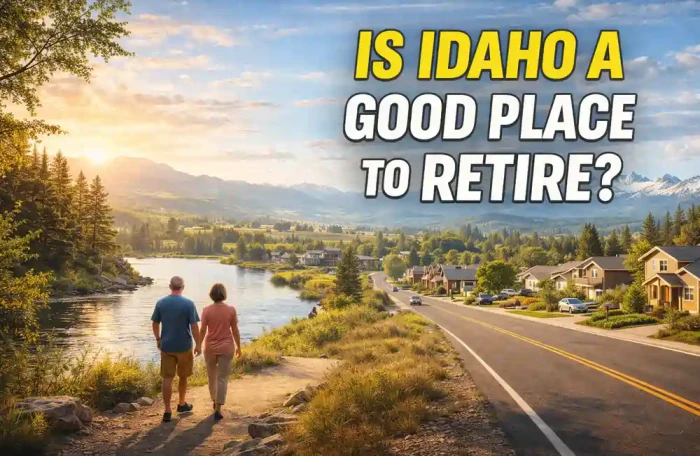


Yes, Idaho can be a good place to retire. Many people look for mountain views, small towns, and steady routines. The state has plenty to offer, but the right place depends on your pace, budget, and needs.
This guide walks you through everyday life across the Gem State so you can understand whether the decision to retire in Idaho is right for you.
What You’ll Learn
The pros and cons of retiring in Idaho
The places to consider when settling in the Gem State
The frequently asked questions retirees ask regarding retirement in Idaho
Summary
Pros of Retiring in Idaho

Affordability
The cost of living in Idaho is 0.10 percent lower than the rest of the country. And there are many reasons for this.
Idahoans pay less for certain cost factors. Groceries, for example. The average cost is $257.54. This is almost 5 percent lower than the national average. Electricity and healthcare costs are also less expensive in Idaho.
Nevertheless, other cost factors in Gem State are higher than the rest of the country:
Housing: Idahoans pay more than 25 percent higher than those living in other states.
Rent: Idahoans pay more than 19 percent higher than the rest of the country.
The table below shows how retiring in Idaho costs compared to the national average:
Given that housing costs in Idaho are more expensive than the rest of the country, it may pay to:
Check for subsidized senior housing: The Idaho Housing and Finance Association (IHFA) runs affordable housing programs.
Use utilities and energy-saving help through various state programs: Lower utility costs free up money for other needs.
Tax-Friendly
You’ll pay no tax on your Social Security benefits. Plus, you may qualify for a property-tax reduction program.

Another benefit is the Idaho income tax rate. It has been reduced from 5.695 percent to 5.3 percent as part of the largest income tax cut in the state’s history. Idahoans benefit from further changes, such as the removal of the capital gains tax for gold bullion sales and the expansion of income tax exemptions to military pensions.
These changes mean you can:
You keep a larger share of your retirement income: Your monthly or annual benefit goes entirely to you.
More predictable expenses: This helps with a fixed income plan ahead, because property taxes stay more manageable.
Quality of Life
Idaho’s standard of living is high because of its warm communities and relaxed pace. You’ll also enjoy the changing seasons with nature nearby.
Another reason why the quality of life in the Gem State is high is because of the low crime rates. Many cities in Idaho have less crime than the rest of the country. Some of these include:
Meridian: The city runs an official Neighborhood Watch program in cooperation with its police department. Residents can join existing blocks or start new watch groups.
Weiser: The police department works with volunteer members of the community through the Citizens on Patrol program.
Outdoor Recreation
You’ll find in Idaho plenty of nature waiting to be explored. You can hike gentle or challenging trails under tall pines. You might cast a fishing line in a pristine mountain lake. Or spend time camping, skiing, or just enjoying fresh air and quiet wilderness.
Some of the Gem State’s standout natural attractions include:
Lake Pend Oreille: Among the most visited lakes in Idaho. It offers a resort-town vibe around the lake for easy access to restaurants, shops, or comfortable lodging.
Shoshone Falls: The falls drop about 212 feet, higher than Niagara Falls, and stretch roughly 900 feet across the Snake River canyon. Many consider the Shoshone the “Niagara of the West.”
Cons of Retiring in Idaho

Climate
Idaho winters can be harsh in parts of the state. In many regions, winter brings heavy snowfall and freezing temperatures. Snow may cover roads and driveways for weeks. Some mountain towns see deep snow, which can make travel and daily errands harder than usual.
Handling this may involve:
Dressing appropriately: Wear several thin, warm layers, including hats, gloves, scarves, and boots with good traction.
Preparing an emergency kit: Include blankets, water, non-perishable food, and a flashlight in case of power outages.
Healthcare Access
Medical services may be hard to reach throughout the rural counties in Idaho. These often have few specialists or no hospital nearby. Local clinics or small hospitals handle basic needs, but complex treatment or specialty care may mean long travel.
Dealing with this can mean:
Contacting senior-focused organizations: There are dedicated Area Agencies on Aging that support different counties.
Using telehealth: It helps you consult doctors without a long trip.
Cultural Scene
Boise, the biggest city in Idaho, has fewer than 240,000 residents. Because the metro and state overall are modestly sized, the variety and frequency of world-class cultural events, galleries, and highly specialized arts venues are more limited than in large urban centers.
However, this does not mean there’s nothing to do. Some events you can attend in the Gem State include:
Idaho Shakespeare Festival: A summer-long outdoor theater tradition in Boise. It stages five plays each season in a 770-seat amphitheater beside the Boise River.
Trailing of the Sheep Festival: Celebrates historic sheep-herding traditions and ranching heritage. Each fall, thousands gather for a lively sheep parade, sheepdog trials, woolcraft fairs, storytelling, Basque dancing, and traditional food.
Transportation
Retirement in Idaho means experiencing limited public transit options outside of major cities. Bus service is often rare in rural areas. That means you usually need a car to get around.
If you prefer not to drive, you may need to:
Use community ride services: In many regions, groups of volunteers or nonprofits will drive older adults to appointments or errands.
Explore ride-share or subsidized programs: Some services offer free or low-cost transport for eligible seniors for medical visits, errands, or social needs.
What Places to Consider

Boise
Boise sits along the flowing Boise River, surrounded by foothills and forests, offering both city life and easy access to nature. Downtown you’ll find history and culture: old-style buildings, lively streets, and the leafy charm that gives Boise its nickname, the “City of Trees.” These and other attributes make it one of the best cities to live in Idaho.
Population: ~237,963
Median home price: $488,609
Notable attractions: Basque Museum and Cultural Center, Boise Art Museum
Coeur d'Alene & Sandpoint
These two North Idaho gems blend lakes, mountains, and small-town charm.
Coeur d'Alene
This city sits along Lake Coeur d'Alene, a clear, forest-ringed lake accessible for boating, scenic cruises, or lakeshore walks. Downtown and waterfront areas give a friendly yet lively vibe.
Population: ~57,355
Median home price: $583,987
Notable attractions: McEuen Park, Museum of North Idaho
Sandpoint
Sandpoint sits on Lake Pend Oreille with mountains in view and a relaxed lakeside spirit. In warm months, you can swim, paddle, fish, or boat. In cooler or snowy seasons, nearby slopes such as Schweitzer Mountain Resort add skiing and winter sports to the mix.
Population: ~10,444
Median home price: $624,119
Notable attractions: Cedar Street Bridge Public Market, Matchwood Brewing Company
Idaho Falls & Twin Falls
These two cities are among the best places to retire in Idaho, in part because of their lower living costs and proximity to nearby natural attractions.
Idaho Falls
Idaho Falls is along a bend of the Snake River. The city mixes small-town comfort, civic amenities, and riverfront charm.
Population: ~69,523
Median home price: $384,385
Notable attractions: Museum of Idaho, Tautphaus Park
Twin Falls
Twin Falls sits on the rim of the Snake River Canyon, offering dramatic canyon views and bold natural landmarks around every turn.
Population: ~55,589
Median home price: $358,745
Notable attractions: Perrine Memorial Bridge, Shoshone Falls Park
Emmett & Blackfoot
These communities feature small-town charm.
Emmett
Emmett sits in the lush valley of Gem County, surrounded by orchards and rolling hills.
Population: ~8,803
Median home price: $445,793
Notable attractions: Firebird Raceway, Wild Rose Park
Blackfoot
Blackfoot lies in southeastern Idaho and is known as the “Potato Capital of the World.”
Population: ~13,224
Median home price: $360,474
Notable attractions: Blackfoot Performing Arts Center, Idaho Potato Museum & Potato Station Cafe
Final Thoughts: Retiring in Idaho
Idaho retirement gives you mountains, lakes, towns, and quiet spaces that fit many lifestyles. You can enjoy trails, small communities, and steady routines. Whether you prefer outdoor days or calm evenings, Idaho offers room to live at your pace.
Move Your Car to the Gem State with AmeriFreight
Let AmeriFreight Auto Transport handle your vehicle shipment before you settle into Idaho’s mix of mountain towns, lakes, and wide open scenery. Our agents work with licensed carriers nationwide to help make your move simple and dependable.
With more than 20 years of experience, AmeriFreight has the knowledge needed to get your vehicle where it needs to be, so you can enjoy your first drive through your new Idaho community.
Frequently Asked Questions (FAQs)
Which areas of Idaho, such as Lewiston or Twin Falls, offer warmer winters and minimal heavy snowfall?
Lewiston and the southwestern as well as southeastern regions of Idaho tend to have milder winters with less heavy snow than northern mountain areas. Lewiston’s winters are short and mild, and cities like Twin Falls see lighter snowfall than much of the state.
Is the air quality in the Treasure Valley significantly affected by agricultural burning or inversions during the winter months?
Yes. The Treasure Valley’s air quality can worsen in winter when cold air traps pollutants close to the ground, causing inversions and stagnant conditions that lead to lower air quality. Smoke from wood burning and vehicle emissions can get stuck under the inversion layer.
Where are the best places in Idaho for a retiree to access gentle, paved walking trails suitable for daily exercise?
The Boise River Greenbelt in Boise or the paved Trail of the Coeur d’Alenes near Coeur d’Alene offer easy, flat walking paths perfect for daily exercise. The North Idaho Centennial Trail also gives long, smooth lakeside walking options.
How accessible are public transportation options in Boise for seniors who may eventually stop driving?
Boise offers fixed-route buses and paratransit through Valley Regional Transit, plus senior-oriented ride programs and volunteer transport help. Some services are curb-to-curb or on-demand, but overall public transit remains modest and may require planning.
Disclaimer
The information provided in this guide is for general informational purposes only and does not constitute legal, financial, or professional advice. While efforts have been made to ensure the accuracy and timeliness of the content, laws, regulations, and local conditions are subject to change without notice.
Readers should not act upon this information without seeking appropriate professional counsel, especially in financial and legal matters.


.webp)