
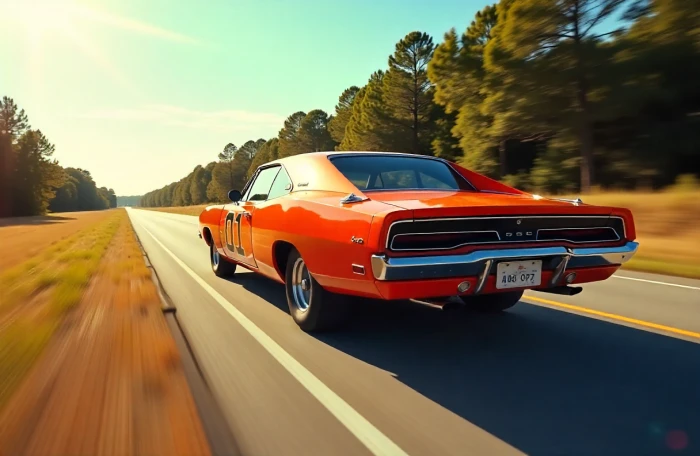


General Lee Car: Rule the 1969 Dodge Charger!
The General Lee is one of the most recognizable cars ever built, even for people who have never watched The Dukes of Hazzard. That bright orange 1969 Dodge Charger did more than appear on screen. It defined how a muscle car could look, sound, and move in popular culture.
What makes it stand out is not just the design or the stunts. Plenty of cars were fast. Few carried the same presence. The General Lee combined real performance with a distinct identity, then pushed both to the limit through jumps, chases, and constant rebuilds.
Muscle Car With the Right Foundation
The 1969 Dodge Charger XP29 had the structure and power to stand on its own long before television turned it into something bigger. Built on Chrysler’s B-body platform with unibody construction, it offered more rigidity than many cars of its time, which made a difference once torque came into play.

Engine choice defined how the car behaved. The 383 V8 delivered strong, usable power for everyday driving. The 440 Magnum leaned into torque, pulling hard without needing high revs. The 426 Hemi sat at the top, built for outright performance, though it came with higher cost and maintenance demands.
Transmission mattered just as much. The TorqueFlite automatic became the practical choice, known for handling repeated stress without failure. That reliability carried over into filming, where consistency mattered more than driver involvement.
This combination, long wheelbase, wide stance, and predictable power delivery, made the Charger stable at speed and visually aggressive from every angle. It did not need modification to look like a lead car.
Why The General Lee Was Impossible To Ignore
The General Lee worked because every element was intentional and easy to recognize. The orange paint stood out immediately. The “01” on the doors gave it a racing identity. The horn turned sound into a signature.

The concept grew out of Southern car culture and storytelling tied to moonshine-running. In an interview with creator Gy Waldron, the car’s role was never meant to be background. It was built to carry scenes.
The welded doors forced entry through the windows, which started as a practical decision and became one of the show’s defining visuals. The roof graphic made the car recognizable from above and from a distance, which worked for camera angles but also tied it to a larger cultural conversation that still shapes how the car is viewed today.
Nothing about the design faded into the background. It was meant to dominate the frame.
Not One Car, But A Rotating Fleet
What appeared on screen as a single car was a constantly changing group of Chargers built for different purposes.

Estimates place total usage between 250 and 325 vehicles, with many destroyed during filming.This confirms how quickly cars were cycled through, often lasting only one major stunt.
Most stunt cars used simpler engine setups like the 383 or 318 V8. Higher-value cars were reserved for close-ups and promotional shots. Automatic transmissions were favored to keep driving consistent across multiple takes.
The biggest limitation came from the car’s natural balance. With most of the weight up front, the Charger tended to dip forward in mid-air. Crews added ballast in the trunk to correct that. Suspension adjustments helped manage takeoff angles, but landings still caused structural damage in most cases.
The result was predictable. The jump looked smooth. The landing ended the car.
The Three Production Eras That Define Value
Not all General Lees were built the same way, and that difference shows up in the collector market.
The early Georgia cars, used in the first episodes, were built with more care. Hand-painted graphics, better detailing, and smaller production runs make these cars more desirable today.
The California builds that followed focused on speed. Cars were assembled quickly, often using whatever paint and interior materials were available. Variations in color and finish are common in this group.
Later in the series, Warner Bros. brought production in-house to standardize the look. These cars were more consistent, but less individual.
That progression matters. A Georgia-era car with documented history carries a different level of interest than a later production vehicle, even if both appear similar at a glance.
Why Chargers Became Hard To Find During Filming
The show did not just use Chargers. It removed them from the market.
With nearly two cars destroyed per episode at peak production, the supply of usable 1968 and 1969 models tightened quickly. Crews searched for replacements anywhere they could find them, including private properties and storage yards.
When original cars became scarce, 1968 models were modified to resemble 1969 versions. Later episodes relied more on reused footage and scaled models to stretch what remained.
This shift had a lasting effect. By the end of the show, the combination of demand and destruction helped push the Charger into a stronger collector position than it held before the series aired.
What Surviving Cars Are Worth Today
Only a small number of screen-used General Lees are still documented, roughly 17 to 18 vehicles.
That scarcity drives a clear pricing structure:
A standard 1969 Charger varies based on engine, condition, and originality
A high-quality General Lee tribute adds value through design and build quality
A documented screen-used car sits at the top, often reaching six figures
Auction data and market tracking show how sharply value changes based on provenance. One of the most recognized survivors remains preserved at the Volo Auto Museum.
The difference between a tribute and a verified car is not cosmetic. It is documented history.
What Separates A Good Replica From A Serious Build
A General Lee replica can look convincing from a distance with the right paint and decals. A serious build holds up under inspection.
Paint is the first decision. Some builders use factory Hemi Orange. Others aim to match the slightly different tones seen on screen. Interior accuracy matters just as much, especially when replicating early cars with factory tan interiors versus later builds with dyed panels.
VIN decoding becomes critical for buyers. The fifth digit identifies the original engine, which affects both value and authenticity when restoring a Charger to period-correct condition.
Details separate levels of quality. Wheel choice, tire stance, push bar design, and even minor imperfections can signal whether a build reflects a specific production era or just the general look.
That difference shows up in pricing. A casual build may stay within a reasonable budget. A precise, era-correct recreation can climb quickly in cost once labor, sourcing, and finishing are factored in.
The Cultural Debate Still Affects Ownership
The General Lee carries more than automotive history. The roof graphic continues to influence how the car is displayed, sold, and restored.
Some collectors preserve the car exactly as it appeared on television. Others modify or remove certain elements to align with event rules, local regulations, or personal preference.
Public response has shaped licensing decisions and media availability over time. This is not a minor detail. It affects resale, show eligibility, and how the car is received in different settings.
Moving A Charger Like This Requires Careful Handling
Transporting a 1969 Charger, especially one restored or built to General Lee specifications, comes with real risk. Paint, trim, and structural components can be difficult to replace once damaged.
AmeriFreight Auto Transport helps coordinate shipments with carriers experienced in handling classic and specialty vehicles. Clear communication with customer service agents and proper planning reduce the chance of damage during loading and transit. Request a quote now!
Disclaimer: This article is for informational and entertainment purposes only. The General Lee is a fictional television vehicle, and replica builds are independent projects not affiliated with original creators or licensed properties. Always consult a qualified professional before making automotive modifications or starting a vehicle restoration.


.webp)