


Rural car shipping costs more because the system rewards density, speed, and predictable backhauls. Remote areas create deadhead miles, lower capacity utilization, tighter carrier supply, higher labor time per unit, and often heavier or specialized loads. Those are structural realities.
In 2026, the nationwide average to ship a car sits around $1,245, with a median distance of 971 miles and a median cost per mile of $1.28. Those numbers assume typical lanes between populated areas. Move the same mileage into a remote farming community and the economics change quickly.

The Hub-and-Spoke Reality
Many parts of the U.S. auto transport system run on a hub-and-spoke model. Carriers prioritize predictable, high-volume lanes that connect cities, auctions, ports, and dealer hubs. On these “hot lanes,” a ten-car hauler can maintain high capacity utilization.
Rural shipments disrupt that optimization. Backhaul options become limited or delayed. Every mile off a main corridor increases the operational cost per vehicle still sitting on the trailer.
Deadhead Miles and the Real Cost of Empty Space
Deadhead miles are non-revenue miles driven without a load. According to the American Transportation Research Institute, that mileage increased to an average of 16.3 percent across all non-tank trucking operations in 2023.
Empty trucks still burn fuel and rack up wear. For some owner-operators, deadhead travel can exceed $20,000 per year in uncompensated fuel and maintenance. It also carries higher safety exposure. Deadhead trucks are 2.5 times more likely to crash than loaded trucks. Increased insurance costs ultimately show up in what customers pay.
If you are thinking, “It is only 50 extra miles,” remember that those miles are often unpaid in both directions.
The Driver Shortage and Selective Lanes
The market runs through a bidding system where carriers choose loads based on profitability and route convenience. Urban markets see dozens of carriers pass through daily. Rural areas do not.
Add a national shortage of around 60,000 and 80,000 truck drivers and carriers become even more selective. They gravitate toward the easiest, most profitable corridors. Rural shipments may sit on a load board until the offer price rises enough to justify the detour.
Delivery Area Surcharges and ZIP Code Math
Logistics companies use Delivery Area Surcharge (DAS) and Remote Area Surcharge (RAS) categories to account for remote service costs. These are triggered by ZIP code classification, distance from hubs, and historical load density, often calculated using GIS mapping.
While parcel carriers may charge $28 to $38 for DAS and $15.35 for certain remote tiers, auto transport numbers are larger due to vehicle size and equipment. The logic is the same. Low vehicle density means more time and fuel per stop.
You are not paying a mystery fee. You are paying for the math of low density.
The Cost-Per-Mile Paradox
Consumers often assume longer trips mean higher cost per mile. In reality, cost per mile usually drops as distance increases because fixed costs are spread out.
Open transport averages in 2026 look roughly like this:
0 to 500 miles, $0.80 to $2.00 per mile
500 to 1,000 miles, $0.73 to $1.30 per mile
1,500 to 2,000 miles, $0.48 to $0.95 per mile
3,000 plus miles, $0.33 to $0.60 per mile
Rural detours break that efficiency. A 500-mile city-to-city trip might cost around $550. The same 500 miles starting in a remote town can exceed $800. The difference is opportunity cost and route fragmentation.
Hours of Service and Time Loss
Drivers operate under federal Hours of Service limits. They can drive 11 hours within a 14-hour window and no more than 70 hours in eight days.
In a city, a driver might load three vehicles in an hour. In a rural setting, one pickup can take three hours due to detours and slow road speeds. That labor inefficiency must be offset somewhere.
Vehicle Type, Weight, and Equipment
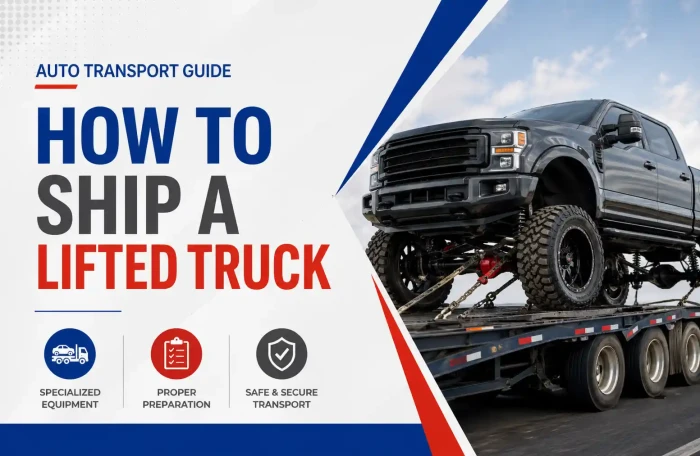
Rural customers often ship full-size pickups, SUVs, or heavier vehicles. SUVs and trucks commonly add costs between $100 and $300, or more. Heavier pickups or EVs can raise rates even more due to weight limits.
An inoperable vehicle, meaning it cannot move under its own power, typically adds $150 to $300 because it requires a winch or forklift. Not all carriers carry winches. That shrinks the available pool and can push rates higher.
When weight approaches federal DOT limits, carriers may leave a slot empty to stay compliant. Fewer cars on the trailer means higher cost per vehicle.
Seasonal Pressure and the Snowbird Effect
During peak seasons such as summer relocations or snowbird movements between northern and southern states, rural rates can increase. Carriers fill their trailers on major corridors first. Detouring into rural zones becomes less attractive unless the pay compensates for lost corridor revenue.
If you are planning a move during heavy demand months, this seasonal premium is part of the equation.
Move Your Car Where It Needs to Be With AmeriFreight Auto Transport
Since 2004, we have arranged vehicle shipments with vetted carriers that work with dealerships, auction locations, and individuals across the country. Our team explains rate factors early in the process so you can plan ahead and avoid unexpected changes.
Frequently Asked Questions (FAQs)
Is the extra cost because of distance or because trucks are empty part of the time?
It’s mainly because trucks often travel empty miles before or after a rural pickup, not just the distance itself. Those unloaded miles drive up cost more than straight mileage alone.
Can choosing a pickup near a highway lower the price?
Yes. Meeting a carrier near a major highway or truck stop often reduces empty miles and access delays, which can lower the overall price compared with a rural driveway pickup point.
Do access challenges like narrow roads or long driveways actually increase what I pay?
Yes. When roads are narrow, unpaved, or hard to access, carriers spend more time, fuel, and effort loading and unloading. Those added challenges are reflected in higher prices.
How much does limited carrier supply in remote areas affect timing and price?
Limited carrier supply in remote areas slows pickup and delivery timing and pushes prices higher. With fewer trucks willing to detour, carriers can command premiums and schedules become less predictable.
Disclaimer
Rates and timing for rural shipments vary based on carrier availability, route efficiency, vehicle type, and seasonal demand. AmeriFreight Auto Transport provides estimates, not exact quotes. No upfront payment until you choose a carrier. Pickup and delivery windows depend on real-time market conditions and location permitting access.