

Vehicle transport claims are resolved through documentation. The pickup inspection, the delivery inspection, and the timing of your report carry more weight than how obvious the damage may seem.
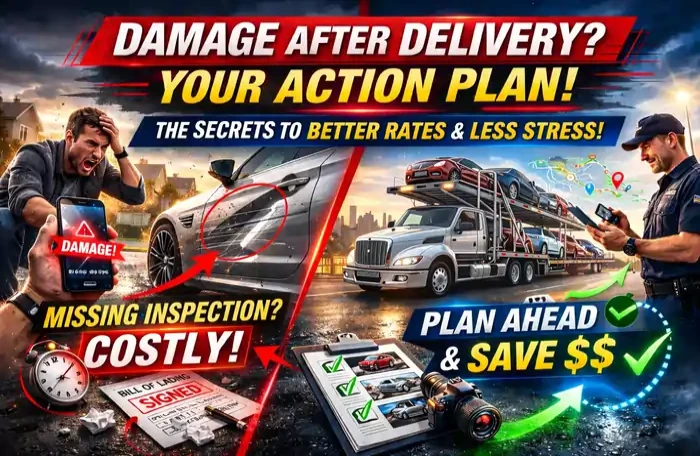
If you notice damage after delivery, take photos right away, review your Bill of Lading, notify the carrier in writing within the required reporting window, and ask for formal claim instructions before authorizing any repairs.
What you do in the first few hours can shape the outcome of the claim. Driving the vehicle again, washing it, or attempting small fixes can make it harder to prove when the damage occurred.
Treat The Bill Of Lading Like Evidence, Not A Formality

In car shipping, the Bill of Lading, or BOL, serves as both the transport contract and the official inspection record. It should list the vehicle’s condition at pickup and again at delivery, including scratches, dents, and other visible marks.
If the delivery BOL was signed without noting damage, the carrier may rely on that signature as confirmation that the vehicle arrived in acceptable condition. Damage found after the driver leaves is classified as concealed damage.
A concealed damage claim is still possible. It simply depends more heavily on your photos, timing, and consistency than on a notation made in the driver’s presence.
What To Do If Damage Is Noticed After Delivery
Follow a clear process.

1. Document Before Moving The Vehicle
Photograph the entire vehicle from multiple angles. Take close-ups of the damaged area and wider shots that show the panel in context. Record a short video if you can. Include the area around the car where it was parked after delivery. Photograph the odometer to reflect how little the vehicle has been driven since drop-off.
2. Review Pickup And Delivery Records
Compare the pickup and delivery BOL copies. Look at any photos taken before transport. Confirm whether the damaged area was mentioned at pickup or delivery. A clean pickup report paired with new damage at delivery supports your claim.
3. Create A Timeline
Write down when the vehicle was delivered, who accepted it, where it was parked, and when the damage was first noticed. If the vehicle was driven after delivery, document the distance and circumstances.
4. Notify The Carrier In Writing
Contact the carrier promptly and follow up in writing. Request their claim filing procedure and required documents. Timely notice limits disputes about when the damage occurred.
5. Organize Your Records
Keep copies of emails, text messages, BOL documents, photos, videos, and repair estimates together. A well-organized file makes it easier to respond if questions arise.
Why Documentation Carries The Claim
Interstate vehicle transport is generally governed by the Carmack Amendment. Carriers are typically responsible for loss or damage, subject to limited exceptions, such as acts of nature or the shipper's negligence.
Most disputes focus on timing. The central question is whether the damage happened while the vehicle was in the carrier’s control or after delivery. If the carrier can reasonably suggest that the damage occurred later, your position weakens.
That is why careful inspections at both pickup and delivery matter. Poor lighting, rushed reviews, or a dirty vehicle can leave room for doubt. Taking your own detailed photos at both ends reduces that uncertainty.
Do Not Repair Before The Claim Is Reviewed
Authorizing repairs too quickly can undermine your claim. Carriers or their insurers may want to inspect the vehicle before approving payment. Even when an in-person inspection is not required, they typically request clear photographs and written repair estimates.
Obtain at least two itemized estimates from reputable repair shops. Wait to schedule repairs until you understand the carrier’s claim process. Once the work is completed, it becomes harder to show the original damage.

Payment, Signatures, And Position
A delivery BOL signed without damage notations strengthens the carrier’s defense. Some customers assume they can delay payment if they suspect an issue. In most cases, delivery terms require payment to be completed as agreed.
The better approach is to inspect carefully before signing, note any visible damage on the BOL, and then follow the claim process if needed. If damage is discovered later, move quickly and rely on your documentation.
Personal Items And Avoidable Complications
The Department of Transportation (DOT) does not permit personal items to be transported inside vehicles. If a carrier allows limited items, it is usually for an added fee and must be discussed beforehand.
Loose items can shift during loading or unloading, causing interior damage. They can also complicate liability discussions if the carrier argues that the contents contributed to the problem. Removing personal items before shipment avoids that issue.
What A Strong Claim File Looks Like
A well-prepared vehicle damage claim typically includes:
Pickup and deliver BOL copies.
Clear photos from before shipment and after delivery.
Prompt written notice to the carrier.
Two itemized repair estimates.
A concise timeline of events.
When your records align with the inspection documents and the reporting timeline, the claim becomes harder to dispute. In vehicle transport, clear proof carries more weight than frustration.
Where AmeriFreight Auto Transport Fits In The Process
AmeriFreight Auto Transport is the licensed broker that arranges your shipment with a properly registered carrier. Before assigning a carrier, we confirm that they are properly registered with the DOT and meet federal requirements.
If damage is discovered after delivery, we help you confirm carrier information, review your Bill of Lading, and ensure your documentation is complete and directed to the correct claims contact.
Disclaimer
This article is for general informational purposes only and does not constitute legal advice. Carrier liability, reporting deadlines, and claim requirements vary by shipment and carrier. Always review your specific Bill of Lading, carrier terms, and any applicable coverage documents, and consult a qualified professional if you need legal guidance.