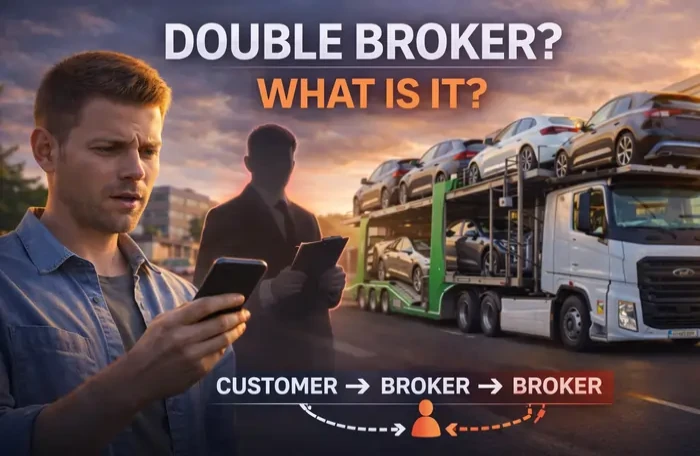


A double broker in auto transport is not a gray-area middleman or a harmless extra step. It is someone who accepts a vehicle shipment and then secretly hands it off to another carrier without permission from the shipper or the broker who arranged the move.
That lack of consent is the entire problem. It breaks the chain of custody, scrambles responsibility, and creates risk that most people do not realize exists until something goes wrong.
Most customers assume the company they speak with is either the carrier moving the car or a licensed broker coordinating that move. Double brokering hides a third party in the background. You think one company has your vehicle. In reality, someone else does, and you were never told.
Who is allowed to move the vehicle? Who is responsible if it is damaged? Who is paid, and who pays? Double brokering muddies all three.
How Double Brokering Typically Unfolds
The setup often looks normal at first. A broker or carrier accepts a vehicle shipment, confirms details, and secures pickup. Behind the scenes, that same party reposts the job to another carrier, usually through a digital load board. The reposted rate is often higher to attract a fast pickup.
The actual carrier believes they are hauling for a legitimate broker. The shipper believes the original company is handling the move. Neither knows the truth.
Payment trouble is usually the first thing anyone notices, and it rarely shows up as a neat “fraud discovered” moment. It shows up as a driver who cannot get a straight answer about who is paying, a dispatcher who stops responding, or a delivery that suddenly depends on a new fee that was never part of the deal in the first place.
Why Double Brokering Is Not Just Unethical but Also Illegal
Federal law requires anyone arranging transportation for compensation to hold proper broker authority. Under the Moving Ahead for Progress in the 21st Century Act, unauthorized brokerage activity is explicitly prohibited.
When a shipment is quietly reassigned, you lose the ability to identify the responsible party fast, which is exactly why regulators treat unauthorized brokerage as a serious violation.
Freight fraud tied to these tactics has become a major financial drain across the industry, with losses in the hundreds of millions reported in recent years.
Why Auto Transport Is Especially Vulnerable
Auto transport gets targeted for one simple reason: a single unit can be worth more than a full trailer of general freight, and the pressure to keep the vehicle moving is constant. The VIN makes the asset easy to identify, but it also creates paperwork sensitivity, especially if the carrier’s coverage is built around specific scheduled vehicles.

When an unauthorized handoff happens, you can end up in a situation where the paperwork looks normal until a claim is filed, and then everyone learns the chain of custody was never what it appeared to be.
Insurance is one of the most misunderstood risks. Some carriers operate under policies that only cover specific listed vehicles. If a car is moved outside the authorized chain, coverage can be denied. From the owner’s perspective, the vehicle looks insured. On paper, it may not be.
Time-to-sale is another factor. Dealers, auctions, and private buyers often need vehicles delivered on tight schedules. A stalled delivery can delay a sale or trigger storage fees. Double brokers exploit that urgency.
The “Hostage Car” Scenario
One of the most visible outcomes of double brokering is the hostage vehicle situation. The carrier who actually hauled the car realizes they will not be paid. Instead of delivering, they hold the vehicle and demand payment directly from the owner or broker.
This is illegal. A carrier can only charge what is listed on the signed transport agreement. Extra fees demanded after the fact are not enforceable. Still, owners often feel trapped.
The car is real. The delay is real. The legal process feels slow. Fraud thrives in that emotional gap.
How Double Brokering Differs from Legitimate Co-Brokering
Not every multi-party move is fraudulent. Co-brokering is legal when all parties know what is happening. In those cases, the shipper consents to more than one broker being involved, and responsibilities are clearly defined.
Double brokering relies on concealment. If you were not told, did not agree, and cannot identify who is physically moving your vehicle, that is a red flag.
How Often This Actually Happens
Freight fraud tied to double brokering has grown rapidly with the rise of digital marketplaces. Industry reporting shows losses exceeding $455 million in a single year, with some regions experiencing spikes of several hundred percent.
Vehicle transport is not immune. Surveys of dealerships and automotive shippers show that nearly one in three has experienced some form of transportation fraud within a three-year period. Many did not know it was double brokering until after the fact.
What People Usually Assume, and Where That Assumption Breaks
People usually think the company they spoke with controls the whole move, so the identity of the truck showing up is a formality. They also assume coverage follows the car no matter what, which is where the damage gets real if the shipment was quietly reassigned.
And there’s a stubborn belief that scams only live at “too good to be true” rates, when plenty of fraud rides inside normal-looking paperwork and ordinary timelines.
Double brokering does not look risky on the surface, which is why it works.
How Credible Brokers Reduce Exposure
Companies like AmeriFreight Auto Transport focus on preventing unauthorized handoffs by working with vetted carriers and maintaining direct visibility into who is assigned to each shipment. That visibility is not about speed or rates. It is about accountability.
A legitimate broker confirms that the carrier picking up the vehicle matches the authority on file. If something changes, the shipper is informed, and there are no silent substitutions.
Customer service agents are trained to flag inconsistencies in contact information, documentation, and dispatch behavior. Many fraud cases involve mismatched phone numbers, generic email addresses, or last-minute carrier changes without explanation.
Those signals are easy to miss if no one is looking for them.
What You Can Do as a Vehicle Owner
Once a carrier is assigned, the practical moment that matters is pickup. The name on the dispatch should match the carrier taking the keys, and the paperwork should not look like it was printed five minutes ago by someone improvising.
If you are being told, casually, that “another carrier will handle it,” treat that as a change in custody, not a minor update.
The other moment that matters is money pressure. If a driver or dispatcher starts pushing for payment outside the agreed terms, slow everything down and get the broker involved immediately. A legitimate move does not require surprise payment demands to keep the vehicle from being delayed.
Understand that Door-to-Door Service still requires clear authorization. Convenience does not remove accountability.
What Happens if Double Brokering Is Discovered Mid-Transport
The first priority is locating the vehicle and confirming its condition. The next step is establishing who has legal authority over the shipment.
Documentation matters. Bills of lading, dispatch confirmations, and written agreements determine who is responsible. When the chain is broken, insurers and regulators scrutinize every detail.
Time matters too. The earlier the issue is identified, the more options exist. Delays compound risk.
Why This Issue Is Not Going Away Soon
The industry will keep tightening verification, and fraud will keep looking for the next soft spot. For most customers, the practical takeaway is simpler: the safest shipment is the one where the identity of the carrier is never treated as a detail, even when asking the extra question feels awkward.
Auto transport works best when every handoff is intentional, documented, and visible. Double brokering thrives on silence. The simplest defense is insisting on clarity, even when everything seems fine.