

Yes. You can file a claim after signing the Bill of Lading. Federal law, including the Carmack Amendment, continues to apply after delivery.
What changes is the evidentiary burden.
This matters because most disputes are decided on the basis of documentation, not assumptions. If damage is not written on the BOL at delivery, the burden often shifts to you to prove it happened in transit. Knowing how this works before you sign can protect your leverage and your payout.
The Bill of Lading as the Deciding Document
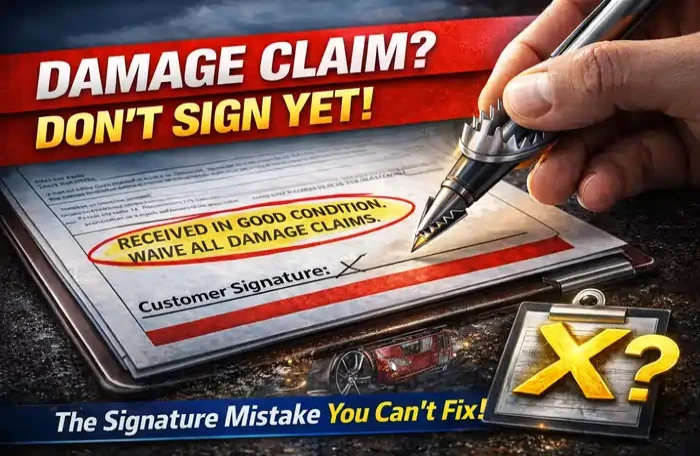
The Bill of Lading, or BOL, is not a casual receipt. It functions as a contract, a condition report, and the central piece of evidence in most car shipping claims. Once you sign it without noting damage, the document becomes what carriers call a clean receipt or clean Proof of Delivery (POD).
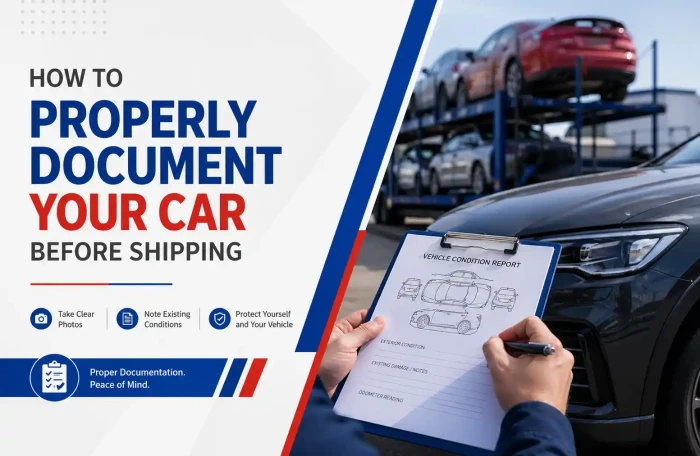
At pickup, the driver conducts a pre-transport inspection and records existing scratches, dents, and chips on the BOL. At delivery, you inspect again. If new damage exists, it must be written on the BOL before you sign.
Visible damage must be noted immediately at delivery. There is no grace period for dents you noticed but did not document. The BOL becomes the baseline for a prima facie case under the Carmack Amendment.
To succeed, you generally must prove:
The vehicle was delivered to the carrier in good condition.
It arrived in damaged condition.
You suffered measurable loss.
A clean delivery signature weakens the second element. That is why filing a car shipping claim after signing the BOL is legally possible but, in practice, more difficult.

Visible Damage: Immediate and Non-Negotiable
Visible damage includes scrapes, cracked lights, dents, and chipped paint that can be seen during a normal walk-around. If it is visible, it must be written on the BOL before signing. No exceptions.
The damage reporting window for visible issues is immediate. Once you sign without notation, carriers and their cargo insurance providers will argue that the damage occurred after delivery.
Concealed Damage: A Narrow but Real Path
Concealed damage is different. It refers to issues that would not reasonably appear during a standard visual inspection.
Examples include suspension misalignment, undercarriage impact, or electronic faults that trigger once the vehicle is driven. Modern vehicles complicate this further. Advanced Driver Assistance Systems often require precise ADAS calibration. A minor shift during transport can cause sensor errors that only appear later.
In these cases, you can file a claim after signing, but timing becomes critical. Concealed damage reporting windows typically fall into three tiers:
Contractual window: 24 to 72 hours.
NMFC standard window: Five days.
Federal formal written claim deadline under the Carmack Amendment: Nine months.
If you intend to pursue litigation, the lawsuit filing window is generally two years from the written denial of the claim.
Some carriers apply what is informally called the one-third rule for concealed damage. They may offer 33 percent of the repair value as a compromise, arguing that responsibility could be shared between shipper, carrier, and owner.
Federal Framework: Carmack Amendment and 49 CFR Part 370
The Carmack Amendment establishes a national liability standard for interstate motor carrier transportation. It imposes near strict liability on carriers for actual loss or injury to property while in their care, custody, and control.
Carriers can avoid liability only through specific affirmative defenses, such as an Act of God, act of public enemy, act of public authority, inherent vice, or shipper's fault.

Claims processing is governed by 49 CFR Part 370. Carriers must acknowledge a written claim within 30 days. They must pay, decline, or offer a compromise within 120 days. If unresolved, they must continue providing updates at regular intervals.
Procedural Discipline Protects You
Filing a car shipping claim after signing the BOL is possible. Winning depends on documentation and timing.
At delivery:
Inspect in good lighting.
Photograph the entire vehicle.
Photograph close-ups of any damage.
Ensure the damage is clearly noted on the BOL.
Keep a copy of the signed document.
If concealed damage appears:
Notify the carrier immediately in writing, ideally within 24 hours.
Obtain diagnostic confirmation.
Submit a formal written claim with a specific dollar demand.
Do not rely on verbal promises. Do not delay reporting. Do not assume the damage rate is low enough to render documentation unnecessary.
Where AmeriFreight Auto Transport Fits In The Process
AmeriFreight Auto Transport is a licensed broker. We arrange your shipment with a properly registered carrier and confirm active DOT authority and required insurance before dispatch.
If issues arise, our customer service agents can review your order details, confirm carrier information, and help ensure your documentation is directed to the correct claims contact.
Disclaimer
This content is for general informational purposes only and is not legal advice. Claim rights, deadlines, and carrier policies vary by shipment. Always review your Bill of Lading and carrier terms, and consult a qualified attorney for legal guidance.